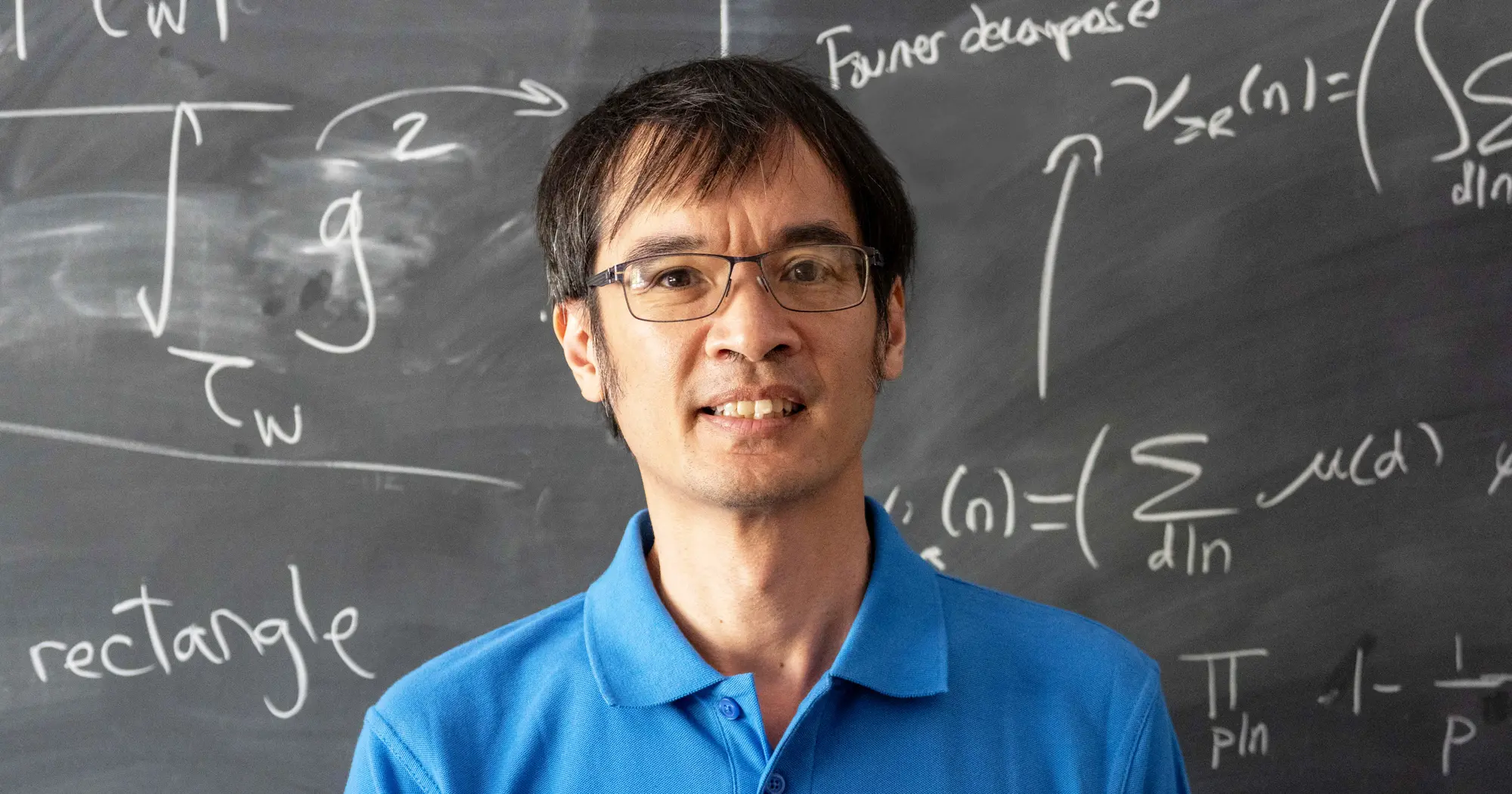
Mathematician Terence Tao reports that artificial intelligence can now rigorously verify mathematical proofs extending to 100,000 lines, a level of complexity previously unattainable for automated proof-checking. Speaking at the 2026 International Congress of Mathematicians, the 2006 Fields Medalist focused on how the field must redefine its goals as AI increasingly handles problem solving, specifically the stages of providing and verifying proofs.
“Let’s assume that soon, AI will be able to perform a reasonable fraction of mathematical tasks successfully,” Tao said, arguing that this capability necessitates a shift in focus toward explaining and contextualizing results for broader understanding and acceptance within the mathematical community.
AI Verification of Extensive Proofs Reaches 100,000 Lines
This achievement signifies a concrete advancement beyond simply generating potential proofs; AI is increasingly able to confirm their validity with a high degree of certainty, even in extraordinarily complex cases. Tao cautioned, however, that verification is only one stage in a broader problem-solving process, and the current focus on outcomes risks obscuring crucial steps. “We can have these 100,000-line proofs that we have to verify, but no one understands them,” he said, highlighting the challenge of ensuring proofs are not only correct but also comprehensible to the wider mathematical community.
The inability to explain a proof, even if AI can confirm its accuracy, severely limits its potential for acceptance and further development within the field. This emphasis on human understanding reflects a shift in focus prompted by AI’s increasing ability to automate the initial stages of proof generation and checking.
The value of a mathematical result, Tao argued, lies not just in its truth but in its accessibility and utility to other researchers. “You can induce people to read your work. Telling good stories helps, and showing the process and describing how you arrived at a result—what worked, what didn’t, and how you went about it—is important,” he explained, emphasizing the importance of transparent methodology.
He noted that past reliance on outcomes alone was effective until the advent of AI, which can produce results without revealing the underlying reasoning. Current AI tools, he added, are often opaque about their process, creating a need for greater clarity in how these systems arrive at their conclusions.
Ultimately, Tao believes the goal is to achieve canonicalization, where a result is incorporated into standard textbooks and becomes widely applicable, UCLA says. “If you want a field of math to become useful to engineers or physicists or others, they’re not going to dig through the most recent papers in the Annals of Mathematics,” he said.
“They want the textbooks.” The most valuable applications of math only become unlocked once you have reached this state. He pointed out that the very success of AI in mathematics is predicated on the existence of these well-established, canonical definitions built over centuries, underscoring the importance of maintaining a strong foundation of understandable, accessible mathematical principles alongside the development of increasingly powerful AI tools.
A big reason why AI is so successful in mathematics is because, for centuries, we’ve been building these canonical definitions.
Terence Tao, UCLA mathematician



See today’s quantum computing news on Quantum Zeitgeist for the latest breakthroughs in qubits, hardware, algorithms, and industry deals.