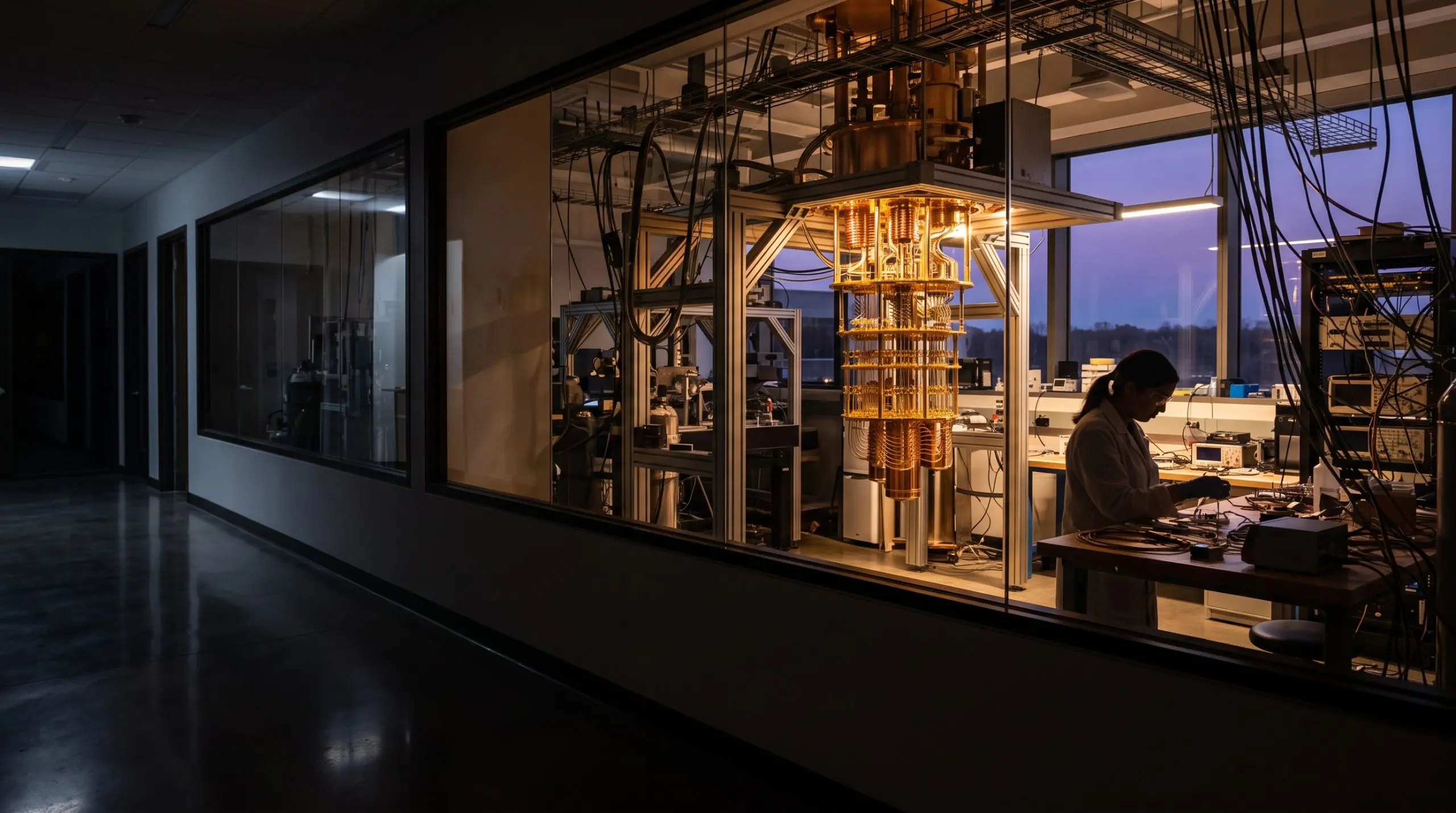
Thirteen partners, including Chalmers, are collaborating on the EuroQSS initiative to unify quantum software development across Europe. The three-year project, funded with approximately five million euros by the European Union, aims to create an open software framework enabling hybrid computing, where quantum computers work alongside conventional high-performance systems. “Chalmers will play a key role by leading the project’s scheduling work package,” says Michele Faucci Giannelli, staff scientist at Chalmers’ Division of Quantum Technology, ensuring the software functions on real quantum computers and prepares Europe for more powerful systems.
EuroQSS Initiative Unifies European Quantum Software Development
The EuroQSS initiative directly addresses a critical bottleneck in quantum computing development. Differing software requirements for various quantum computers impede broader adoption and collaboration. This new, pan-European effort, involving thirteen partners across seven countries, seeks to establish a unified software framework to overcome these hardware-specific limitations. The project’s scope extends beyond simply enabling quantum computation, aiming to facilitate hybrid computing architectures where quantum processors augment existing high-performance computing systems.
This integration allows developers to use the strengths of both technologies by assigning tasks to the most appropriate processor for optimal efficiency. The initiative’s focus on real-world functionality distinguishes it from projects concentrating solely on algorithmic advancement. The consortium includes diverse organizations such as Airbus, Qruise and Fraunhofer Gesellschaft, reflecting a commitment to both academic research and industrial application.
Partners from France, Germany, Spain, Sweden, Finland, Austria, and the Czech Republic contribute expertise in areas ranging from quantum simulation to cybersecurity. This collaborative approach is designed to accelerate the development of a robust and interoperable quantum software stack, preparing Europe for the advent of more powerful and fault-tolerant quantum computers while simultaneously expanding existing software capabilities.
Chalmers will play a key role by leading the project’s scheduling work package. Our extensive experience in building and operating superconducting quantum computers will ensure that the software developed within the project functions effectively on real quantum computers.
Michele Faucci Giannelli, staff scientist at the Division of Quantum Technology at Chalmers


See today’s quantum computing news on Quantum Zeitgeist for the latest breakthroughs in qubits, hardware, algorithms, and industry deals.