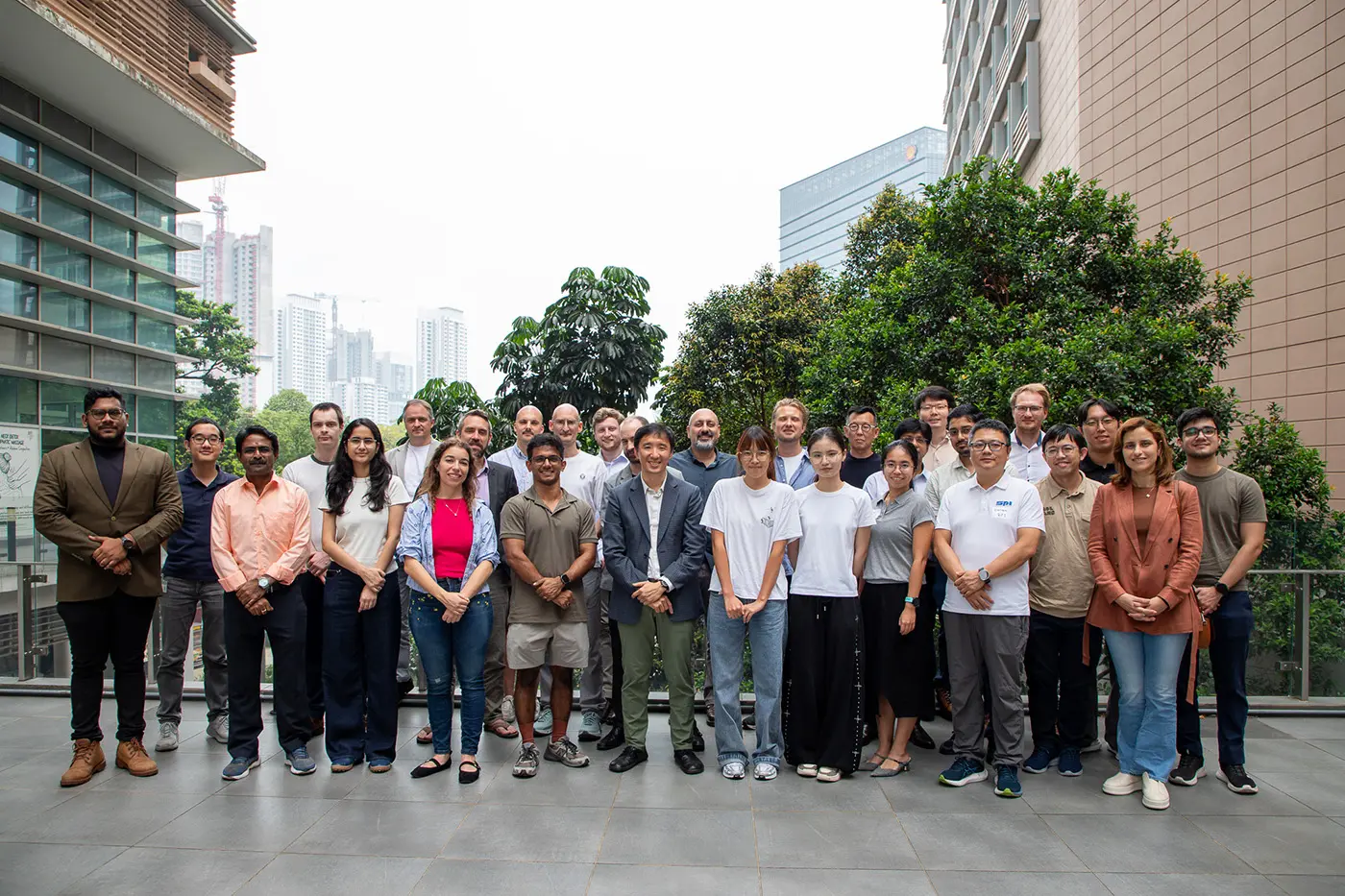
Researchers convened in Singapore for the ninth Workshop on Quantum Technologies on Small Satellites, or QTX-9, from October 19 to 20, focusing on the challenges and opportunities of deploying quantum technologies in space. Limited to 40 invited delegates, the workshop featured 13 talks covering quantum missions, optical ground segments, and the architecture needed for future experiments.
“When we started the workshop years ago, it was to get the community together and get people excited to test how we can get things to space,” said Alexander Ling, Principal Investigator at CQT and Professor in the Physics Department at the National University of Singapore. The event highlighted progress from missions like SpeQtre, planned for launch in 2025, and laid groundwork for building a global quantum network.
QTX-9 Focus: Quantum Missions, Optical Ground Segments, and Space Technologies
The event extended beyond theoretical discussion, with attendees touring the National Quantum-Safe Network testbed and Alexander Ling’s laboratory, where his team is developing quantum memories intended for use in networking applications. Thirteen invited talks across four sessions covered quantum missions, optical ground segments and new developments for quantum technologies in space. Looking ahead, the community is already planning the tenth anniversary of QTX, scheduled for Munich next year, signaling continued momentum in the development of quantum space technologies.
“Now we can be more ambitious. There’s a lot of things we can do, especially if we are talking about building a global quantum network,” he said.
Singapore OGS and SpeQtral’s SpeQtre Mission Updates at QTX-9
SpeQtral assumed full operational control of its SpeQtre satellite in July 2026. Robert Bedington, co-founder and Chief Technology Officer of SpeQtral, presented an update on the mission at QTX-9, detailing ongoing testing with optical ground stations.
This includes the optical ground station in Singapore, operated for Quantum Technologies, which is being used to validate the satellite’s quantum payload. Shaik Abdillah, a CQT PhD student, gave a talk about the station’s specifications and design, noting that it is the first station to be built in an equatorial climate and operated in a densely populated urban environment, and about the team’s background noise characterisation.


See today’s quantum computing news on Quantum Zeitgeist for the latest breakthroughs in qubits, hardware, algorithms, and industry deals.