Rigaku Corporation and Tohoku University will launch the Rigaku-Tohoku University Co-Creation Research Institute for X-ray Metrology: Beyond The Limits on August 1, 2026, focusing on advancements in X-ray measurement technology. The new institute addresses limitations in current semiconductor analysis, specifically by prioritizing soft X-rays, X-rays with longer wavelengths and lower energy than conventional methods. This three-year collaboration between the two entities will also cultivate a new generation of researchers, with potential for extension based on demonstrated achievements. The Institute will integrate technological innovation and talent development to push current boundaries.
Advancement of Soft X-Ray Metrology with NanoTerasu
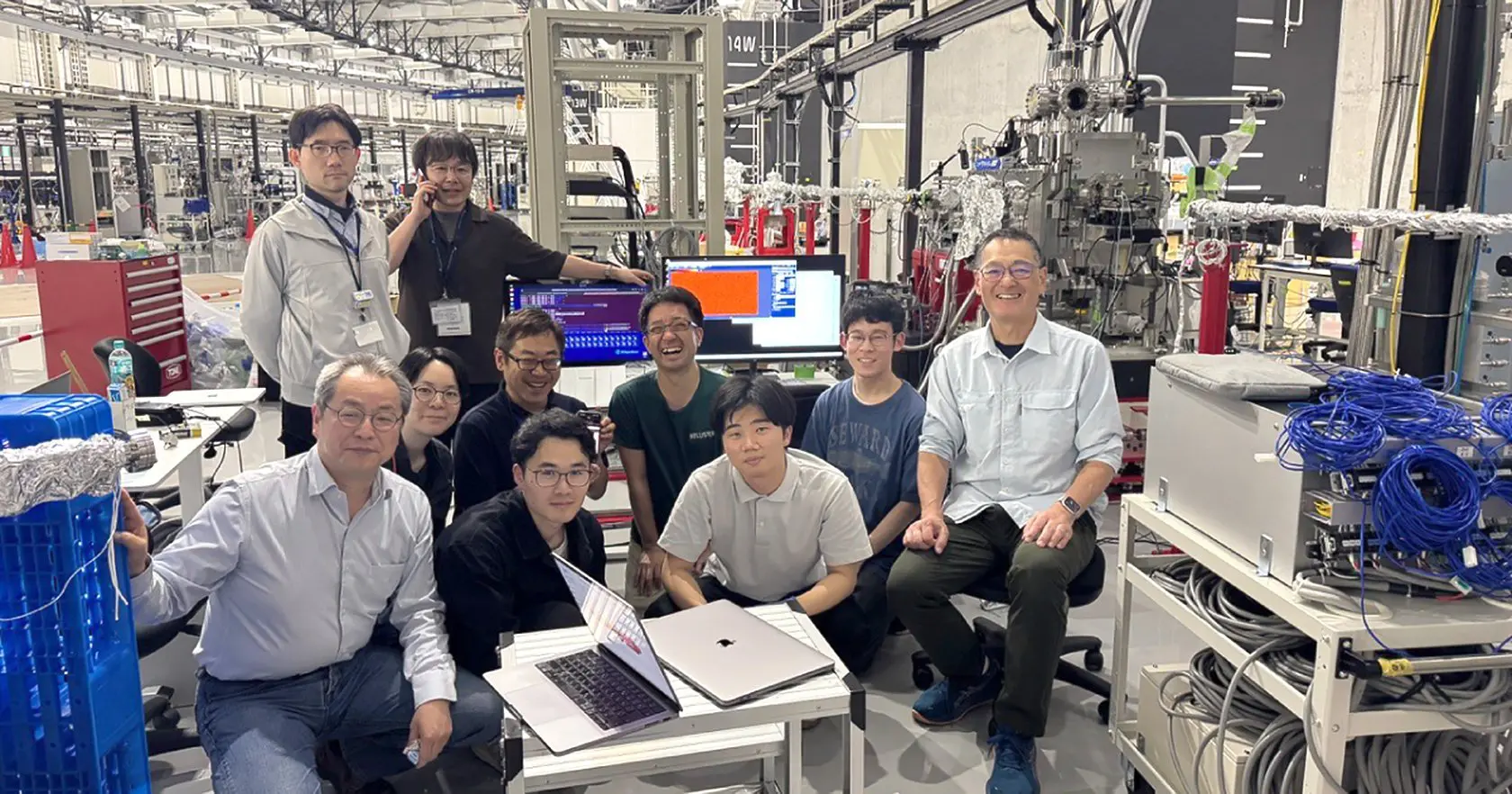
Conventional methods are reaching limitations in evaluating microstructures and performing accurate depth-direction structural analysis, creating a need for innovation in the field. The Institute, formally launched on August 1, 2026, will leverage the capabilities of Tohoku University’s NanoTerasu facility, a synchrotron radiation source, to advance this specialized form of metrology. Researchers plan to integrate Tohoku University’s expertise in information science with Rigaku’s technical knowledge to improve data analysis, establishing a foundation for meeting sophisticated metrology needs.
This collaboration extends beyond technological advancement to include a commitment to cultivating the next generation of experts; the Institute will introduce credit-bearing courses and offer Rigaku Scholarships to graduate students engaged in X-ray research. “The driving force behind Rigaku’s growth has been our ability to provide optimal solutions using X-ray technology whenever new metrology targets have emerged,” says Kazuhiko Omote, General Manager, X-ray Research Laboratory, Rigaku Corporation.
The Institute’s initial three-year term will concentrate on applying soft X-ray metrology to semiconductors and refining data analysis technologies, with plans to expand into electronic and functional materials research. Daichi Chiba, Director, International Center for Synchrotron Radiation Innovation Smart, Tohoku University, explains that “X-ray metrology is a fundamental technology that supports a wide range of fields, including semiconductors, materials, and life sciences.” He adds, “we hope to break free from existing frameworks and, together with the next generation of researchers and engineers, shape the future of X-ray metrology technology.” The Institute aims to foster a cycle of knowledge exchange between industry and academia, establishing a sustainable foundation for continued innovation in the field.
The driving force behind Rigaku’s growth has been our ability to provide optimal solutions using X-ray technology whenever new metrology targets have emerged.
Kazuhiko Omote, General Manager, X-ray Research Laboratory, Rigaku Corporation (Chief Operations Officer and Specially Appointed Professor, the Institute)
Rigaku-Tohoku Institute Fosters Next-Generation Researcher Training
This initiative responds to increasing complexity in semiconductor manufacturing and the limitations of conventional analytical methods, where current technologies struggle with detailed microstructure evaluation and depth-directional analysis. A key component of this training is the Rigaku Scholarship System, which will financially support graduate students engaged in X-ray-related research, linking academic study with practical application in metrology technologies.
This commitment to human capital development is integral to the Institute’s three-year plan, with potential for extension contingent on achieving its research objectives. This collaborative model, linking Rigaku’s technical capabilities with Tohoku University’s research infrastructure, seeks to push beyond existing technological constraints and shape the future of the field.
X-ray metrology is a fundamental technology that supports a wide range of fields, including semiconductors, materials, and life sciences.
Daichi Chiba, Director, International Center for Synchrotron Radiation Innovation Smart, Tohoku University (Operations Support Officer, the Institute)




See today’s quantum computing news on Quantum Zeitgeist for the latest breakthroughs in qubits, hardware, algorithms, and industry deals.