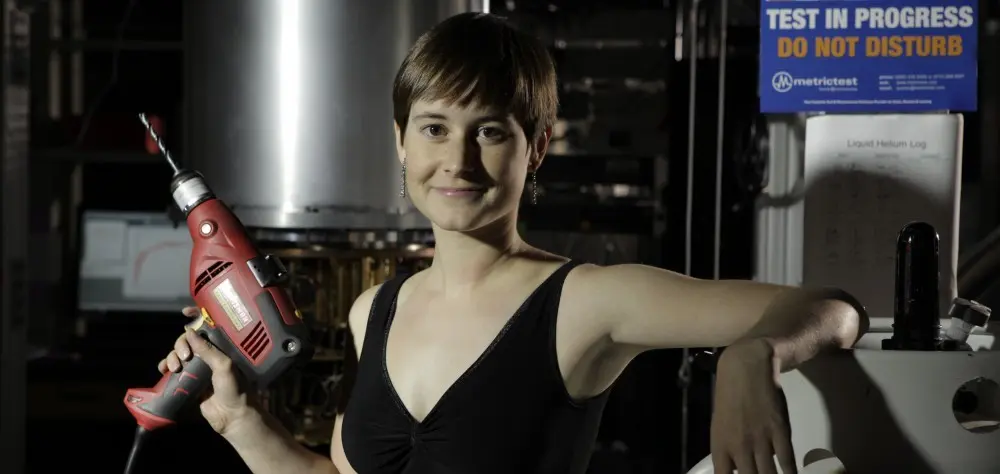
Saleh Naghdi of Caltech champions a new emphasis on science communication, arguing it’s become critical for discerning genuine insight from the surge of AI-generated mathematical manuscripts. Following OpenAI’s recent release of hundreds of AI-generated papers, Terence Tao at Caltech posited that the field has shifted “from a long era of proof scarcity to one of proof abundance.” Naghdi, whose decision to pursue a physics PhD was influenced by channels like MinutePhysics and Veritasium, suggests video abstracts can now help prioritize human understanding, as conferences like STOC 2027 begin requiring them for submissions.
Video Abstracts Prioritize Insight Over Proof in Research
The shift toward video abstracts is rooted in changes in mathematical and theoretical physics, where the challenge is no longer solely finding proofs but conveying genuine understanding, according to Terence Tao of Caltech. This abundance, however, doesn’t automatically translate to increased insight, prompting a re-evaluation of what constitutes meaningful progress in these disciplines. Tao’s central claim, that problem-solving was always a means to elevate human understanding, is gaining traction as researchers grapple with the influx of technically correct but conceptually shallow submissions.
Recognizing this shift, the STOC 2027 conference will begin requiring video recordings as part of the submission process, a move designed to prioritize effective scientific communication and filter out AI-generated work lacking substantive insight. This requirement establishes a standard for research intelligibility, ensuring that findings are not only mathematically sound but also accessible to a broader audience.
Saleh Naghdi of Caltech, whose own work focuses on quantum spin glasses, believes the video format captures an element often missing from traditional publications: the embodied experience of understanding. He describes this feeling as almost sensory, a sense of empowerment and excitement that comes with grasping a new concept and wanting to share it with others.
Naghdi’s personal journey into physics was significantly influenced by science communication videos, specifically citing MinutePhysics, Veritasium, VSauce, Crash Course, TED-Ed, Physics Girl and 3Blue1Brown as formative resources. “Had they not existed, I may very well have never considered pursuing a physics PhD here at Caltech,” he stated, emphasising the power of these channels to inspire the next generation of scientists.
His recent work, detailed in an arXiv preprint, explores the possibility that sampling from the thermal states of a quantum spin glass model may not require a quantum computer, a counterintuitive finding he deliberately chose to present through a video abstract. The video prioritizes why the research was undertaken over the technical details of how the problem was solved, aiming for accessibility for a wider audience.
This emphasis on accessibility reflects a broader trend in science communication, moving beyond simply disseminating information to actively encouraging understanding. Naghdi explains that his team’s approach relies on reducing the sampling problem to estimating tilted means, quantities they believe are classically easy to compute. However, this relies on a long-held conjecture within the spin-glass community that, while widely accepted, remains unproven with current mathematical tools.
Such assumptions are common in the field, but the video abstract format allows researchers to transparently acknowledge these limitations and contextualize their findings, Caltech says. Naghdi argues that science communication is no longer solely about reaching audiences outside the field, but about ensuring that scientific progress is accompanied by a corresponding growth in human understanding. He encourages colleagues to embrace the opportunity to “geek out” and share their excitement through video, embodying their work and conveying the genuine experience of discovery.
This approach, he believes, is important for navigating a future where the sheer volume of research threatens to overwhelm the pursuit of true insight. The goal, ultimately, is to ensure that scientific advancement deepens our collective understanding of the universe.


See today’s quantum computing news on Quantum Zeitgeist for the latest breakthroughs in qubits, hardware, algorithms, and industry deals.