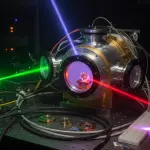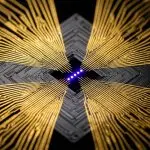
Aegiq has been using an NVIDIA DGX Spark, equipped with a GB10 Grace Blackwell Superchip, to run tests of quantum computing tasks for fundamental condensed matter models with approximately 100 qubits. The NVIDIA DGX Spark allowed Aegiq to develop code for larger GPU clusters without altering existing Python workflows, the company says. This ease of access, facilitated through a one-click connection, differs from typically complex quantum development setups.
Qubit Tests Advance Aegiq’s Quantum CFD Algorithms
These tests used acceleration from NVIDIA’s cuTensorNet alongside Aegiq’s proprietary libraries, enabling rapid cycles of testing and debugging that will inform larger implementations with around 1000 qubits on cloud-based NVIDIA accelerated computing. Dr. Matthew Horner, Quantum Applications Scientist at Aegiq, emphasized the server’s role in bridging the gap between theoretical quantum computing and practical engineering challenges.
Horner noted that maintaining a familiar coding experience was a key benefit, allowing polished live demonstrations accessible to clients and smooth remote access through a VPN. He said the integration with NVIDIA CUDA and cuQuantum was smooth, adding, “I could easily forget I was even connected to it, as it didn’t change my coding experience at all.” Access to the DGX Spark is streamlined through the NVIDIA Sync program, which features a simple graphical user interface that allows connection with a single click.
According to Horner, connecting to the server is as simple as clicking the NVIDIA Sync icon in the Windows system tray and selecting “connect.” The server’s compact size also proved advantageous, fitting comfortably on a desk and encouraging frequent use. “The box looks cool too – it fits on my desk nicely and makes me want to use it!” Horner added. Aegiq’s work with tensor networks, a method for efficiently representing quantum states, is central to their approach to CFD.
These networks decompose complex systems into smaller, interconnected tensors, enabling powerful analysis of entanglement and physical systems. The DGX Spark’s capabilities are expected to support further exploration of quantum-inspired methods for transient turbulent problems, potentially offering both speedups and memory compression on conventional computers.


See today’s quantum computing news on Quantum Zeitgeist for the latest breakthroughs in qubits, hardware, algorithms, and industry deals.