Welcome to this week’s quantum technology digest. The articles below cover advances across the quantum computing stack, from hardware development and error correction to algorithmic improvements and commercial growth. Several companies reported significant progress this week, indicating continued momentum in the field.
This week’s updates demonstrate a clear focus on scaling and refinement. Quantinuum features prominently with announcements regarding both hardware manufacturing partnerships and algorithmic efficiency gains. Other companies, including IonQ and Pasqal, are pushing boundaries in error correction and qubit control. Funding news from D-Wave and Infleqtion’s strong revenue growth further illustrate increasing investment and market demand.
Overall, this week highlights practical steps toward building more capable and accessible quantum systems. Progress isn’t limited to a single approach; diverse modalities – superconducting, trapped ion, and neutral atom – all saw encouraging developments. The increasing availability of quantum resources on cloud platforms like Oracle also suggests a move toward wider accessibility for researchers and developers.
1. Quanta Computer & Quantinuum Partner to Scale Quantum Computing Hardware
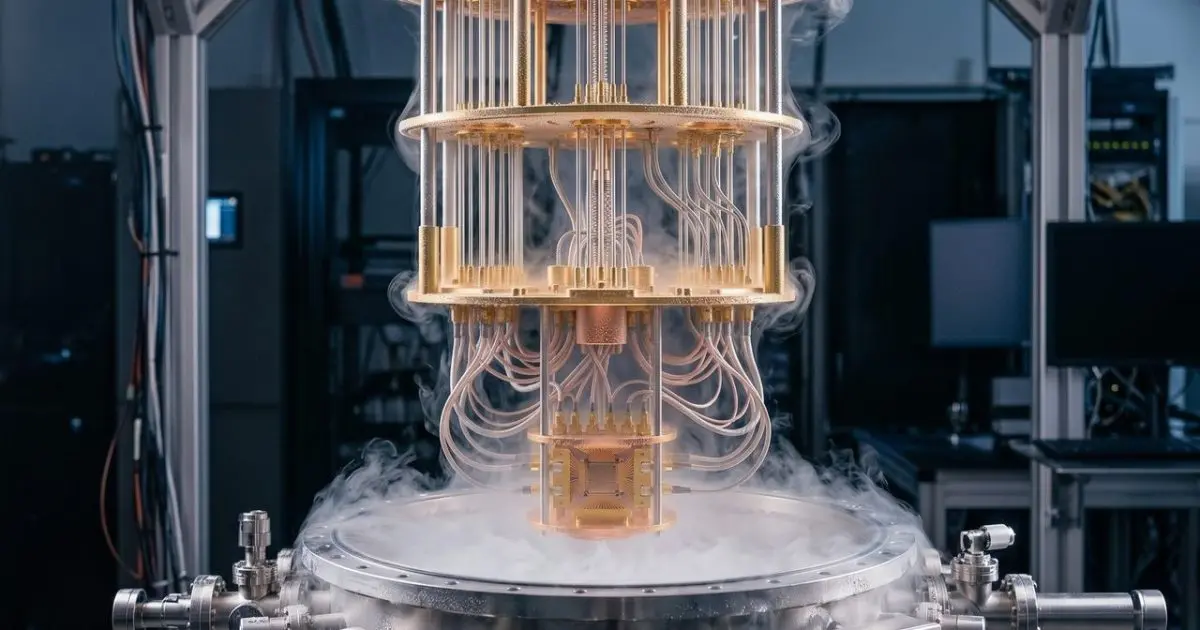
Quantinuum and Quanta Computer are collaborating to manufacture infrastructure for large-scale quantum computers. The partnership combines Quantinuum’s quantum technology with Quanta’s manufacturing expertise, shifting focus from research toward deployable systems. This co-development effort aims to improve the modularity and scalability of quantum processors, supporting Quantinuum’s roadmap for fault-tolerant quantum systems. Quanta’s experience in industrializing advanced computing will establish supply chains and manufacturing processes needed for wider quantum access.
2. IBM’s QOBLIB Library Demonstrates Quantum Advantage in Optimization
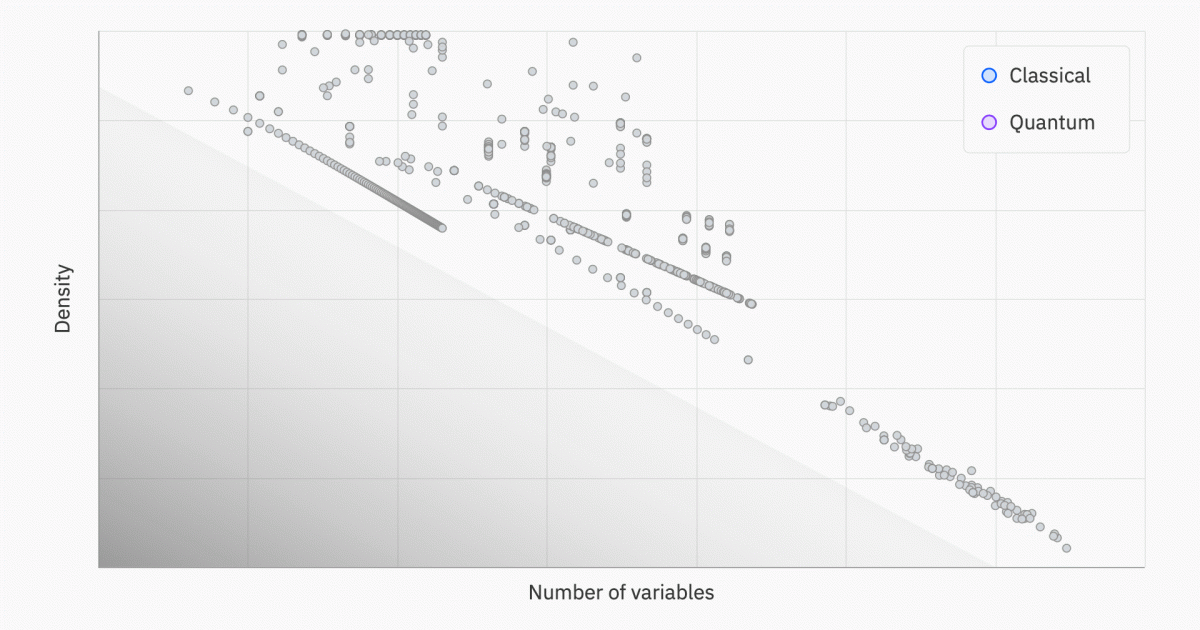
IBM and its partners announced demonstrations of quantum advantage in optimization through the Quantum Optimization Benchmarking Library (QOBLIB). Published in Nature Computational Science and initially released as an open-source project on GitHub in 2025, QOBLIB provides a platform for comparing quantum and classical algorithms on challenging problem classes. The library, developed with contributions from institutions like Zuse Institute Berlin and Purdue University, hosted over 1,200 problem instances and tracked both quantum and classical progress to ensure rigorous evaluation of advantage claims. This collaborative effort aimed to identify practical applications for quantum computing beyond theoretical proofs.
3. Europe Launches €4.6M Network to Train Quantum Error Correction Experts

Alice & Bob joined the QuBriC network to address a shortage of skilled professionals in quantum error correction. The €4.6 million, 48-month program, funded by the Horizon Europe MSCA program, will train 15 doctoral researchers across 16 universities and seven companies including ETH Zürich and TU Delft. QuBriC aims to integrate expertise from quantum physics, coding theory, and hardware engineering, preparing researchers for both academic and industrial roles in building fault-tolerant quantum computers. The network’s structure differs from typical research grants by jointly recruiting, training, and supervising doctoral candidates.
4. Quantinuum’s High-Accuracy Quantum Computer Now Available on Oracle Cloud

Quantinuum announced its Helios quantum computer, boasting 99.921% two-qubit gate fidelity, is accessible through Oracle Cloud Infrastructure (OCI). Launched commercially in November 2025, Helios supports hybrid quantum-AI workloads for applications including drug discovery and financial modeling. This multi-year partnership between Quantinuum and Oracle aims to simplify quantum computing access for researchers and enterprises, integrating it with existing cloud services and promoting more sustainable computation due to Helios’s low energy consumption. A preview of the OCI quantum service was planned for release in the coming months after the initial announcement.
5. Q-CTRL Achieves 100-Qubit Quantum Fourier Transform on IBM Processor

Q-CTRL researchers executed a 100-qubit Quantum Fourier Transform on an IBM Heron r3 processor, doubling the size of any prior experimental demonstration of this key algorithm. The team successfully isolated the correct frequency from a Hilbert space exceeding 10³⁰ possibilities, despite inherent hardware noise, by using a novel compilation strategy called Convolutional QFT and active error suppression techniques. This achievement confirms current quantum processors can handle high-dimensional quantum states and extract meaningful results at this scale without full fault tolerance.
6. Quantinuum Algorithm Cuts Memory Use in Quantum Circuit Optimization

Quantinuum researchers developed a new backpropagation algorithm that reduces memory requirements for optimizing quantum circuits by a factor equal to the number of circuit parameters. The method achieves this reduction while maintaining gradient accuracy comparable to observable expectation values and matching the computational complexity of sparse Pauli simulation. The team demonstrated the algorithm’s scalability by successfully optimizing circuits for several models, including transverse-field Ising and Heisenberg models, and compressing two-dimensional time-evolution circuits. This compression exceeds the complexity of many earlier quantum algorithm tests. This advancement allows for more efficient state preparation and time-evolution compression during quantum computations.
7. IonQ Achieves Faster Quantum Error Correction with LDPC Codes

IonQ researchers demonstrated a nearly three-fold increase in the speed of measuring logical operators using quantum low-density parity-check (LDPC) codes. This improvement addresses a critical performance limitation in fault-tolerant quantum computing by optimizing operations on logical qubits within a single encoded block. Numerical simulations with Q70 and Q102 LDPC codes showed speed-ups of up to 74× when paired with a CliNR error correction scheme and up to 5× for Toffoli gates, simplifying requirements through the use of cat states and single-step memory interaction. The team’s scheduler code efficiently manages measurement sequences, facilitating accurate decoding and bringing practical fault-tolerance closer to realization.
8. D-Wave Receives Canadian Funding for Quantum Software Advancement
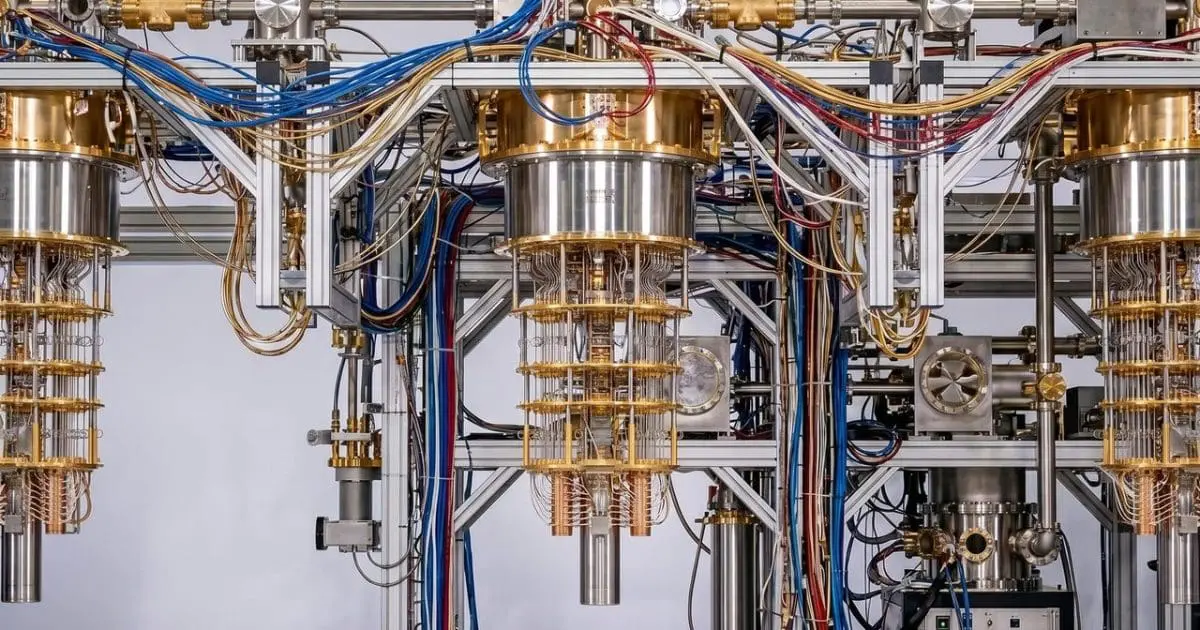
D-Wave Quantum secured CAD $300,000 from the National Research Council of Canada to improve software for its Advantage2 quantum computers. The funding supports development of new graph minor-embedding algorithms, which translate complex problems into a format the system can process. These algorithms will be integrated into D-Wave’s Ocean software development kit, aiming to expand the scale of solvable optimization problems in areas like logistics and machine learning. This collaboration reinforces Canada’s investment in applied quantum computing and commercialization efforts.
9. Infleqtion Reports 116% Revenue Jump Amid Growing Quantum Demand

Infleqtion announced $12.6 million in second quarter revenue, a 116% increase year-over-year, driven by growth in its quantum business. The company also received a Letter of Intent from the U.S. Department of Commerce for up to $100 million in proposed funding. Infleqtion planned to deploy a new, scalable quantum computer in Illinois in 2027, targeting over 50 logical qubits. Current projects with Eaton and the Department of Energy demonstrate increasing commercial applications of their quantum technology. The company raised its full-year revenue outlook to approximately $43 million.
10. Pasqal Demonstrates On-Chip Qubit Control with Aeponyx Technology
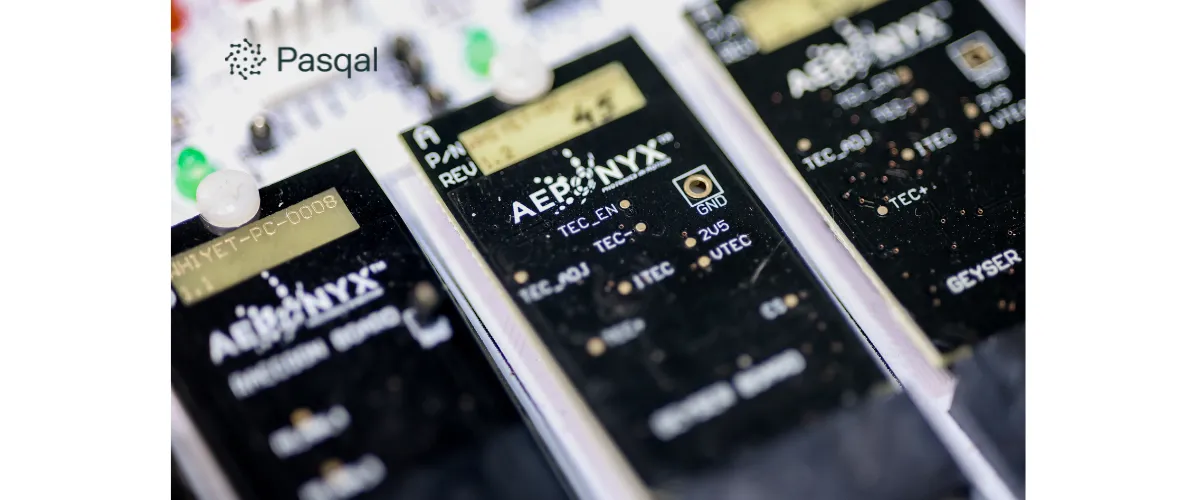
Pasqal announced it successfully trapped and controlled four qubits using laser light generated by a photonic integrated circuit, a first for neutral-atom quantum computing. This milestone, achieved less than 18 months after acquiring Aeponyx, addresses a key challenge in scaling quantum processors and could reduce the physical footprint of future machines by up to 50 times. Pasqal reports the on-chip control system matched the performance of existing bulk-optics systems, maintaining atom lifetimes of approximately 27.5 seconds, and intends to scale this technology toward processors with over 10,000 atoms and 100 logical qubits. The company views this development as critical for moving toward mass production and building commercially viable quantum computers, serving clients like Saudi Aramco, LG Electronics, and IBM.




See today’s quantum computing news on Quantum Zeitgeist for the latest breakthroughs in qubits, hardware, algorithms, and industry deals.