
Andrew Dzurak, founder and CEO of Diraq, has been elected a Fellow of the American Physical Society, indicating a focus on silicon as a key material for scalable quantum computing. QuEra Computing and IBM Quantum are pushing qubit counts into the thousands; QuEra expects 10,000 by 2028. Companies like Diraq and Quantinuum are demonstrating that architectural choices and software optimisation can deliver gains even with fewer physical qubits. Quantinuum’s Helios system achieved lower error rates than comparable superconducting systems, driven by its trapped-ion architecture and its ability to sustain performance during mid-circuit measurements.
This focus on quality over quantity extends to qubit use. Quantum Algorithms Inc.’s Adaptive Algorithmic Control (A2C) shows a 100,000% boost in sampling performance on IBM Quantum hardware through software improvements. QuEra and Q-CTRL are co-designing a new compiler to schedule algorithms onto heterogeneous architectures for faster processing. Dell ships quantum-resistant PCs to address “Harvest Now, Decrypt Later” attacks, assuming security is paramount (hence the generic beige PC for our leading image this week!)
DARPA’s Quantum Benchmarking Initiative supports teams from Atom Computing, Diraq, IBM, and IonQ in their work toward utility-scale quantum computers. QuEra Computing identified supply chain vulnerabilities relating to lasers and specialized optical crystals, indicating materials science and logistics will be as important as physics and engineering. The next few years will determine if a focus on pragmatism and supply chain resilience can yield more consistent, reliable progress than simply increasing qubit counts.
1. QuEra and Q-CTRL Co-Design Compiler for Neutral Atom Systems

QuEra Computing is collaborating with Q-CTRL to redesign quantum compilation for its neutral atom systems. Recognizing algorithms spend 99.5% of time with idle qubits in one instance, they are prioritizing software optimization alongside hardware development. Their Q-CHESS compiler aims to reduce logical errors by scheduling algorithms onto heterogeneous architectures with fast processing modules and memory hierarchy, relocating idle qubits to cheaper storage. Built on QuEra’s open-source Kirin infrastructure, this layered approach enables independent development of error correction and hardware. Q-CTRL’s Quantum Compiler for Heterogeneous Execution, Scheduling and Synthesis, or Q-CHESS, targets algorithmic logical error reduction. QuEra aims to achieve a 10-6 logical error rate with its Libra system, requiring over 10,000 physical qubits for 256 error-corrected logical qubits, and plans a release on Amazon Braket, alongside a Next Gen Gigaquop-class system. This work changes how quantum algorithms are executed.
2. IonQ to Acquire Elisity for Up to $1.3 Billion in All-Stock Deal

IonQ acquired Zero Trust security firm Elisity in an all-stock transaction valued at up to $1.3 billion, combining IonQ’s quantum cryptography with Elisity’s enterprise security platform. Elisity’s IdentityGraph correlates identity, asset, and risk data to enforce access policies, which IonQ will integrate with its post-quantum cryptography (PQC) and quantum key distribution (QKD) offerings. This expands IonQ’s reach into the over $10 billion microsegmentation market, using Elisity’s 100+ global deployments and relationships with CISOs. A White House executive order issued June 22, 2026, prioritized quantum innovation and the federal government’s transition to PQC standards. IonQ had already deployed quantum-safe national communications networks in Switzerland, Poland, Romania and Slovakia, and was serving global customers with quantum-safe defense-in-depth solutions. In the second quarter of 2026, IonQ reported 40 percent year-over-year growth in multiproduct revenue. The transaction remained subject to customary closing conditions and regulatory approval as of the reporting date. Elisity will continue operating under its current leadership. Founded in 2019, the company has a global employee footprint and a growing number of Fortune 500 clients.
3. Quantinuum’s Helios Achieves Lower Error Rates in Fault Tolerance Testing
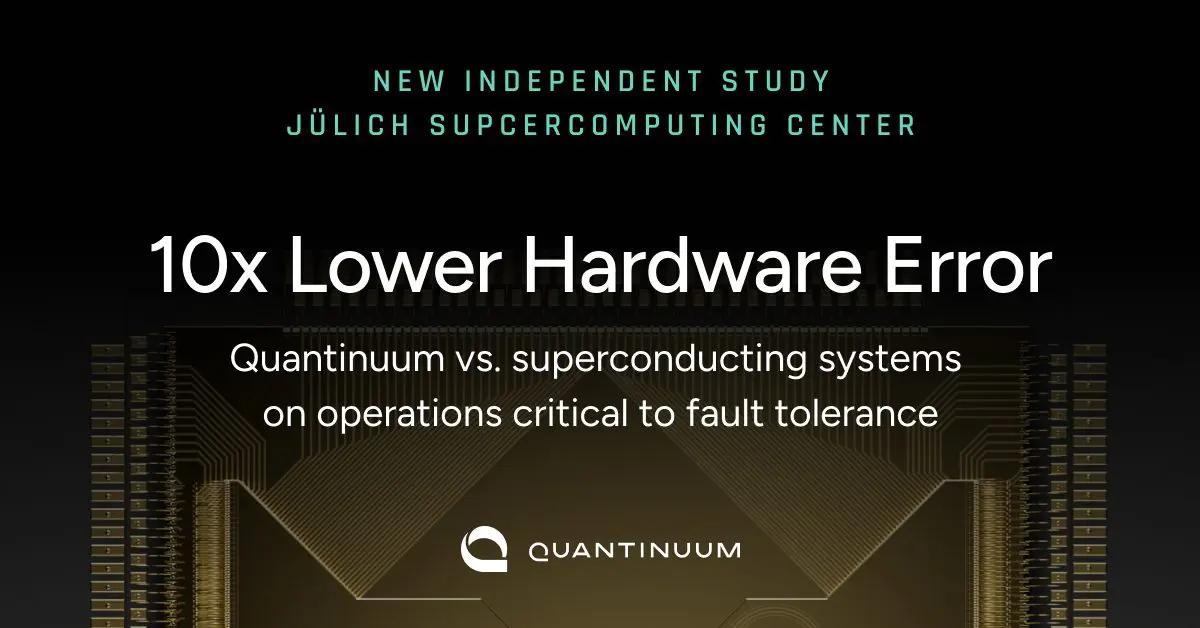
Quantinuum demonstrated significantly improved performance in quantum error correction tests using its Helios system. Independent analysis by the Jülich Supercomputing Center showed Helios achieved approximately 13 times lower effective hardware error at 30 data qubits, and eight times lower at 50 qubits, compared to tested superconducting systems. This advantage stems from Quantinuum’s trapped-ion QCCD architecture, which offers greater flexibility in implementing error-correcting codes and maintains performance during mid-circuit measurements, crucial for sustained computation. These results suggest Quantinuum’s design is better positioned to meet the increasing demands of fault-tolerant quantum computing as systems scale beyond the current NISQ limitations, and the company intends to build on this lead with further investment. (86 words)
4. Quantum Algorithms Team Achieves 100,000% Sampling Boost with New Control Method

Quantum Algorithms Inc. developed Adaptive Algorithmic Control (A2C), a software technique that dramatically improves performance on existing quantum computers. Instead of tracking time, A2C optimises calculations by balancing ‘computational difficulty’, concentrating processing power where it yields the most benefit, like intelligent traffic management. Demonstrations on IBM Quantum hardware showed low-energy sampling probabilities improving by 22% to over 100,000% across problems with up to 156 qubits. This gain, achieved purely through software, avoids the need for costly hardware upgrades and offers a new way to enhance quantum computation with current technology. Word counts: 22, 22, 25, 21.
5. DARPA Quantum Benchmarking Initiative Advances Four Teams to Final Testing
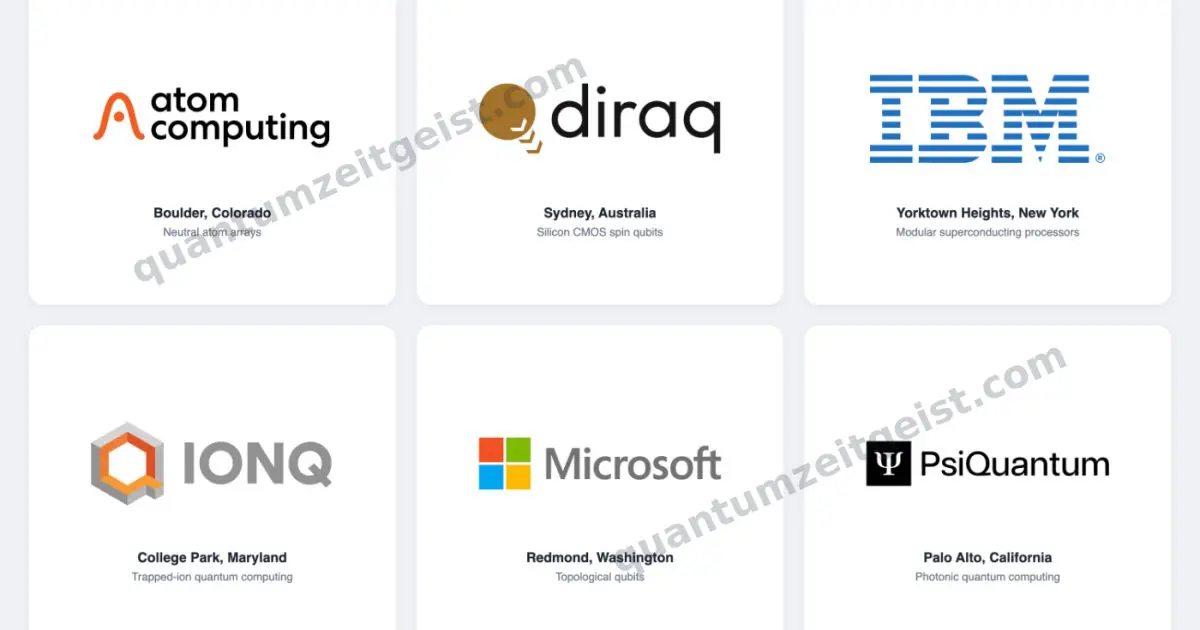
DARPA’s Quantum Benchmarking Initiative has selected Atom Computing, Diraq, IBM, and IonQ to advance to Stage C, joining Microsoft and PsiQuantum. Stage B rigorously evaluated each team’s plans for building a utility-scale quantum computer, where computational value exceeds cost, assessing technical risks and feasibility. The program independently evaluates diverse qubit technologies, including neutral atoms, silicon CMOS, superconducting processors, and trapped ions, without prioritizing a single approach. QBI aims for a utility-scale quantum computer by 2033, driven by rapid advancement and expanding evaluation of emerging technologies. Since launching in mid-2024, QBI has assessed over 20 companies, recently adding new participants to Stage A in May 2026, changing the landscape of quantum computing development.
6. Qiskit v2.0 Enables Fortran, C++ and Julia Quantum Circuitry

IBM Quantum released Qiskit version 2.0, expanding its software development kit to support circuit construction in Fortran, C++, and Julia. This functionality uses a new C API linked to a Rust core, allowing developers to bypass Python and integrate quantum computing into existing high-performance computing workflows. Researchers in fields like physics and chemistry can now directly connect Qiskit to established codes, including Fortran’s BLAS, LAPACK, Gaussian, and VASP, without needing a Python interpreter. The update benefits those already using these languages, streamlining integration and enabling data transfer between languages to combine quantum computing with classical resources for more complex scientific simulations.
7. Harvard University Achieves Ten-Hour Entanglement with 99.94% Fidelity

Harvard University physicists demonstrated 99.941(3)% fidelity in entangling CZ gates on a neutral atom quantum processor. This result was achieved through a “loss postselection” technique, where only calculations without atom loss are considered, improving upon a raw fidelity of 99.854(4)%. The team sustained this performance for over ten hours without recalibration, a substantial increase in stability for complex quantum operations. By creating and disentangling cluster states, and implementing circuits with longer-range connectivity, they validated control over entanglement. Their architecture, using rubidium-87 atoms, and optimized gate pulses may enable efficient quantum algorithms and high-rate error correction.
8. Diraq’s Dzurak Earns American Physical Society Fellowship for Silicon Qubit Work

Diraq founder and CEO Andrew Dzurak has been elected a Fellow of the American Physical Society, recognizing his sustained contributions to silicon-based quantum computing. His team pioneered stable operation of spin qubits, using the intrinsic angular momentum of electrons in silicon, at 1 kelvin and above, a temperature easier to maintain than many competing qubit designs. This approach leverages existing semiconductor manufacturing processes, potentially lowering the cost and complexity of building scalable quantum computers. Dzurak’s work, spanning over two decades, addresses key challenges in quantum system scaling and his leadership continues to shape the global direction of this technology. (99 words)
9. QIA Receives €47.5 Million to Prototype Full-Stack Quantum Internet
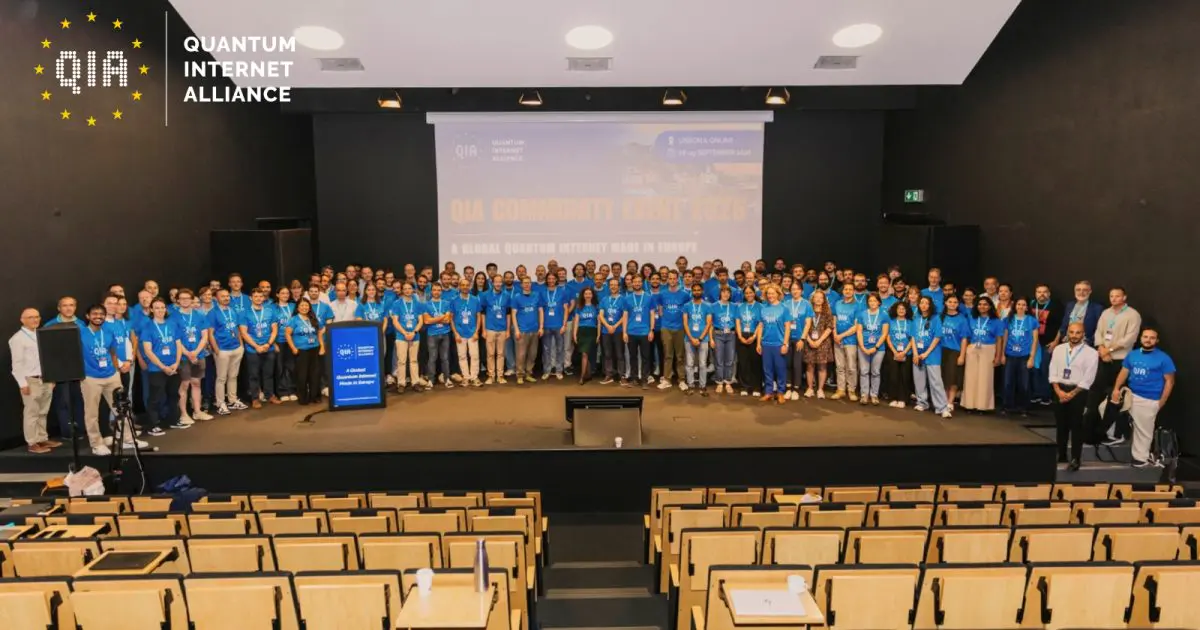
The Quantum Internet Alliance (QIA) has been awarded €47.5 million by the European Commission to build and demonstrate a complete prototype of a full-stack quantum internet. This 42-month project will interconnect existing metropolitan quantum networks using quantum repeaters, building upon core building blocks developed between October 2022 and March 2026. The resulting prototype will be fully programmable and open to researchers, developers, and startups, aiming to foster Europe’s leadership in quantum technology. QIA hopes to move beyond research toward practical applications by empowering its associated startups and creating accessible facilities, ultimately strengthening the European quantum ecosystem and enabling real-world quantum communication infrastructure.
10. Rigetti Computing Focuses on Algorithm Speed, Not Just Qubit Count

David Rivas of Rigetti Computing argues that evaluating quantum progress requires focusing on computational complexity and speed, rather than simply increasing qubit numbers. The company is building scalable quantum systems using chiplet technology, connecting smaller processors to avoid the immense power and cost of some competitors’ designs. These systems fit within the space of two dining tables and use 50 kilowatts. QuEra Computing has demonstrated a 3,000-qubit system and expects to deliver a 10,000-qubit system in 2028. This prioritizes running algorithms efficiently and solving realistic problems, a strategy panelists agreed is more valuable than a large qubit count coupled with high error rates.
11. Universal Quantum Secures $100M to Expand Modular Quantum Computing

Universal Quantum, a UK-headquartered firm, announced over $100 million in Series A funding. This investment will drive expansion into new research and development centers in Singapore, the United States, Germany, and Japan, building on existing European operations. The company connects multiple small quantum chips using patented technology, avoiding complex laser and cooling systems, and aims to build practical, error-corrected machines. Universal Quantum has a $77 million contract with the German Aerospace Center, demonstrating commercial viability and attracting a diverse investor group. This contract and funding support the company’s growth. Word counts: 93 words total. Sentence lengths: 20, 18, 24, 16.
12. UWA Achieves 92.9% Fidelity in Quantum State Preparation on Quantinuum Hardware
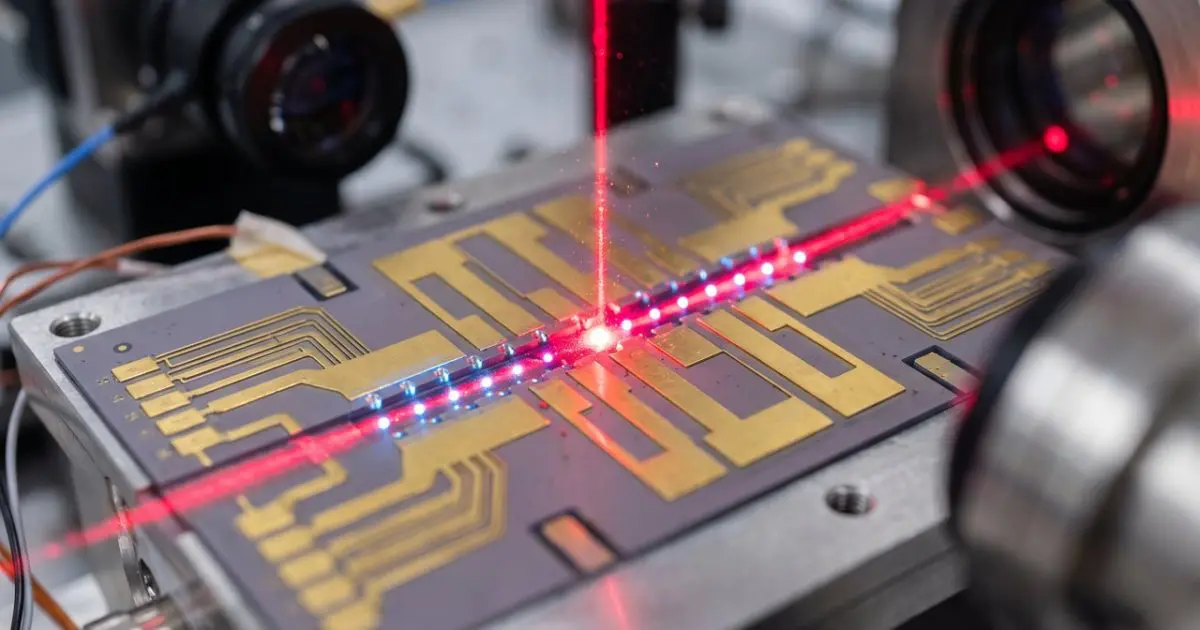
The University of Western Australia team achieved 92.9% fidelity in preparing quantum states on Quantinuum’s H2-1 trapped-ion system. They used resource-efficient tensor networks combined with a new change-of-basis technique within shadow overlap methodology, avoiding the need for fault tolerance. This approach reduced the verification parameter τ by ten orders of magnitude, allowing reliable validation with only 1,000 quantum measurement shots. Validating highly structured states is now more feasible, enabling more complex quantum algorithms in areas like image processing and machine learning. The researchers encoded and validated a digitised acoustic signal using 13 qubits and circuits of 337 gates. This demonstrates practical scalability.
13. IonQ CEO Highlights Business Focus at EPB Quantum Conference

IonQ CEO Niccolo de Masi spoke at the inaugural EPB Quantum in Business Conference on October 1, 2026, presenting real-world applications of quantum technology. The conference, hosted by the Chattanooga Quantum Collaborative, emphasizes moving beyond theoretical research and toward practical, commercial solutions for industries like energy. EPB now offers computing time on its recently launched quantum computer to customers, while a new commercialization studio supported by CO.LAB, UTC, and others aims to accelerate the development of investable quantum companies in Tennessee. This coordinated initiative, spanning commercial deployment, education, and investment, positions Chattanooga as a leading US quantum hub focused on tangible results and economic development.
14. SandboxAQ Gains $500 Million for US Chip Research and Expansion

SandboxAQ received a $500 million research and development award through the US CHIPS Act to advance semiconductor development and materials science. Its AQPotency is now generally available in Marketplace, coinciding with accelerated timelines for cryptographic migration due to growing concerns about quantum attacks. SandboxAQ is applying large quantitative models to materials science and collaborating with organizations like the United Nations and Acubed. A December 6, 2025 blog post noted the importance of data availability for AI development; the company participates in the OpenFold AI Research Consortium, Open Cryptography and AQtive Guard Protect. Strategic acquisitions have expanded SandboxAQ into cardiac care with AQMed, changing how we approach data security and creating new possibilities in fields like medicine.
15. Xanadu and GlobalFoundries Partner to Scale Quantum Chip Production
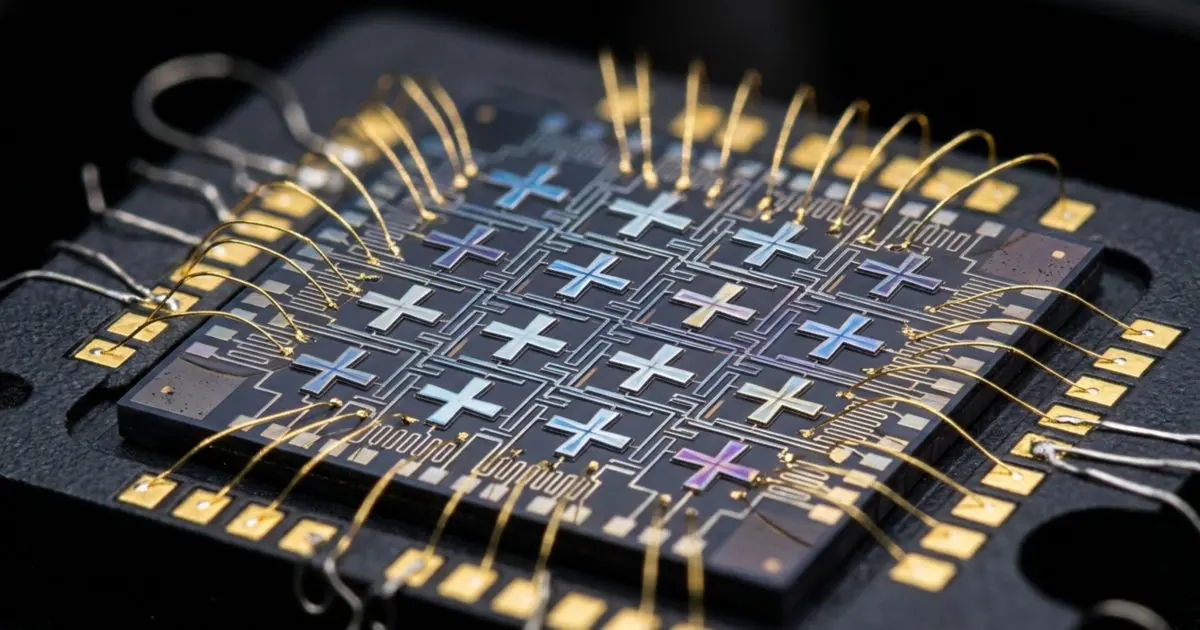
Xanadu Quantum Technologies and GlobalFoundries are collaborating to manufacture components for large-scale quantum computers at GlobalFoundries’ facility in Malta, New York. This partnership focuses on scaling production of Xanadu’s Superconducting Nanowire Single-Photon Detectors (SNSPDs) and combining them with silicon nitride photonics, the core of Xanadu’s quantum architecture. These detectors, known for their reliability, are expected to increase quantum computer speed and lower chip overhead. The collaboration will also refine quantum modules, supporting Xanadu’s development of fault-tolerant quantum systems and future quantum data center hardware.
16. Zapata Quantum and IBM Partner to Develop Practical Quantum Applications
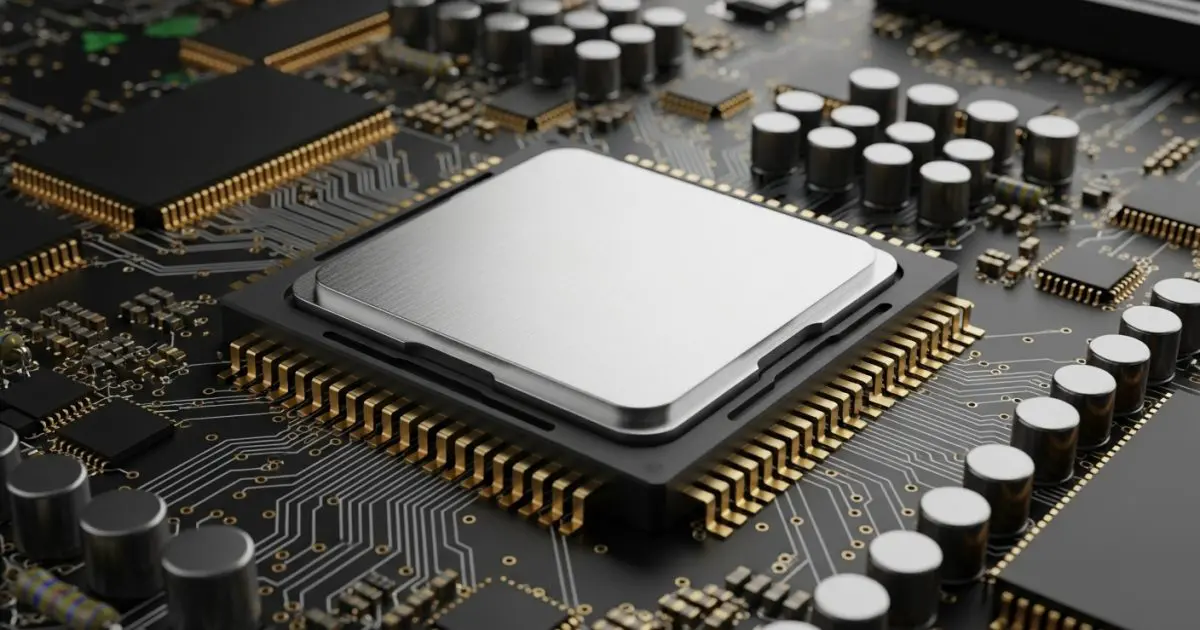
Zapata Quantum is collaborating with IBM to translate quantum computing theory into useful applications. The partnership will combine Zapata’s Quantum Application Intelligence platform with IBM’s superconducting qubits, building on earlier joint research published in Nature Biotechnology. This effort aims to close the gap between theoretical progress and demonstrable returns on investment for businesses by identifying and developing applications that deliver real-world value. Zapata will also refine its Quantum Pilot platform, helping companies prepare for the benefits of quantum technology as hardware improves, focusing on opportunities where quantum systems can deliver quantifiable results.
17. Classiq Unveils Qmod, a High-Level Quantum Programming Language

Classiq Technologies introduced Qmod, a new quantum programming language aimed at simplifying application development. This language uses quantum functions, similar to classical subroutines, to build algorithms from reusable parts, shielding developers from hardware-specific details. The compiler then optimizes code for various quantum systems and simulators, a process enhanced by automated qubit management which automatically releases qubits after use, addressing a major source of errors. Qmod’s support for digital, phase, and amplitude arithmetic, along with type inference, streamlines quantum calculations and mathematical approximations, allowing coders familiar with languages like Python and C to more easily construct complex quantum applications.
18. Dell Ships Quantum-Resistant PCs, Citing Immediate Security Threats

Dell Technologies is shipping commercial personal computers with embedded quantum-resistant security features, addressing vulnerabilities beyond the arrival of quantum computers. The new systems use the NIST SP 800-208 Leighton-Micali signature scheme alongside SHA-512 hashing for BIOS verification and secure signing, protecting against “Harvest Now, Decrypt Later” attacks and firmware forgery. This protects data and firmware from retroactive decryption, a risk amplified by typical PC refresh cycles of three to five years and the US National Security Systems CNSA 2.0 standard, which takes effect January 1, 2027. Dell states that Lenovo does not publicly document similar hardware-level post-quantum cryptographic protections, creating a potential security gap for organizations.
19. QuEra Computing, Commerce Detail Quantum Supply Chain Vulnerabilities

QuEra Computing identified critical dependencies on lasers and specialized optical crystals for building scalable quantum computers. Crystal growth rates are limited by physics and funding, and much optical fiber production is currently located in China. These findings, presented at Quantum World Congress 2026 with representatives from the U.S. Department of Commerce and JPMorganChase, show present-day supply chain issues even before widespread quantum utility is achieved. Advances in quantum error correction are also shifting priorities, potentially reducing the required qubit count to tens of thousands instead of a million and easing demands on certain components. Proactive funding and standardized testing are key to bolstering the emerging industry. Word counts: 26, 28, 23, 24.
20. NTT DOCOMO Business to Sell Classiq Quantum Development Platform

NTT DOCOMO BUSINESS partnered with Classiq Technologies to offer its quantum software platform to Japanese enterprises. The Classiq platform uses a language called Qmod, which lets developers model quantum algorithms abstractly, then automatically translates those models into circuits optimized for specific quantum hardware. This automated circuit creation aims to lower the barrier to entry for businesses interested in exploring quantum computing applications like materials science and financial modeling. DOCOMO BUSINESS is also building a 600-kilometer quantum-secure communications network, indicating a broad strategy for both computation and data security. (87 words)




See today’s quantum computing news on Quantum Zeitgeist for the latest breakthroughs in qubits, hardware, algorithms, and industry deals.