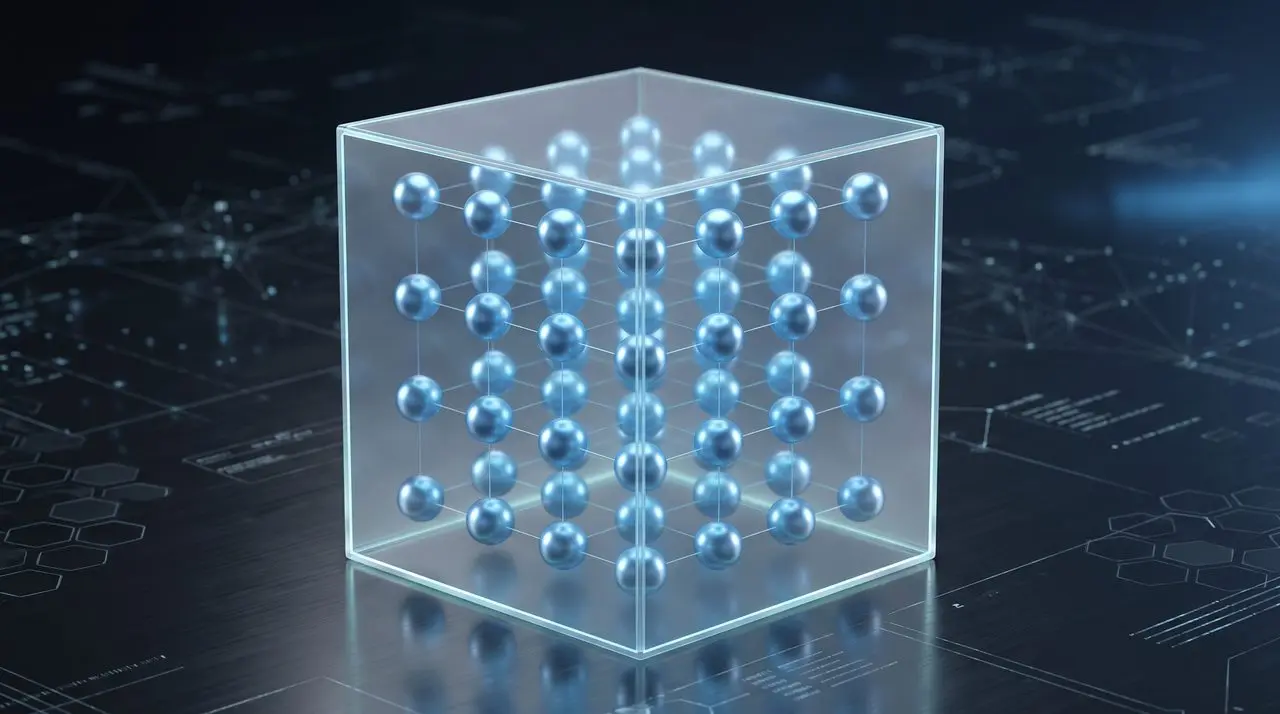
Rigetti’s David Rivas argues that simply counting qubits misses the mark when measuring progress in quantum computing; instead, focus should be on the complexity of algorithms a machine can run and the speed at which it delivers results, the company says. The assertion came during a panel discussion at Quantum World Congress, bringing together hardware, software and academic perspectives on scaling quantum systems.
Rigetti Defines Quantum Scaling as Algorithm Complexity and Speed
The panel, moderated by Victor Bucklew of the University of Maryland, brought together representatives from hardware, software and academia, including Jason Silbergleit, head of Americas at Classiq. Scaling up adds more qubits to a single system. Rigetti is pursuing scaling through chiplet technology, connecting smaller quantum processing units (QPUs) to create larger, more powerful systems.
This contrasts with approaches requiring massive infrastructure, such as one planned system projected to consume 100 megawatts and cost approximately one billion dollars. Their systems fit in roughly the footprint of two large dining tables, use about 50 kilowatts and need no cryogenic cooling.
The core computational element, remarkably small at the size of a fingernail, relies on atoms held in light, simplifying the addition of qubits without necessitating a full machine rebuild. This approach contrasts sharply with some competitors pursuing systems demanding extensive infrastructure and resources. While scaling qubit numbers is a significant achievement, Victor Bucklew of the University of Maryland, as moderator of the panel, asked what scaling actually means beyond simply adding more qubits.
Rigetti’s response centers on the ability to tackle increasingly complex problems efficiently, emphasizing that a qubit count alone is an insufficient metric for measuring progress. The planned system drawing on the order of 100 megawatts and costing around a billion dollars represents an extreme example, likened to the B-2 bomber of quantum computing, while Rigetti positions itself as building the Boeing 777, a more pragmatic and accessible solution.
Jason, a panelist whose affiliation was not specified, noted the increasing accessibility of quantum tools, with AI and improved software lowering the barrier to entry for potential users. The company stated that the driving question is, “Can we optimize it for this hardware’s specific capabilities?”
QuEra Computing Prioritizes Realistic Problem Solving Over Quantum Hype
Yuval Boger of QuEra Computing highlighted that while increasing qubit numbers represents progress, a system with a high qubit count but substantial error rates would be functionally equivalent to a broken laptop. He explained that long calculations necessitate error correction, framing fault tolerance as an important step toward achieving practical quantum solutions. David Rivas, COO of Rigetti, described their use of chiplets to integrate smaller quantum processing units into larger systems.
QuEra Computing has demonstrated 3,000 qubits in a system, and expects to deliver a 10,000-qubit system in 2028. He detailed QuEra’s customer engagement strategy, beginning with identifying problems that would deliver significant value to an organization, then realistically assessing whether those problems are solvable with existing hardware. “How complex an algorithm can I run? How long will it take?” are the critical questions prospective clients should ask, according to Boger.


See today’s quantum computing news on Quantum Zeitgeist for the latest breakthroughs in qubits, hardware, algorithms, and industry deals.