Welcome to this week’s quantum technology digest. This collection presents developments across the field, from fundamental research into qubit performance to practical steps toward commercialization and security. The articles reflect ongoing efforts to build a fully realized quantum ecosystem.
This week features significant progress in several key areas. NIST finalized post-quantum encryption standards, addressing long-term cybersecurity risks. Multiple organizations demonstrated advancements in quantum computing performance, including simulation advantages and automated calibration techniques. Alongside these hardware and software improvements, investment in quantum infrastructure—like the new network in New Mexico—continues to expand testing and development opportunities.
The convergence of private investment and government initiatives marks a notable week for quantum technology. IonQ’s acquisition of SkyWater signals a push for domestic chip manufacturing, while collaborative projects between companies like Quantinuum, NVIDIA, and Pfizer demonstrate the growing application of quantum tools in areas like materials science and drug discovery.
1. NIST Establishes Post-Quantum Encryption Standards to Counter Future Threats

The National Institute of Standards and Technology (NIST) has finalized three post-quantum encryption standards after a decade-long evaluation process. These new standards address the potential vulnerability of current encryption methods to attacks from future quantum computers, which could compromise sensitive data. NIST researchers, including Andrew Regenscheid, developed these standards to utilize mathematical problems difficult for both conventional and quantum computers to solve. The agency’s move responds to the “harvest now, decrypt later” tactic, where encrypted data is intercepted and stored for future decryption with quantum computing power.
2. IonQ Acquires SkyWater, Expanding U.S. Quantum Chip Manufacturing Capabilities

IonQ completed its acquisition of SkyWater Technology, a major U.S. semiconductor foundry, on July 30-31, 2026, following regulatory approval announced earlier in the year. This vertical integration secures a domestic supply chain for IonQ’s quantum computers and establishes the company as a supplier to the broader quantum industry. SkyWater will continue operations as a wholly owned subsidiary, maintaining its existing customer base, and the combined company reported second quarter earnings on August 5. IonQ plans to discuss the integration’s impact on development at an investor day on September 8.
3. Quantum Simulation Achieves Performance Advantage Over Classical Supercomputers
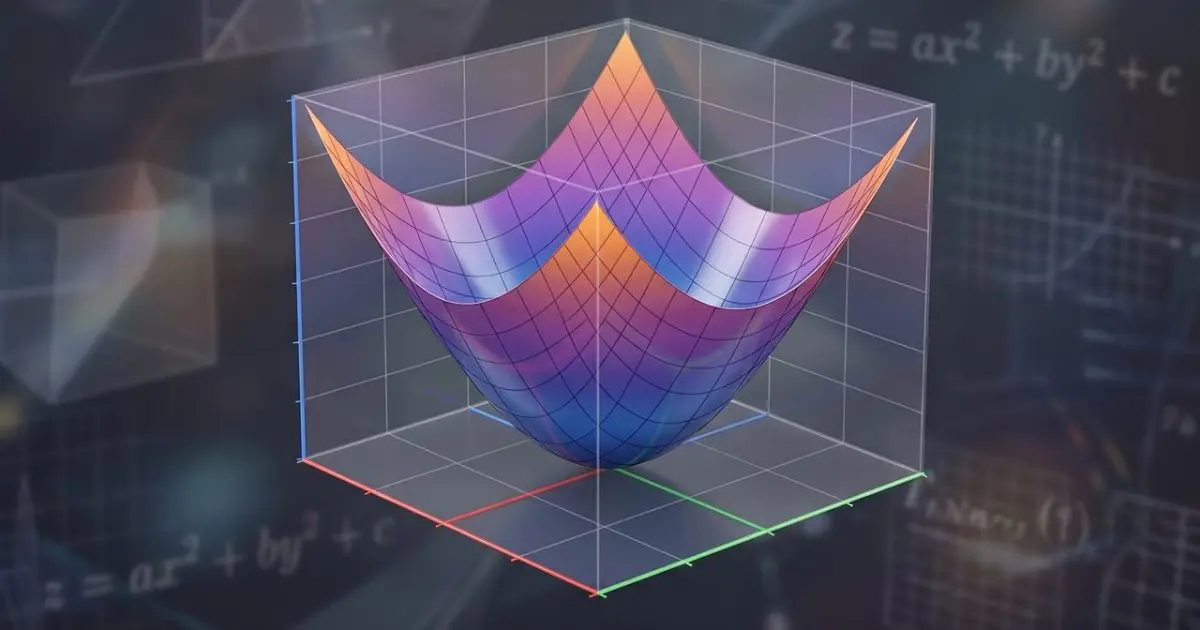
Researchers from BlueQubit, Qedma, IBM, and RIKEN demonstrated a quantum advantage by accurately simulating the behavior of Floquet Ising magnets, materials crucial for superconductors and batteries. This feat was previously impossible with classical supercomputers like Fugaku, which required over 500,000 CPU-core hours for a similar task. The simulation, completed on IBM’s 156-qubit Heron processor in 16.4 quantum processing unit hours, relied on Qedma’s QESEM error mitigation software utilizing both Unbiased and Extrapolated protocols. This result suggests practical quantum applications are now viable, arriving sooner than the previously expected five-to-ten year timeframe.
4. Quasiparticle Absorption Limits Superconducting Qubit Performance
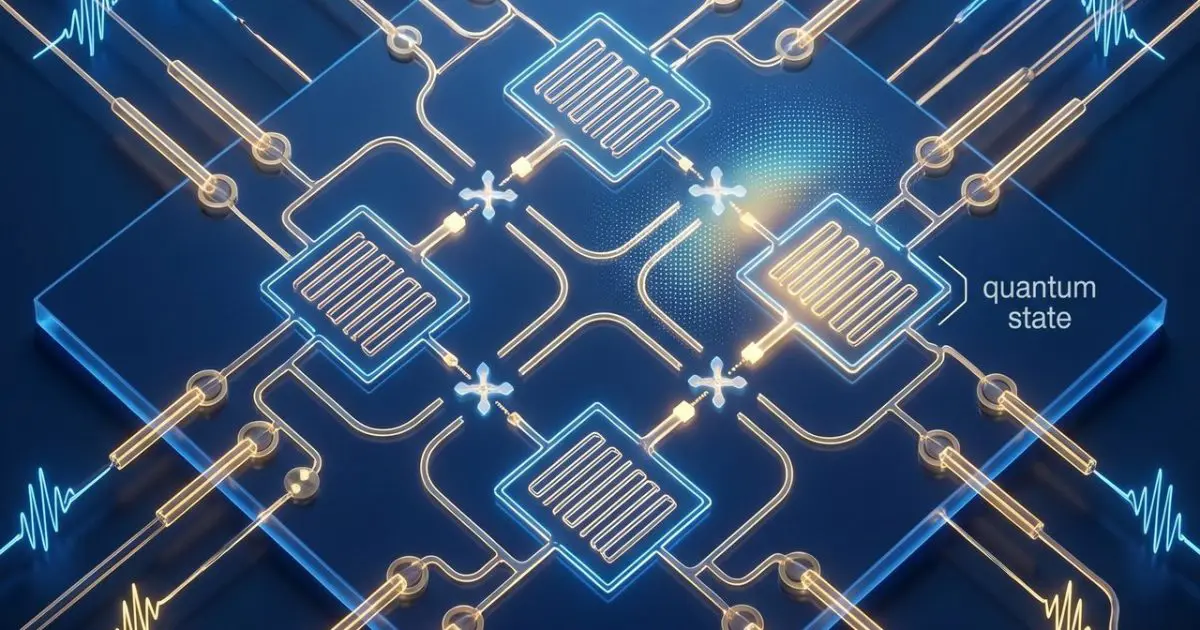
A team from Google Quantum AI, Columbia University, and Yale University detailed two mechanisms by which quasiparticles (QPs) degrade superconducting qubit performance, even in qubits designed with “gap engineering” to minimize QP tunneling. Their theoretical work demonstrates that existing QPs can absorb qubit excitation and photons, while qubit operations themselves can create new QPs via nonlinear absorption. This research establishes a fundamental limit to microwave qubit fidelity, showing that QP-induced decoherence persists despite advanced cooling and mitigation strategies.
5. Cisco Routers Now Secure with Live Quantum Encryption Network
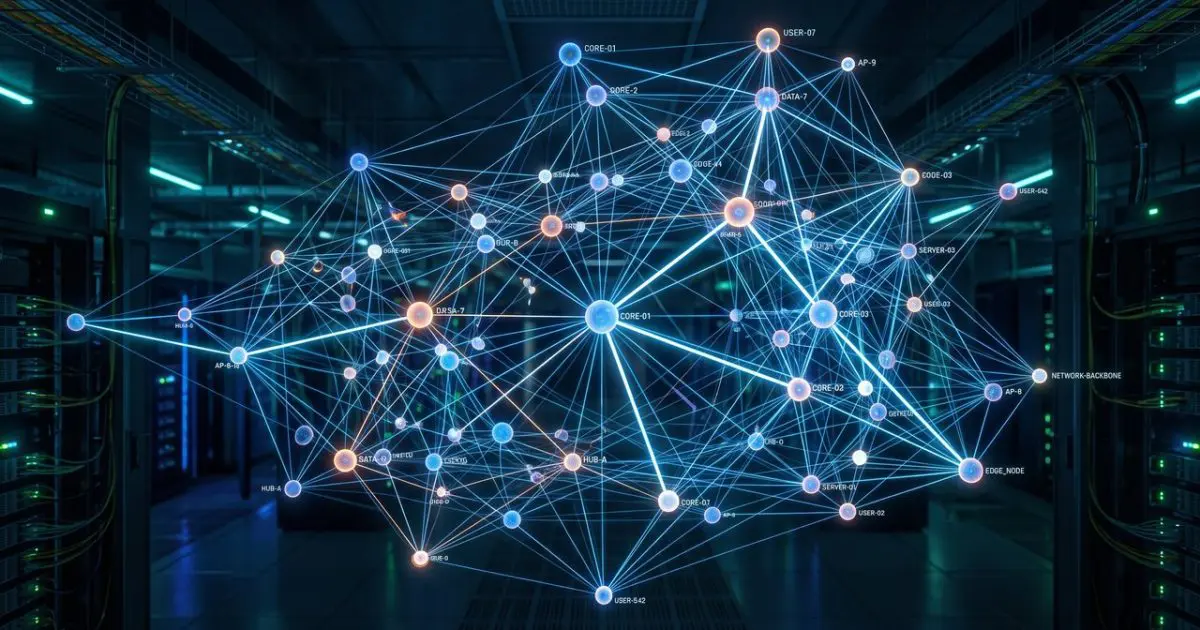
Cisco is currently testing quantum key distribution (QKD) with its routers at its Vimercate, Italy facility. The network uses the BBM92 entanglement-based protocol and integrates with Cisco’s SKIP interface, enabling field-ready quantum secure encryption. Aliro Orchestrator manages the network, monitoring performance and automatically remediating issues like eavesdropping attempts by rerouting traffic or shutting down links. This demonstration, featuring hardware from zerothird, demonstrates interoperability crucial for scaling quantum networks and represents a step toward commercializing the technology.
6. Quantum Signals Scale Polynomially, Challenging Classical Simulation

A team from the University of Edinburgh, École Polytechnique Fédérale de Lausanne, Sorbonne Université, and others demonstrated that certain quantum signals in photonic circuits scale polynomially, a significant improvement over the previously expected exponential scaling, making classical simulation more difficult. Their work, utilizing a representation-theoretic framework, links signal concentration to entanglement and locality within these circuits, revealing that misalignment with standard unitary group representations strengthens the signal. This finding addresses a key obstacle in verifying quantum advantage by enabling easier distinction between quantum and classical states, and provides guidance for designing experiments more likely to demonstrate a computational benefit. The research builds on passive linear optics as a potential pathway for near-term quantum algorithms.
7. NVIDIA’s Ising Calibration 1.5 Automates Quantum Computer Tuning Across Platforms

NVIDIA released Ising Calibration 1.5, an open-source vision language model that automates quantum computer calibration without needing prior training data. The model is 11.4% smaller and now operates on single GPUs or NVIDIA DGX Spark through NVFP4 quantization, increasing accessibility. Trained on data from six qubit modalities – including superconducting qubits, ions, and quantum dots – it performs 86.68% better than its predecessor when analyzing related experimental data, and is available on Hugging Face with support through NVIDIA NIM and the OpenMDW License.
8. Quantinuum, NVIDIA, and Pfizer Accelerate Molecular Modeling with AI-Generated Quantum Circuits
Researchers at Quantinuum, NVIDIA Corporation, and Pfizer Inc. developed ADAPT-GQE, a generative AI framework that speeds up quantum circuit creation for molecular modeling. The new method reduced circuit generation time by a factor of ten compared to their previous ADAPT-VQE technique, while maintaining or improving accuracy in determining molecular ground states, demonstrated using the antidepressant imipramine. The team successfully ran these AI-generated circuits on Quantinuum’s Helios-1 quantum computer, marking progress toward automated quantum circuit synthesis for complex chemical simulations.
9. Riverlane & Unitary Foundation Launch Fund for Open-Source Quantum Error Correction
Riverlane and the Unitary Foundation established the Deltakit Community Fund to bolster development of open-source quantum error correction tools. Following a successful hackathon where developers completed 165 tasks and earned $18,000 in bounties, the fund will award $2,000 to $4,000 for features focused on areas like error budgeting and threshold computation within Riverlane’s Deltakit toolkit. The initial phase of the fund launches with a review of applications beginning August 17th, and two pilot projects are planned to begin later in 2026.
10. New Mexico’s $450M Quantum Network Attracts Firms for Secure Tech Testing

A $450 million investment by New Mexico has established ABQ-Net, the first open-access entanglement-based quantum network in the United States, and is attracting quantum companies. Qunnect built the network, and Infleqtion, Bandelier Technologies, Tensora, and Aliro Technologies are the first firms utilizing it for applications including missile defense, geological monitoring, and secure key generation. The network’s design prioritizes physics-based security and provides a testing ground for advancements in quantum sensors, timing synchronization, and critical infrastructure protection.



See today’s quantum computing news on Quantum Zeitgeist for the latest breakthroughs in qubits, hardware, algorithms, and industry deals.