IBM reports 93% fidelity entangling logical qubits on the ibm_phoenix processor. This indicates software correction is now driving progress more than hardware improvements. IQM Quantum Computers demonstrated 54 fully entangled qubits on their Emerald processor, but stabilizing qubits for useful calculations remains a challenge. Quantinuum and the National Quantum Computing Centre achieved a 0.26% error rate using QLDPC surgery, reducing the physical qubit overhead needed for logical stability.
This focus on error mitigation and logical qubit fidelity is also driving the search for quantum advantage, as demonstrated by the IBM, Qedma, and Algorithmiq collaboration achieving a 70-logical-qubit computation with verifiable results. That result, alongside Google and MIT’s tenfold reduction in physical qubit requirements for error correction, suggests that the industry is shifting from simply building bigger machines to building better machines. Intel’s acquisition of Classiq further reinforces this trend, prioritizing software tools that can maximize the performance of existing hardware.
Improving error rates is critical for both performance and security. NIST’s 2035 plan for quantum-resistant encryption standards, developed after the arrival of post-quantum cryptography, shows the immediate security risks from increasingly powerful quantum computers. Alice & Bob estimate 23,000 qubits could break RSA-2048 in three days, a reminder that transitioning to new standards cannot be delayed. Building a fault-tolerant quantum computer and securing digital infrastructure are now connected.
1. IBM Achieves 93% Fidelity Entangling Logical Qubits on ibm_phoenix

IBM Quantum researchers demonstrated high-fidelity operations on logical qubits using its ibm_phoenix processor. They achieved Bell-state fidelities exceeding 93% through lattice surgery, combining two adjacent quantum codes. Logical errors fell to 0.9% on the ibm_phoenix processor, an improvement over the previous 1.9% rates in memory tests. This was accomplished by proactively identifying and excluding less reliable superconducting qubits, alongside advanced decoding techniques. While this defect exclusion method doesn’t scale indefinitely, it enables more stable quantum computations and suggests that combining hardware improvements with software correction will help build fault-tolerant quantum computers. The research utilized 120 superconducting qubits on the ibm_phoenix processor.
2. Quantinuum and NQCC Demonstrate 0.26% Error with QLDPC Surgery

Surabhi Luthra and Alex Owens at Quantinuum, collaborating with the National Quantum Computing Centre, have achieved 0.26% error rates using Quantum Low-Density Parity Check (QLDPC) surgery. This technique allows for non-destructive measurement of encoded quantum information, an important step for building practical quantum computers. They demonstrated this on Quantinuum’s H2-2 trapped ion processor, measuring a logical qubit within a two-qubit block using seven ancillary qubits and reusing them for multiple measurements. This innovation reduces the number of physical qubits needed to create a stable logical qubit, potentially lowering the resource demands for fault-tolerant quantum computation. Scaling to larger code blocks remains a challenge.
3. IBM, Qedma, and Algorithmiq Demonstrate 70-Qubit Quantum Advantage with Verification
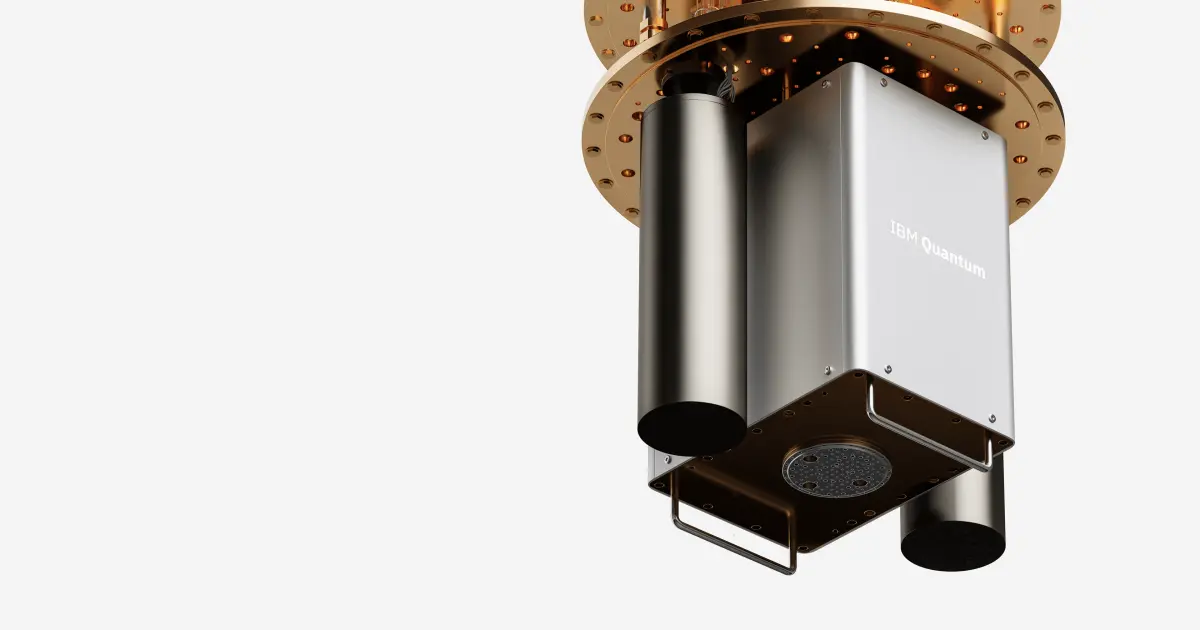
IBM, with Qedma and Algorithmiq, demonstrated quantum advantage using a 70-logical-qubit computation with verifiable results. Embedding circuits within a spacetime code reduced effective gate error by approximately 10×, distributing ancilla qubits to detect errors and improve reliability. This moves beyond statistical proxies, allowing the solution of classically challenging sampling problems and revealing quantum behavior inaccessible to classical supercomputers. Independent experiments on Quantinuum systems and using Qedma’s QESEM software supported these findings, establishing a framework for building trust in quantum computations. The Quantum Advantage Tracker, launched in 2025, monitors potential candidates and systematically compares them against classical methods. Researchers created classically hard sampling problems with T gates in encoded Clifford circuits, quickly exceeding the capabilities of leading classical simulation methods, changing how we assess quantum computation.
4. Google and MIT Cut Quantum Error Correction Overhead by Tenfold with New Design
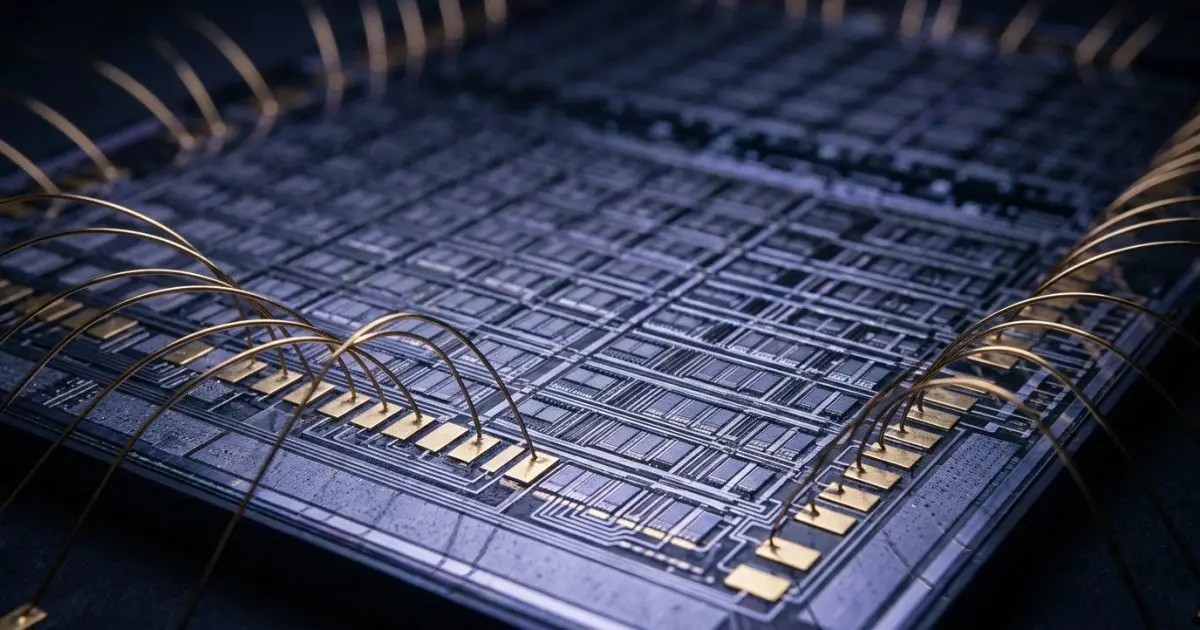
Google Quantum AI researchers, collaborating with MIT, reduced the physical qubits needed for quantum error correction by a factor of ten. They built modular hyperbolic and color codes by connecting planar modules with minimal links, differing from standard surface code designs. This approach uses a syndrome extraction system 4.5 times smaller than the code itself, enabling efficient storage and achieving a code rate of 1/16 with a distance of 22 or greater. Simulations show this modular design reduces qubit overhead by a factor of ten at a logical error rate of 10⁻¹⁰, even with increased noise between modules, and allows for efficient logical operations alongside error correction.
5. NIST Details 2035 Plan for Quantum-Resistant Encryption Standards

The National Institute of Standards and Technology (NIST) released NISTIR 8547, outlining a phased approach to updating encryption vulnerable to future quantum computers following the arrival of post-quantum cryptography standards in August 2024. The report addresses the “harvest now, decrypt later” threat and aims for a complete migration across federal systems by 2035, with high-value assets updated by 2030 and 2031. NIST recognizes organizations must prioritize updates based on system specifics and data sensitivity, supporting full transitions and hybrid approaches combining current and post-quantum methods. The National Cybersecurity Center of Excellence (NCCoE) is also developing practical tools and blueprints to aid implementation of these new standards.
6. IBM Quantum’s VGSQD Simulates Molecules with 124 Qubits

The IBM Quantum Watson Team has introduced variable-geometry sample-based quantum diagonalization (VGSQD), a new algorithm for simulating molecular reactions. VGSQD efficiently calculates molecular energy, shape, and reaction pathways by reusing data from initial calculations on different molecule structures, demonstrated with circuits utilising up to 124 qubits on a Heron r2 processor. This technique achieved high accuracy, within 0.2 kcal/mol of established benchmarks, in modelling beryllium dimer and water, and even mapped the energy path of a hydrogen exchange reaction. While VGSQD expands the possibilities for near-term quantum hardware in chemistry, the team acknowledges that further work is needed to prove its speed advantage over classical methods and to scale it to more complex molecules.
7. Intel to Acquire Company Building Full-Stack Quantum Computing Platform
Intel Corporation announced an agreement to acquire Classiq, a quantum software company. The purchase combines Classiq’s automated algorithm creation platform with Intel’s silicon spin-qubit manufacturing capabilities, aiming to deliver a complete quantum computing system. Classiq’s software simplifies quantum circuit design, allowing programmers to focus on applications instead of low-level code, a limitation that previously restricted scaling. This full-stack approach, hardware, software, and algorithm synthesis, will broaden access to quantum computing and support innovation. Intel intends to maintain Classiq’s existing integrations and ensure its software remains compatible with various qubit modalities, supporting an open and collaborative quantum software ecosystem. The transaction is pending regulatory approvals.
8. Alice & Bob Estimate 23,000 Qubits to Break RSA-2048 in Three Days

Alice & Bob calculated that a quantum computer using its cat-qubit architecture could factor the RSA-2048 encryption standard in approximately three days, requiring around 23,000 physical qubits. This estimate was lower than previous assessments of nearly 100,000 qubits in 2024 and 350,000 in 2023. The company achieved this by mapping the complete Shor’s algorithm onto a physical qubit layout, designing for specific computations rather than general hardware development. The company argued this benchmark shows institutions should begin transitioning to post-quantum cryptography, and that speed and efficient computation are as important as qubit count. The company urged increased investment in testing and implementing these new standards.
9. IQM Quantum Computers Entangles 54 Qubits on Emerald Processor
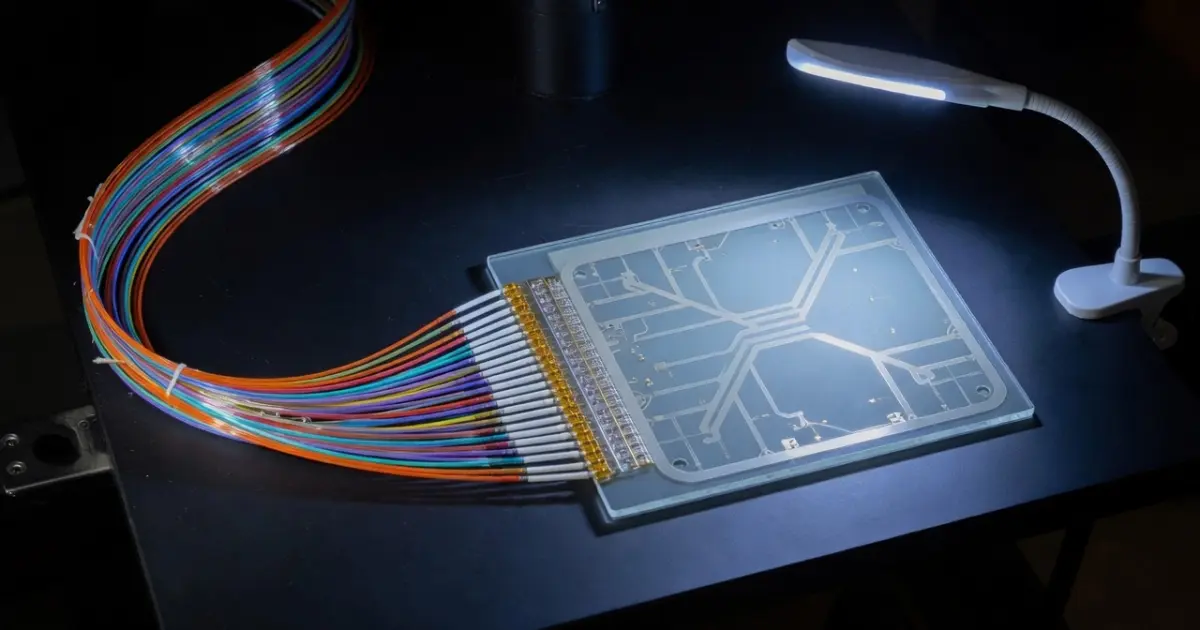
IQM Quantum Computers has fully entangled all 54 qubits on its Emerald processor simultaneously. This demonstration expands usable qubit counts beyond the typical 30 qubits used in algorithms on similar hardware, achieving a fidelity of 0.516 with error mitigation. The company accomplished this through automated state preparation and optimized gate ordering, reducing error rates by up to 50 percent after a year of development. IQM’s cloud users can now access the entire processor for single computations, enabling more complex calculations and potentially accelerating algorithm development.
10. IBM Quantum’s Broz to Discuss Security at Next Edge Alliance Launch
IBM Quantum’s Joseph Broz keynoted the Next Edge Alliance launch, an impact investing exchange. The platform, Investor Hive, uses artificial intelligence trained on the investment decisions of its founding members, prioritizing their expertise over public data. Broz’s presentation detailed how quantum technology is changing security for financial markets and private equity. This approach aims to connect accredited investors with opportunities that align financial returns with social and environmental impact, shifting how capital is allocated.




See today’s quantum computing news on Quantum Zeitgeist for the latest breakthroughs in qubits, hardware, algorithms, and industry deals.