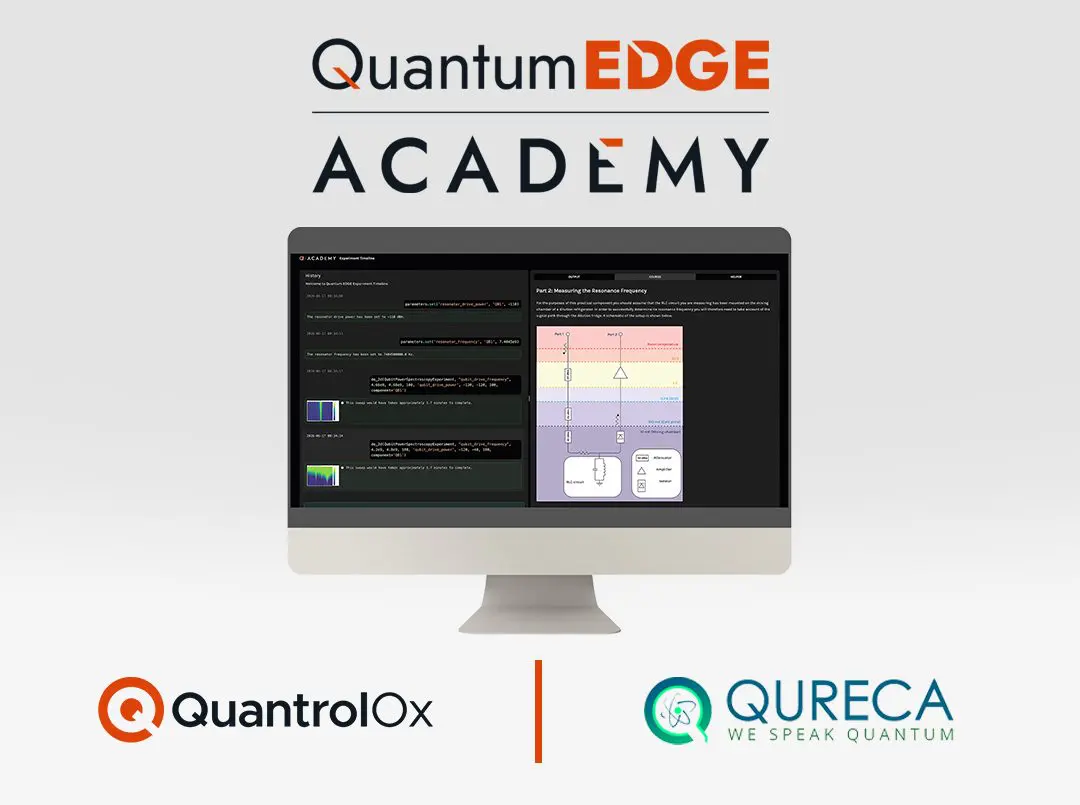
QuantrolOx and QURECA have partnered to launch Quantum EDGE Academy, an initiative designed to address the critical shortage of skilled engineers hindering the expansion of quantum technology. Industry data reveals only one qualified candidate exists for every three open quantum roles, while demand, as measured by the MIT Sloan Quantum Index Report 2025, nearly tripled in the US between 2011 and mid-2024.
“You can install the hardware in eighteen months; you cannot conjure an experienced experimentalist in eighteen months,” says Dominic Lennon, Director of Product at QuantrolOx, explaining that the Academy aims to accelerate workforce development by teaching practical skills using the same workflows employed by their engineers.
Quantum EDGE Academy Addresses Quantum Workforce Shortages
This scarcity is not a future projection, but a present constraint hindering the rapid scaling of quantum computing, prompting QuantrolOx and QURECA to collaborate on Quantum EDGE Academy. The initiative aims to bridge the gap between theoretical knowledge and the practical skills needed to operate complex quantum hardware, a deficiency identified as a national priority within the UK’s £2.5 billion National Quantum Strategy. Historically, expertise in quantum hardware has been cultivated through lengthy apprenticeships within limited research groups, a slow process incompatible with the accelerating demands of industry.
While online courses have broadened access to quantum concepts, they have not replicated the essential experience of hands-on laboratory work. Recognizing this, the Academy leverages QuantrolOx’s Quantum EDGE measurement and automation platform to provide a realistic, software-based training environment.
This approach allows learners to develop competence in operating quantum systems without requiring access to scarce and expensive physical equipment, effectively acting as a training ground for quantum engineers, the company says. The Academy’s curriculum focuses on practical skills, device fabrication, qubit measurement, and system troubleshooting, complementing existing educational programs that emphasize theoretical foundations. QURECA will distribute the Academy’s courses through its existing network, offering flexible commercial models to universities, including per-seat cohort pricing and departmental subscriptions, to facilitate widespread adoption.
“We’re delighted to be partnering with QuantrolOx on Quantum EDGE Academy. It’s a genuinely innovative approach to quantum education, giving learners real laboratory intuition without needing lab access, and exactly the kind of practical training our network has been asking for,” stated Dr. Araceli Venegas-Gomez, CEO and Founder of QURECA. The program’s courses will also carry Continuing Professional Development certification, further validating the skills acquired by participants and bolstering the quantum workforce pipeline.
You can install the hardware in eighteen months; you cannot conjure an experienced experimentalist in eighteen months. Quantum EDGE Academy is how we close that gap at the pace the industry actually needs, not by writing a training curriculum from the outside, but by teaching the exact workflows our engineers run on live hardware every day.



See today’s quantum computing news on Quantum Zeitgeist for the latest breakthroughs in qubits, hardware, algorithms, and industry deals.