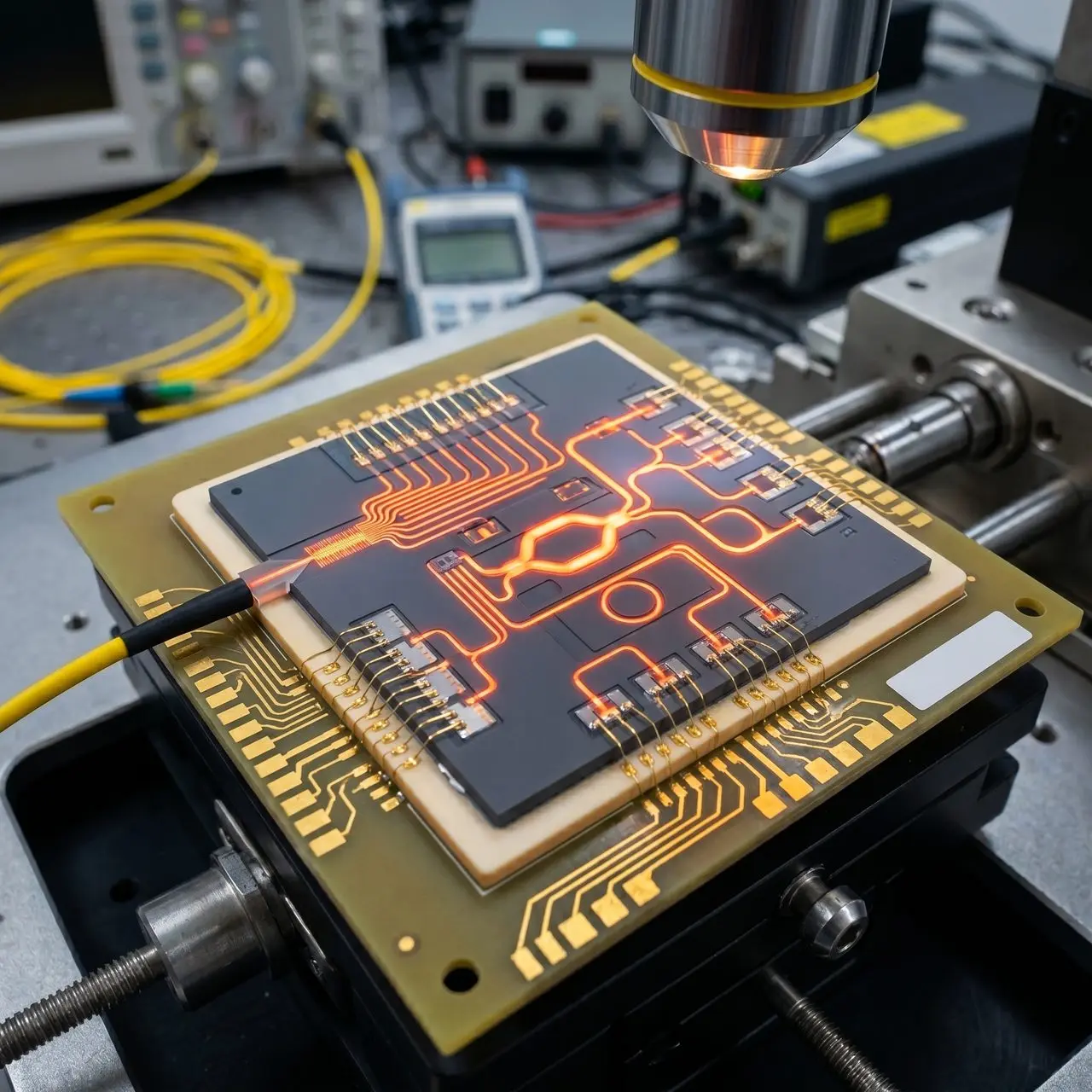
SEALSQ will demonstrate two new quantum-resistant chips and a post-quantum ASIC design concept at electronica 2026, November 10-13 in Munich, positioning the company to influence the next generation of connected products before an expected audience of over 80,000 visitors. The company’s presence at the world’s leading electronics trade fair includes a roundtable discussion with NXP and Infineon focused on industrial security.
“Electronica is where embedded decisions get made,” said Gweltas Radenac, Product Marketing Director at SEALSQ. “We are bringing the chips and the live demos to Hall C6 so manufacturers can see what a quantum-ready Root of Trust looks like before they lock their next design.”
SEALSQ Unveils Quantum-Resistant Chips and QASIC at Electronica 2026
SEALSQ will showcase a functional quantum-computer mock-up at Electronica 2026, a tangible representation of the threat its new chips are designed to mitigate. Visitors will also see a quantum-computer mock-up, silicon quantum-computing partner. The exhibit runs from November 10-13, 2026, at the Trade Fair Center Messe Munich, a key venue attracting over 80,000 visitors. The company’s new QASIC design concept represents a departure from traditional semiconductor development, according to David Fresneau, Strategic Marketing Director at IC’Alps.
“At Electronica we are showing what QASIC truly represents: not another catalog chip, but a new approach to designing trusted custom semiconductors,” he said. QASIC uses IC’Alps’ expertise in analog, digital and mixed-signal ASIC design, functional safety, and ultra-low-power architectures, along with cybersecurity technologies and post-quantum cryptographic solutions. This collaboration enables the rapid development of application-specific semiconductors optimized for demanding markets like automotive, medical, industrial and critical infrastructure, prioritizing security, resilience and performance.
The approach aims to streamline the creation of custom chips with built-in, future-proof security features. SEALSQ’s participation extends beyond the exhibit hall, with a roundtable discussion scheduled for November 11th.
The event, “Physical AI at the Edge for Industrial Security,” will feature representatives from NXP and Infineon, highlighting a collaborative effort to address security challenges in industrial applications. The company will also deliver a keynote presentation on November 13th at the Embedded Systems World Forum, focusing on simplifying the migration to post-quantum security standards through certified secure hardware, and its focus is on embedding certified secure hardware to simplify the transition to post-quantum security standards for manufacturers.
At Electronica we are showing what QASIC truly represents: not another catalog chip, but a new approach to designing trusted custom semiconductors.
David Fresneau, Strategic Marketing Director at IC’Alps



See today’s quantum computing news on Quantum Zeitgeist for the latest breakthroughs in qubits, hardware, algorithms, and industry deals.