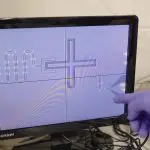
Infineon Technologies AG and ZuriQ AG are collaborating to scale quantum computing hardware, building on ZuriQ’s demonstration of a 3×3 array of nine individually controlled ions, the largest two-dimensional array of its kind achieved to date, the company says. The partnership unites ZuriQ’s trapped-ion quantum computing architecture with Infineon’s semiconductor manufacturing expertise, aiming for larger qubit counts in future processors.
“Advancing quantum computing toward commercial impact will require close collaboration between quantum innovators and industrial technology leaders,” says Pavel Hrmo, co-founder and CEO of ZuriQ, as the companies seek to translate technological progress into scalable, manufacturable quantum hardware.
ZuriQ’s 2D Penning Micro-Trap Architecture Enables Scalable Quantum Chips
ZuriQ’s Penning micro-trap architecture circumvents limitations of conventional trapped-ion systems by using electric and magnetic fields to directly move ions across the chip, eliminating the need for complex junction structures that hinder scalability. This two-dimensional design allows for easier accommodation of larger qubit arrays, a critical step toward building practical quantum processors. Infineon Technologies AG’s role extends beyond fabrication of ZuriQ’s designs; the semiconductor manufacturer will integrate its advanced photonics and semiconductor processes to accelerate the transition from laboratory demonstration to real-world applications, according to the company.
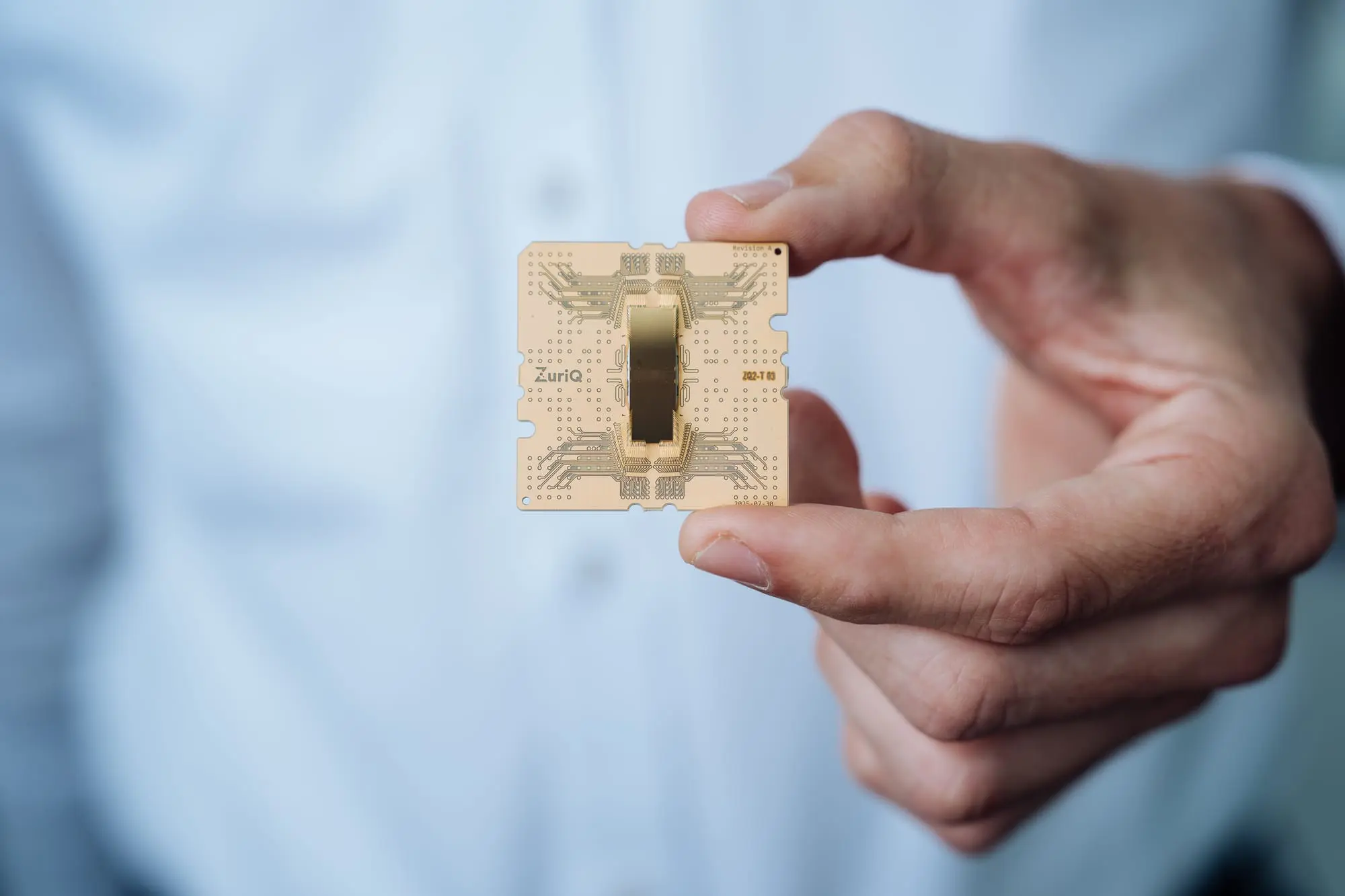
“With our expertise in semiconductor manufacturing, integration and advanced packaging, we are enabling the next generation of trapped-ion quantum processing units,” said Clemens Rössler, Senior Director and Head of Quantum Processing Units at Infineon. This integration is intended to address a key bottleneck in quantum computing development: the difficulty of translating promising physics into robust, mass-producible hardware.
Fault tolerance is essential for building reliable quantum computers capable of tackling complex problems beyond the reach of classical systems. This partnership between a quantum computing start-up, founded in 2024 as a spin-off and a global semiconductor leader is intended to strengthen Europe’s position in the strategically important quantum ecosystem.
The combined expertise is expected to accelerate innovation across sectors including medicine, logistics, materials science and artificial intelligence, potentially unlocking solutions to some of the world’s most challenging computational problems. The focus on manufacturability, coupled with ZuriQ’s architectural innovation, suggests a deliberate strategy to move beyond purely academic demonstrations and toward commercially viable quantum systems.
Advancing quantum computing toward commercial impact will require close collaboration between quantum innovators and industrial technology leaders.
Pavel Hrmo, co-founder and CEO of ZuriQ


See today’s quantum computing news on Quantum Zeitgeist for the latest breakthroughs in qubits, hardware, algorithms, and industry deals.