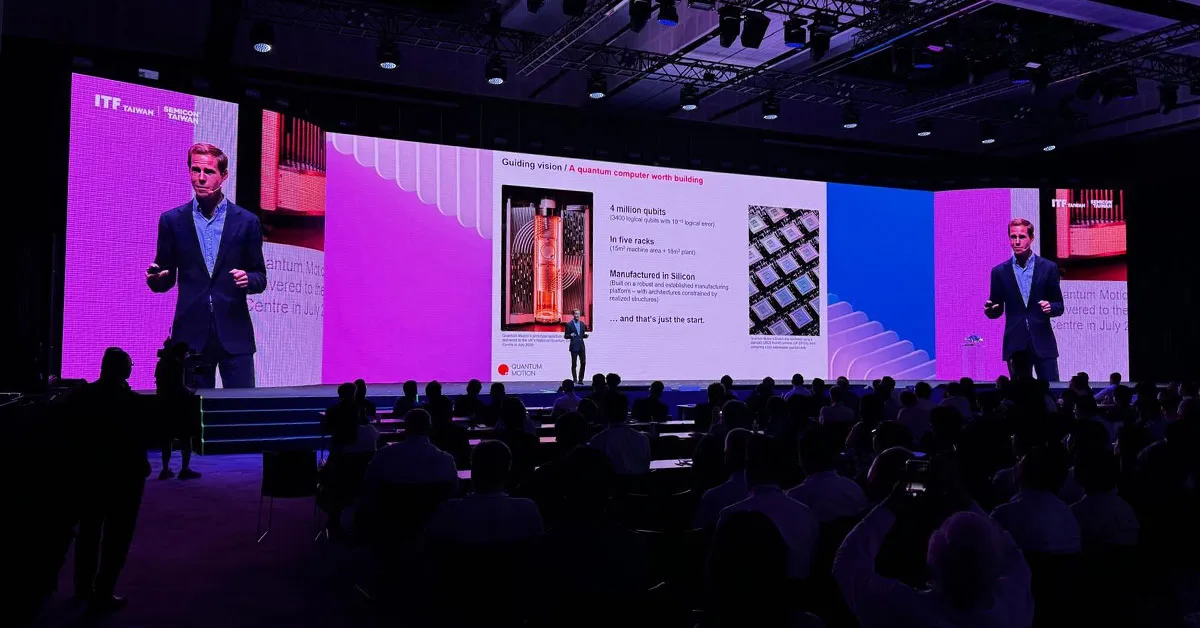
Quantum Motion has secured further investment to advance silicon-based quantum computing, aiming for a 100-fold cost reduction compared to many competing architectures currently priced upwards of $100 million per machine, the company says. The series C funding round, led by DCVC and Kembara, will support custom silicon development and expansion, including a newly opened US lab in Maryland, as well as participation in DARPA’s Quantum Benchmarking Initiative Stage B. “Silicon technology transformed classical computing and it remains the only platform capable of delivering the density and scale required for practical quantum utility,” said James Palles-Dimmock, CEO of Quantum Motion, confirming the company’s focus on using standard silicon CMOS fabrication.
Series C Funding Accelerates Silicon Quantum Hardware Scale-Up
Quantum Motion’s recent funding secures a path toward significantly lower costs for quantum hardware, aiming for single-digit millions per machine, a stark contrast to the $100 million price tag currently associated with many competing architectures. The company’s strategy uses established CMOS fabrication technology, the same process used to manufacture conventional computer chips, to avoid the bottlenecks of bespoke hardware production and accelerate the delivery of commercially viable quantum systems. The expanded investment also facilitates international growth, most notably through the opening of a US lab in Maryland, establishing a strategic presence within the American quantum computing ecosystem.
Participation in stage B of DARPA’s Quantum Benchmarking Initiative (QBI) further validates Quantum Motion’s approach, positioning the company within a significant national effort to advance quantum technologies, according to the company. “By tapping into existing global semiconductor supply chains, we are bypassing the cost bottlenecks of bespoke manufacturing and bringing commercially viable quantum systems to market faster.” Imec. ventures, Lansdowne Partners, Sony Innovation Fund, S3 Ventures, and Inkef also contributed to the funding round, signaling broad industry confidence in Quantum Motion’s silicon spin-based approach, the firm reports.
Olivier Rousseaux, Head of imec. ventures, explained that their investment extends beyond capital, representing a commitment to co-developing disruptive silicon innovation and providing deep technical support. The company’s focus on industrial scalability is a key differentiator, as it aims to deploy systems into standard data-centre environments with a 100-fold reduction in space and a 1000-fold reduction in energy consumption compared to alternative quantum computing methods.
Peter Davies, Senior Partner and Head of Developed Markets at Lansdowne Partners, highlighted the strong progress Quantum Motion has made in both performance and manufacturing, expressing enthusiasm for backing the company through its next stages of development. Sony Innovation Fund’s investment reflects a belief in Quantum Motion’s pragmatic, engineering-led approach to using established semiconductor manufacturing, while S3 Ventures emphasized the company’s ability to execute and scale where others struggle, the company states.
“While alternative architectures rely on bespoke hardware costing upwards of $100 million per machine, Quantum Motion uses existing semiconductor infrastructure to drive costs down to single-digit millions at volume,” said Aaron Perman, General Partner at S3 Ventures. “As Andy Kessler famously noted, ‘CMOS always wins.’ Quantum Motion’s progress proves that silicon spin is the most scalable, cost-effective path to practical quantum utility.” Frank Lansink, General Partner at Inkef, added that “Realising useful quantum computing isn’t just a physics problem, it’s a manufacturing problem.
Quantum Motion is the only company tackling scale from within a semiconductor supply chain that already operates globally. We’ve backed their contrarian vision since 2020, and their recent milestones prove that the future of quantum is being built on standard silicon.
While alternative architectures rely on bespoke hardware costing upwards of $100 million per machine, Quantum Motion leverages existing semiconductor infrastructure to drive costs down to single-digit millions at volume. As Andy Kessler famously noted, ‘CMOS always wins.’ Quantum Motion’s progress proves that silicon spin is the most scalable, cost-effective path to practical quantum utility.



See today’s quantum computing news on Quantum Zeitgeist for the latest breakthroughs in qubits, hardware, algorithms, and industry deals.