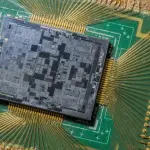
Qunnect’s Qu-MEM has been recognized by TIME as one of the Best Inventions of 2026, honored for its role in establishing the foundations for quantum data centers and scalable networks. Developed initially at Stony Brook University and brought to market in 2021, the Qu-MEM operates at room temperature, a key differentiator from many competing quantum memory technologies.
“Category-defining technologies often start as a bet, and ours was that entanglement-based quantum networks can operate outside and on real-world fiber,” said Noel Goddard, CEO of Qunnect. Currently, Qunnect hardware supports live quantum networks in New York City, Berlin and Albuquerque.
Qu-MEM Enables Scalable Quantum Networks and Data Centers
The absence of cryogenic cooling sets Qunnect’s Qu-MEM apart from many competing quantum memory designs, simplifying integration into existing data center infrastructure and reducing operational costs. Unlike systems requiring complex and expensive refrigeration or vacuum environments, Qu-MEM operates at room temperature, fitting within a standard server rack for easier deployment and scalability. This design choice addresses a critical barrier to widespread adoption of quantum networking technologies, making them more accessible to a broader range of users and applications.
Qunnect’s technology is not confined to laboratory demonstrations; the company’s hardware currently supports live quantum networks in three cities, New York City through GothamQ, Berlin via BearlinQ with Deutsche Telekom’s T-Labs and Albuquerque with the ABQ-Net, the first open-access quantum network in the United States, the company says. These deployments use existing telecom fiber networks, demonstrating the practical viability of entanglement-based quantum communication outside of controlled research settings.
Using established infrastructure significantly lowers the hurdles for building and expanding quantum networks, accelerating the path toward a future quantum internet. The development of Qu-MEM originated in the labs of Stony Brook University, where Mael Flament and Mehdi Namazi first conceived of the quantum memory as graduate students before founding Qunnect in 2018. Bringing this technology to market in 2021 was a key step in realizing the potential of scalable quantum communications, addressing the need for reliable storage and retrieval of quantum information.
“Qu-MEM was our first commercial proofpoint in that journey and we couldn’t be prouder that it is recognized today as one of the industry’s best inventions,” said Noel Goddard, CEO of Qunnect, reflecting on the significance of the TIME recognition. The company’s Carina platform further builds on this foundation, supporting the development of quantum security applications and networks for distributed quantum computing and sensing.
Category-defining technologies often start as a bet, and ours was that entanglement-based quantum networks can operate outside of a lab and on real-world fiber.
Noel Goddard, CEO of Qunnect



See today’s quantum computing news on Quantum Zeitgeist for the latest breakthroughs in qubits, hardware, algorithms, and industry deals.