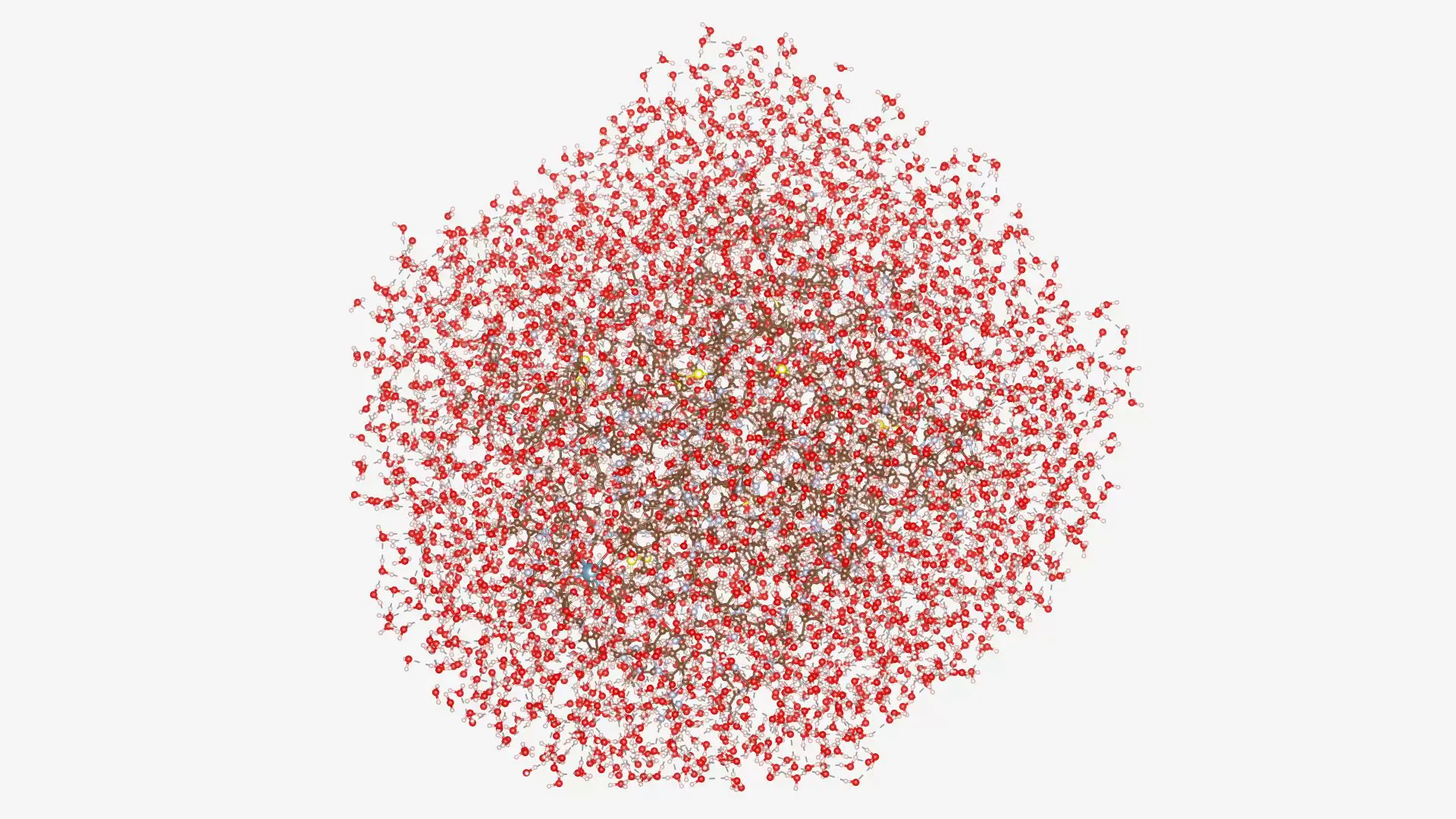
A research collaboration between Cleveland Clinic, RIKEN, and IBM has reached a new benchmark in molecular modeling, simulating a protein containing 12,635 atoms, the largest ever achieved using quantum computers, the company says. The team’s success, detailed in work initially published in May 2026, combines the power of quantum and classical computing in a framework they call quantum-centric supercomputing, with calculations running on IBM Quantum Heron processors at both Cleveland Clinic and RIKEN, alongside Japan’s Fugaku and Miyabi-G supercomputers.
To achieve these results, the team first scaled their method roughly 40 times while also achieving 210 times improvement in accuracy, and then advanced the work further. This achievement has earned the team a place as a finalist for the 2026 ACM Gordon Bell Prize, recognizing outstanding innovation in high-performance computing, and targets improvements in drug discovery by more accurately computing atomic energies during biological processes. The team validated the workflow on JHPC-quantum GPU supercomputer “ROQUO,” RIKEN’s newest system, eliminating the need for complex manual operations and data transfers.
Quantum-Classical Methods Simulate 12,635-Atom Protein
The simulation achieved a 210-fold improvement in accuracy, accomplished less than one year after the team first scaled their method roughly 40 times. This leap in precision stems from refinements to embedded wavefunction methods at Cleveland Clinic, adapted to address the specific challenges of this larger system. The researchers coupled these advancements with sample-based quantum diagonalization developed jointly by IBM and RIKEN, a technique previously highlighted on the cover of Science Advances.
This combined approach, termed quantum-centric supercomputing, uses the strengths of both computational paradigms to tackle previously intractable problems in molecular modeling. RIKEN’s commitment to hybrid quantum-classical computing is underscored by its strategic partnership with Singapore, focused on integrating supercomputing resources with quantum processors. This collaboration builds upon RIKEN’s existing partnerships with Fujitsu, NVIDIA, and IBM Quantum, all aimed at accelerating the development of practical quantum technologies.
In April 2025, RIKEN and Fujitsu launched a 256-qubit superconducting computer, extending their partnership through March 2029, which began in 2022, to broaden access for companies and research institutions. Further investment came in November 2025, when NVIDIA provided 2,140 Blackwell GB200 GPUs for RIKEN, with 540 dedicated to quantum research and operational by spring 2026. These resources are critical for supporting complex simulations like the recent protein model.
“Project for Research and Development of Enhanced Infrastructures for Post 5G Information and Communications Systems (JPNP20017),” and “Research and Development of Quantum-Supercomputers Hybrid Platform for Exploration of Uncharted Computable Capabilities” provided key funding for this effort. The ability to simulate larger, more complex proteins with greater accuracy promises to accelerate the identification of promising drug candidates and reduce the time and cost associated with bringing new therapies to market.
IBM Heron Processors & Supercomputers Enable Molecular Calculations
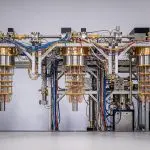
RIKEN’s Kobe facility houses this combined system, established in 2025 with the deployment of a 156-qubit Heron processor directly connected to Fugaku, marking Japan’s first quantum-HPC integrated environment. This configuration allowed researchers to run nearly 6,000 quantum operations, utilizing up to 94 qubits, within critical sections of the molecular modeling process. Further refinements to the computational workflow, published in September, focused on enhancing the precision of binding energy calculations, a key metric for predicting molecular interactions.
This advancement is particularly notable given RIKEN’s broader commitment to hybrid computing, building on a partnership with Fujitsu launched in 2022 and extended through March 2029, which delivered a 256-qubit superconducting computer in April 2025, according to the company. RIKEN also maintains strategic partnerships with Singapore, aiming to combine supercomputing and quantum expertise for future platforms. The orchestration of CPUs, GPUs, and quantum processing units minimized errors and reduced computational overhead, pushing the boundaries of quantum-centric supercomputing.
RIKEN and Q-CTRL successfully simulated complex open system dynamics, reducing circuit depth by an order of magnitude, as reported on July 25, 2026. This work builds on RIKEN’s 12 families of patents and seven publications in the last twelve months, solidifying its position as Japan’s largest comprehensive research institution and a leader in quantum computing innovation.
Improved Accuracy & Automation Validated on ROQUO System
Achieving further gains in computational precision, specifically in calculating the binding energies of molecular systems, a critical factor in predicting how molecules interact and a key element in drug discovery, was enabled by the team’s recent refinements. These energies, reflecting the strength of molecular bonds, were computed with increased accuracy, moving researchers closer to reliable predictions of drug-target interactions. This achievement builds on a collaborative framework known as quantum-centric supercomputing, uniting the strengths of both quantum and classical computational methods.
Calculations used up to 94 qubits to perform nearly 6,000 quantum operations, essential for achieving the reported accuracy, while Fugaku and Miyabi-G supercomputers reassembled the results into complete molecular representations. The integration of these resources allowed for a comprehensive analysis, exceeding the capabilities of either system alone. The award, presented at the International Conference for High-Performance Computing, Networking, Storage, and Analysis (SC26) in Chicago, November 15-20, 2026, acknowledges outstanding achievement in the field.
RIKEN’s commitment to hybrid computing is further underscored by strategic partnerships with institutions like Singapore, Fujitsu, NVIDIA, and IBM Quantum, solidifying its position as a leader in quantum research and development. The team’s work demonstrates a clear path toward increasingly accurate molecular calculations, ultimately aiding researchers in the design and discovery of new medicines.