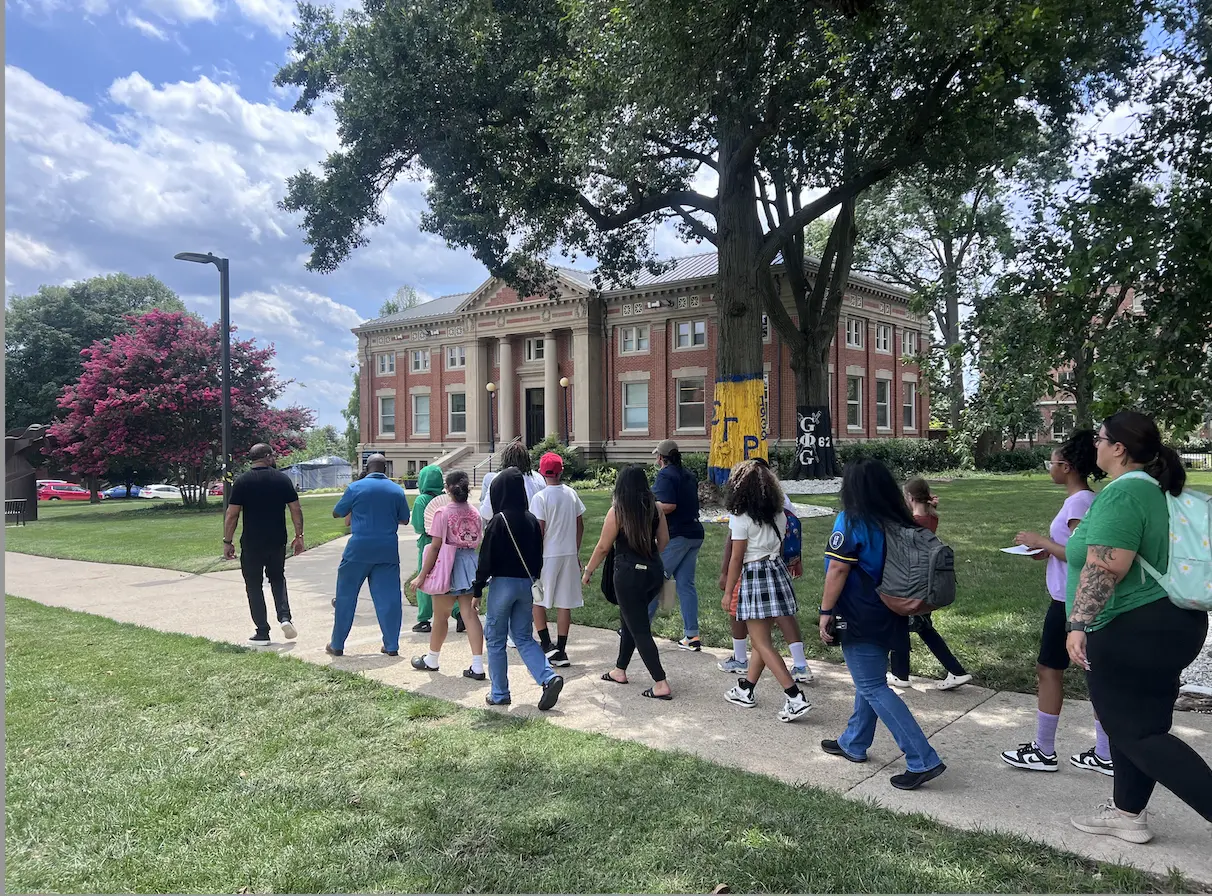
Rising first through seventh grade students explored quantum science and advanced mathematics this summer through the Quantum Biology Lab’s Quantum Math Camp, culminating in a full-day trip to Howard University. Designed to support STEM interest in young learners, particularly Black and Brown students, the camp offered hands-on activities like building edible models of quantum entanglement and observing shape memory metals.
Dr. James Murray, Intern Coordinator and K-12 Liaison for the QBL, recalls that “If I had been here as an undergrad,” referring to Howard University, “maybe I would have done something different,” a sentiment driving his vision for early STEM exposure. The program also reshaped teaching approaches, with educator Corinne Zacharia noting the camp focuses on students already excelling, allowing them “the time and space to soar.”
Dr. Murray’s Vision: Addressing STEM Representation Gaps
A visit to Howard University after completing his doctorate sparked a new direction for Dr. Murray. Witnessing Black excellence in STEM fields on campus prompted a vision for increased representation, ultimately leading to the implementation of the Quantum Math Camp. This experience contrasted sharply with his undergraduate years, where he lacked peers from similar backgrounds in STEM disciplines. The camp’s curriculum extends beyond typical elementary school fare, introducing rising first through seventh grade students to the fundamentals of quantum science alongside advanced mathematics.
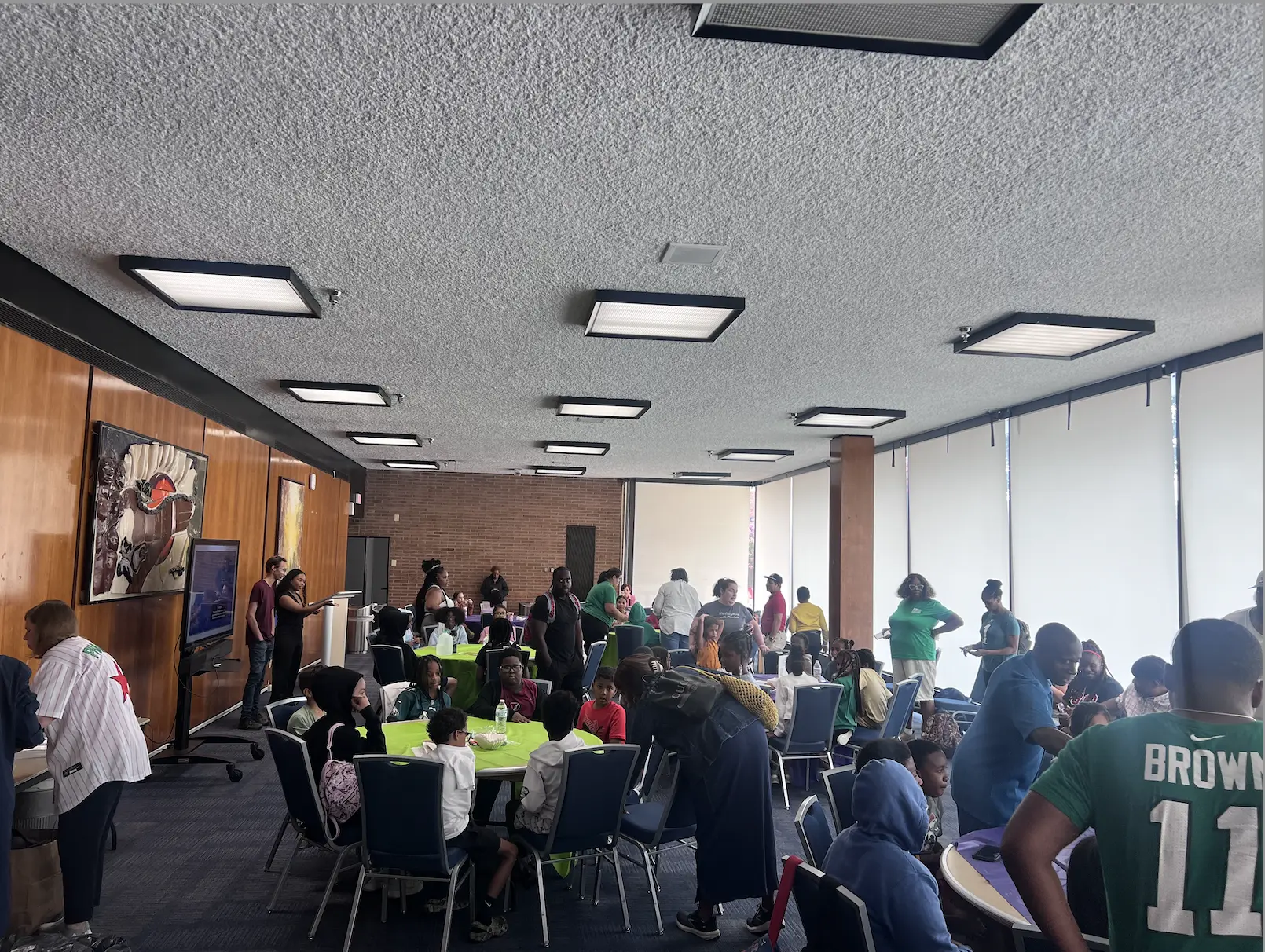
Educators are intentionally shifting their focus to nurture already-gifted students, a departure from traditional remediation-centered approaches. “In the classroom, so much attention goes to those who are struggling,” explained Corinne Zacharia, a returning teacher. “This camp flips that; it gives these high-flyers the time and space to soar.” Zacharia noted the program allows for deeper exploration of core concepts, asking “Why does a negative times a negative equal a positive?” rather than simply memorizing the rule.
The program’s impact extends beyond academic enrichment. A full-day trip to Howard University provides students with a tangible vision of future possibilities. “For many of my students in the Feltonville neighborhood of Philadelphia, college is just not talked about in the way it is in other places,” shared Zacharia. The Quantum Biology Lab, with support from the HBCU Quantum Center, aims to expand the program to serve up to 200 students annually, providing sustained support from first through seventh grade.
In the classroom, so much attention goes to those who are struggling. This camp flips that – it gives these high-flyers the time and space to soar.
Corinne Zacharia, Returning Teacher
Quantum Math Camp Curriculum: Exploring Physics & Quantum Phenomena
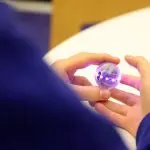
The Quantum Biology Lab’s approach to STEM education extends beyond traditional curricula, incorporating hands-on experiences designed to illuminate complex scientific principles for young learners. During a recent full-day excursion to Howard University, students engaged in experiments demonstrating phenomena like polarized light, the unique properties of kinetic sand and the behavior of shape memory metals, activities intended to make abstract concepts tangible and spark curiosity.
These explorations weren’t merely demonstrations; they were designed to encourage a deeper understanding of the physical world, moving beyond rote memorization to experiential learning. Each year, the curriculum explores increasingly complex topics, such as magnetoreception and photosynthesis, with plans to introduce superradiance in protein fibers next year.
For many of my students in the Feltonville neighborhood of Philadelphia, college is just not talked about in the way it is in other places. But here, they see it. They meet students who look like them. And they start to imagine a future beyond high school.
Rania Jones’ Journey: From Biology to Medical Physics
Initially intending to pursue a career in writing, Jones’ academic path dramatically shifted following the loss of both grandmothers to strokes within a three-month period, prompting a search for a way to directly impact lives through medicine. She first applied to Howard University as a biology major, not with a defined career goal, but with a desire for higher education, even briefly considering marine biology due to an interest in nature documentaries.
This initial uncertainty gradually resolved through practical experience and a renewed application to the Quantum Biology Lab, ultimately leading her to medical physics, a field she hadn’t envisioned during her undergraduate studies. Jones’ first attempt to join the Quantum Biology Lab proved unsuccessful, an experience she described as “an ego death,” but rather than deterring her, it motivated her to proactively gain experience throughout that summer.
She secured internships, including one at a forensic science lab where she submitted her own DNA for testing, an experience she recalled as both “wild cool” and unsettling. This commitment to building her resume proved important when she reapplied, successfully gaining acceptance and setting the stage for her current pursuit of a degree in medical physics.
Now a Howard graduate student, Jones’ work focuses on applying physics principles to medical challenges, allowing her to directly contribute to patient care, a goal she articulated simply: “I get to save lives now.” She emphasizes the importance of embracing opportunities, advising students to “Say yes. Say yes to everything.”
So many of our students are rule-memorizers, and they’re great at it. But here, we dig deeper. Why does a negative times a negative equal a positive? That’s something we have time to explore.


See today’s quantum computing news on Quantum Zeitgeist for the latest breakthroughs in qubits, hardware, algorithms, and industry deals.