Approximately 978,000 GPS jamming events were recorded globally in the first quarter of 2026, with 98% concentrated in the Middle East and impacting over 1,100 vessels; in response, Q-CTRL has demonstrated the world’s first GPS-free quantum gravimetric navigation system in a maritime field trial off Australia’s East Coast, the company says. The company achieved one nautical mile positioning accuracy using its new Ironstone Opal system, which detects the Earth’s geophysical signatures to deliver GPS-like positioning without external radio signals.
“Gravity sensing and map matching is the only passive Alt-Nav technology that is global in extent and is impossible to jam or to spoof,” says Q-CTRL, positioning the technology as a uniquely resilient solution for increasingly vulnerable maritime operations.
Ironstone Opal: GPS-Free Quantum Gravimetric Navigation Demonstrated at Sea
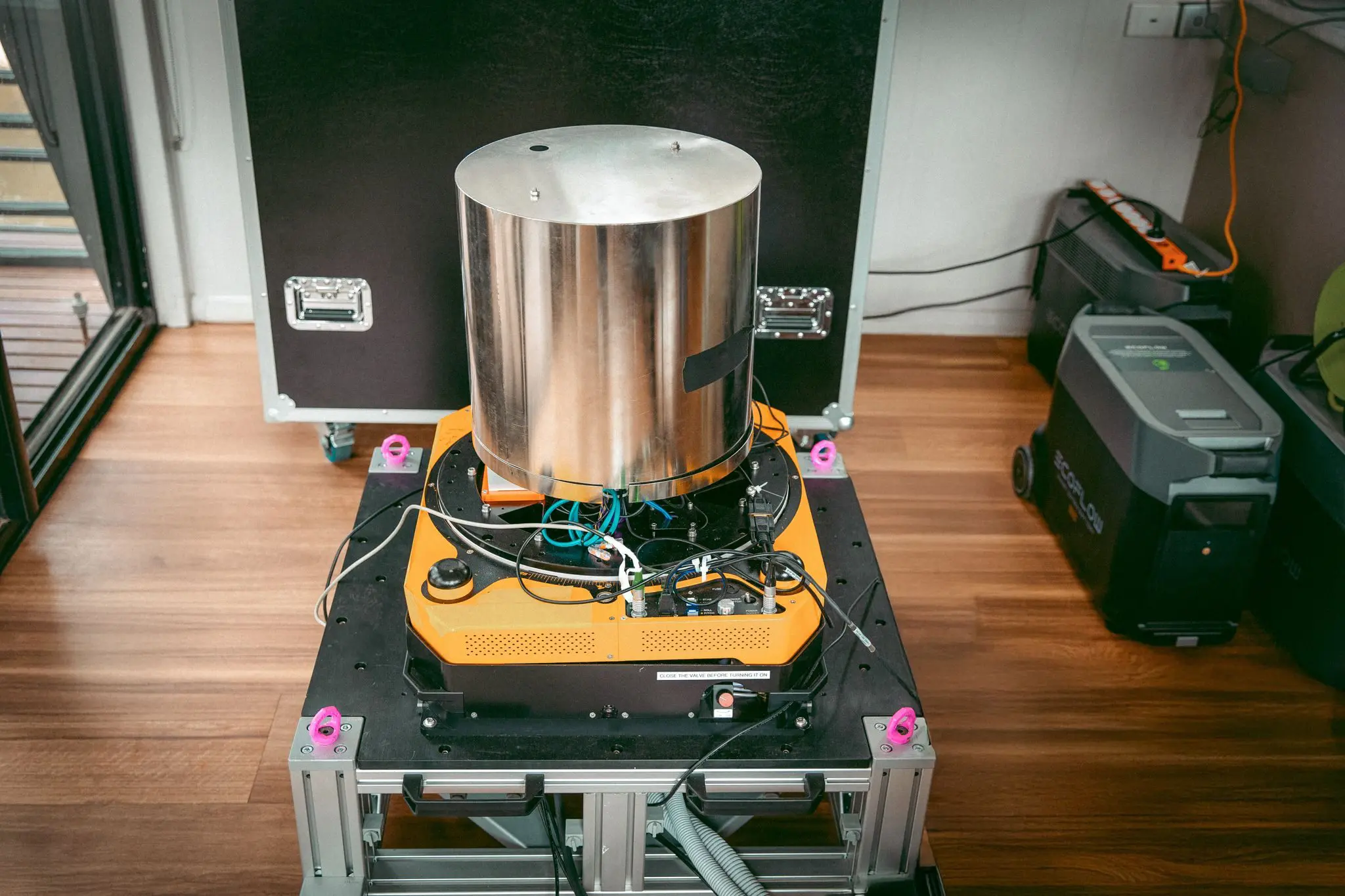
Q-CTRL demonstrated one nautical mile positioning accuracy during maritime trials, achieving GPS-free navigation through a novel quantum gravimetric system. The company’s Ironstone Opal system, tested in the Coral Sea off Australia’s East Coast, autonomously mapped gravity and established position without reliance on satellite signals, a feat previously unattained in open demonstration, according to Q-CTRL. This demonstrated resilience positions Ironstone Opal as a potential solution to these growing threats.
The core of this new navigation method involves detecting the Earth’s geophysical signatures, a process Q-CTRL terms “GravNav.” This system utilizes a quantum sensor to detect subtle variations in Earth’s gravity, effectively creating a map based on these imperceptible variations. Building upon their existing “MagNav” system, which uses magnetic fields for similar positioning, quantum gravimetric navigation is particularly suited for maritime applications due to the greater availability of detailed gravity maps at sea.
Q-CTRL’s proprietary software plays a critical role, stabilizing the quantum sensor to function reliably even in rough seas without requiring specialized motion stabilization or frequent recalibration; the system was reportedly installed in a passenger cabin and operated autonomously. This breakthrough isn’t simply about replacing GPS, but enhancing existing inertial navigation systems with a correction that improves performance and allows for precise positioning regardless of mission duration.
Jason Ralph, Professor of Electrical Engineering and Electronics at the University of Liverpool, said, “The presence of malicious interference to GNSS signals via jamming and spoofing attacks means that we need reliable alternatives that cannot be manipulated by external sources.” Michael J. Biercuk, Q-CTRL’s CEO and Founder, stated, “Q-CTRL is proud to show the world again that quantum technology can transform real defense missions today.”
Adversarial investment in GPS jamming and spoofing capabilities has made assured positioning, navigation, and timing a warfighting necessity, not a convenience.
Quantum “GravNav” Leverages Gravity Mapping for Positioning Accuracy
A surge in electronic warfare prompted Q-CTRL to demonstrate a functional alternative to satellite-based navigation, successfully piloting a vessel in the Coral Sea using a quantum gravimeter and proprietary software. This new approach, termed “GravNav,” relies on precisely measuring subtle variations in Earth’s gravitational field. Unlike GPS, which transmits signals susceptible to jamming and spoofing, GravNav detects the planet’s geophysical signatures, creating a map against which the quantum sensor can determine location. The system’s ability to function without external signals positions it as a uniquely resilient navigation solution, impervious to interference.
This contrasts with other alternative navigation systems, which often have limitations in range, accuracy, or susceptibility to interference. Lieutenant General Steve Sklenka notes that “adversarial investment in GPS jamming and spoofing capabilities has made assured positioning, navigation, and timing a warfighting necessity, not a convenience.” Q-CTRL is currently collaborating with defense organizations, including DARPA, the U.S. Defense Innovation Unit, and AUKUS partners, to integrate this technology into future defense strategies.
The company’s success builds on earlier achievements, including a demonstration of GNSS-free MagNav in 2025 that outperformed a high-end conventional GPS alternative by up to 100 times, solidifying their position as a leader in quantum sensing for real-world applications.