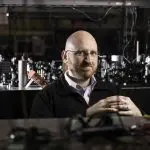
CSIRO researchers have developed two field-ready Quantum Light Sources as part of a Defence Science and Technology Group project designed to secure timing signals in environments where GPS and other Global Navigation Satellite Systems (GNSS) are disrupted. These quantum-enabled devices generate entangled photons for ground-to-satellite time transfer, creating a signal highly sensitive to interference and allowing detection of both jamming, blocking signals, and more sophisticated spoofing attacks that transmit false information. “This work is a significant milestone in the development of quantum-secure time transfer in Australia,” stated CSIRO Technical Lead, Matt Broome. Precise timing from GNSS underpins not only defence operations, but also critical civilian infrastructure including power grids, finance, transport, and emergency services, making signal resilience a growing global concern.
Entangled Photons Enable Secure Ground-to-Satellite Timing
These are not theoretical prototypes, but practical devices designed to maintain secure timing even when conventional Global Navigation Satellite Systems (GNSS) signals are compromised, a vulnerability increasingly exploited through jamming and spoofing. The CSIRO’s approach centers on generating entangled photons for ground-to-satellite time transfer, a method that introduces a unique layer of security. Unlike traditional signals, this quantum-enabled timing signal is highly sensitive to interference, allowing for the immediate detection of any tampering attempts; users can then seamlessly switch to an alternate channel, mitigating the impact of attacks. The team initially collaborated with Heriot-Watt University to transition a laboratory design into a field-deployable system capable of maintaining quantum correlations over vast distances, according to CSIRO.
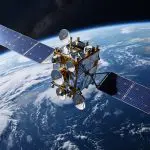
This entanglement distribution relies on a fundamental principle of quantum physics: two photons become linked such that any change to one is instantly reflected in the other, regardless of the distance separating them, even hundreds of kilometers when one photon is sent to an orbiting satellite. CSIRO explained that this sensitivity means any interception or manipulation of the quantum state immediately reveals the disruption. “With this work, CSIRO has developed specialised capability, which puts Australia on the path to a more resilient future in global positioning technology,” Broome added, highlighting the long-term implications of this technology for both defence and civilian applications.
So, if someone were to intercept or tamper with the signal, the quantum state changes and the disruption can be detected instantly – enabling the user to switch to a different channel, CSIRO explained.
CSIRO
The increasing fragility of global navigation satellite systems (GNSS) is rapidly accelerating investment in quantum technologies designed to ensure resilient timing signals, particularly for critical infrastructure and defense applications. While GPS remains the most widely known GNSS, dependence on these satellite constellations, which deliver time-stamped signals underpinning everything from financial transactions to emergency services, creates a single point of failure increasingly exploited by both accidental interference and deliberate attacks. Jamming, which blocks signals, and the more sophisticated technique of spoofing, transmitting false signals, are no longer theoretical risks; reports indicate GNSS disruption is occurring globally, even during acts of war. These devices aim for a fundamentally different approach to signal security, rather than simply encryption. This capability stems from quantum entanglement, where linked photons maintain a connection even over vast distances, with one remaining on Earth while its partner is transmitted to an orbiting satellite hundreds of kilometers away. CSIRO claims this entanglement distribution process provides a link, continuously verifying signal integrity.
“This work is a significant milestone in the development of quantum-secure time transfer in Australia.


See today’s quantum computing news on Quantum Zeitgeist for the latest breakthroughs in qubits, hardware, algorithms, and industry deals.