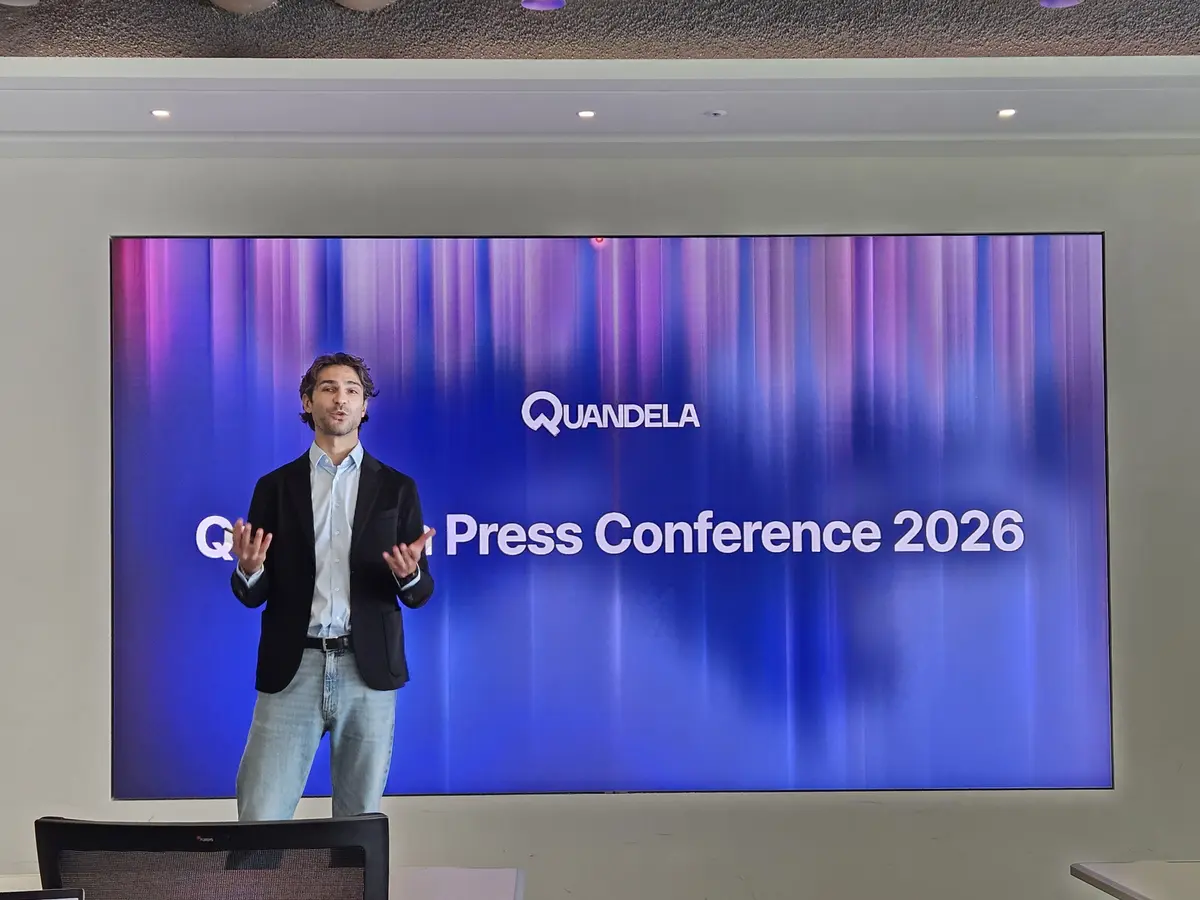
Quandela, a French firm building quantum computers on single photons, intends to identify Korean partners within two years to advance chip manufacturing and system integration, the company says. Chief executive Niccolo Somaschi outlined the strategy at a press conference in Seoul, emphasizing a need for semiconductor-grade precision to scale performance. “Combining Quandela’s quantum computing expertise with Korea’s semiconductor manufacturing technology would be a strong fit,” Somaschi said, naming Samsung, SK hynix and LG Innotek as potential collaborators in a move towards hybrid quantum-classical computing infrastructure.
Photonic Quantum Chips: Quandela’s Korean Partnership Strategy
This focused approach diverges from broader partnership explorations, signalling a clear intent to integrate with existing industry leaders rather than build independent manufacturing capacity. The company believes this collaboration is essential for scaling performance and achieving long-term viability in the quantum computing market, a sector increasingly reliant on precision engineering at the nanoscale, according to Quandela.
The company’s strategy extends beyond simply outsourcing production; it envisions a deep technology cooperation spanning quantum chip manufacturing, system integration, demonstration and ultimately, real-world operation of quantum computers. “Over the next two years, we will identify partners in Korea, review whether photonic modules are suitable for mass production, and reflect the results in our technology roadmap toward FTQC,” said Niccolo Somaschi, chief executive of Quandela, outlining a two-year timeframe for establishing these important relationships.
This timeline emphasises the urgency with which Quandela views the need for Korean manufacturing expertise, particularly as it develops its path toward fault-tolerant quantum computing. Quandela’s recent work integrating quantum processing units with Nvidia’s graphics processing units highlights a shift towards hybrid quantum-classical computing architectures, a move that demands tight integration between quantum processors and existing computational infrastructure. This integration requires semiconductor-grade precision manufacturing and inspection capabilities, areas where Korean companies possess significant advantages.
Founded in 2017 and headquartered in Massy, France, Quandela has quickly established itself as a key player in photonic quantum computing, building systems that use single photons as qubits. With over €107 million in funding, the company is now expanding its global footprint, and the Korean strategy is central to its ambitions. The company’s decision to establish a presence in Korea also reflects a broader trend of international collaboration in quantum technology.
A partnership with Quanova advances quantum computing skills in Vietnam, and with Mekdam Holding Group to bring photonic quantum computing to Gulf markets. A partnership with CMC Microsystems expands its Canadian presence, offering access to its technology through the Quantum Computing Sandbox. These strategic alliances, combined with the recent establishment of a Quandela Hub at KAIST (Korea Advanced Institute of Science and Technology) for education and research, demonstrate a commitment to building a global ecosystem around its photonic quantum computing platform, the firm reports.
Beyond manufacturing, Quandela is also exploring opportunities for collaboration within Korea’s burgeoning quantum clusters. Somaschi indicated a desire to engage with a wider network of researchers, developers and potential end-users. This approach, encompassing both manufacturing and research, aims to create a self-sustaining quantum computing ecosystem in Korea.
The company’s work with Mila, the Quebec AI Institute, on quantum machine learning research, and with the Seoul Metropolitan Government on a quantum technology development centre, further illustrates this commitment to supporting innovation through collaborative partnerships. Quandela’s technology uses photonic qubits, using the unique properties of light to encode and process quantum information. This approach offers several advantages, including the potential for room-temperature operation and compatibility with existing fiber optic networks.
The company’s open-source Perceval software and courses further democratize access to quantum computing, allowing researchers and developers to experiment with its technology. Integration of Welinq quantum memory with Quandela’s platform, completed in 2024, demonstrates a commitment to pushing the boundaries of quantum information processing, the company states. The company also demonstrated an approach to integrating quantum processors into AI and high-performance computing infrastructures using NVIDIA NVQLink, a move that could lead to new advancements for hybrid quantum-classical algorithms.
A partnership with Safran Tech will use Quandela’s photonic technology in the AQeFLU project to model fluid flows and reduce reliance on traditional wind tunnel tests, highlighting the potential for real-world applications beyond fundamental research. This diversification of applications, combined with its strategic partnerships and focus on Korean manufacturing, positions Quandela for sustained growth in the rapidly evolving quantum computing landscape, by the company’s account.
The company, with a headcount of approximately 130 people, is clearly aiming to translate its technological advancements into commercially viable solutions. Korea is seen as a critical component of that strategy.
Combining Quandela’s quantum computing expertise with Korea’s semiconductor manufacturing technology would make a perfect match.
Niccolo Somaschi, CEO at Quandela
Source: https://en.sedaily.com/technology/2026/09/28/quandela-ceo-seeks-korean-partners-for-quantum-chip



See today’s quantum computing news on Quantum Zeitgeist for the latest breakthroughs in qubits, hardware, algorithms, and industry deals.