The robotaxi market is expanding rapidly, with over 6 million commercial vehicles projected to be in operation by 2035. NVIDIA’s modular, full-stack pipeline, spanning AI training, simulation, and in-vehicle computing, is being adopted by robotaxi leaders. NVIDIA provides an open platform with libraries and software development kits, enabling developers to scale fleets while maintaining safety and reliability, the company says. “Deploying a driverless vehicle is one challenge. Scaling a fleet is a next-level computing challenge,” the company notes, as driverless fleets already navigate complex city streets.
NVIDIA DGX Trains Robotaxi Models with Alpamayo VLA Portfolio
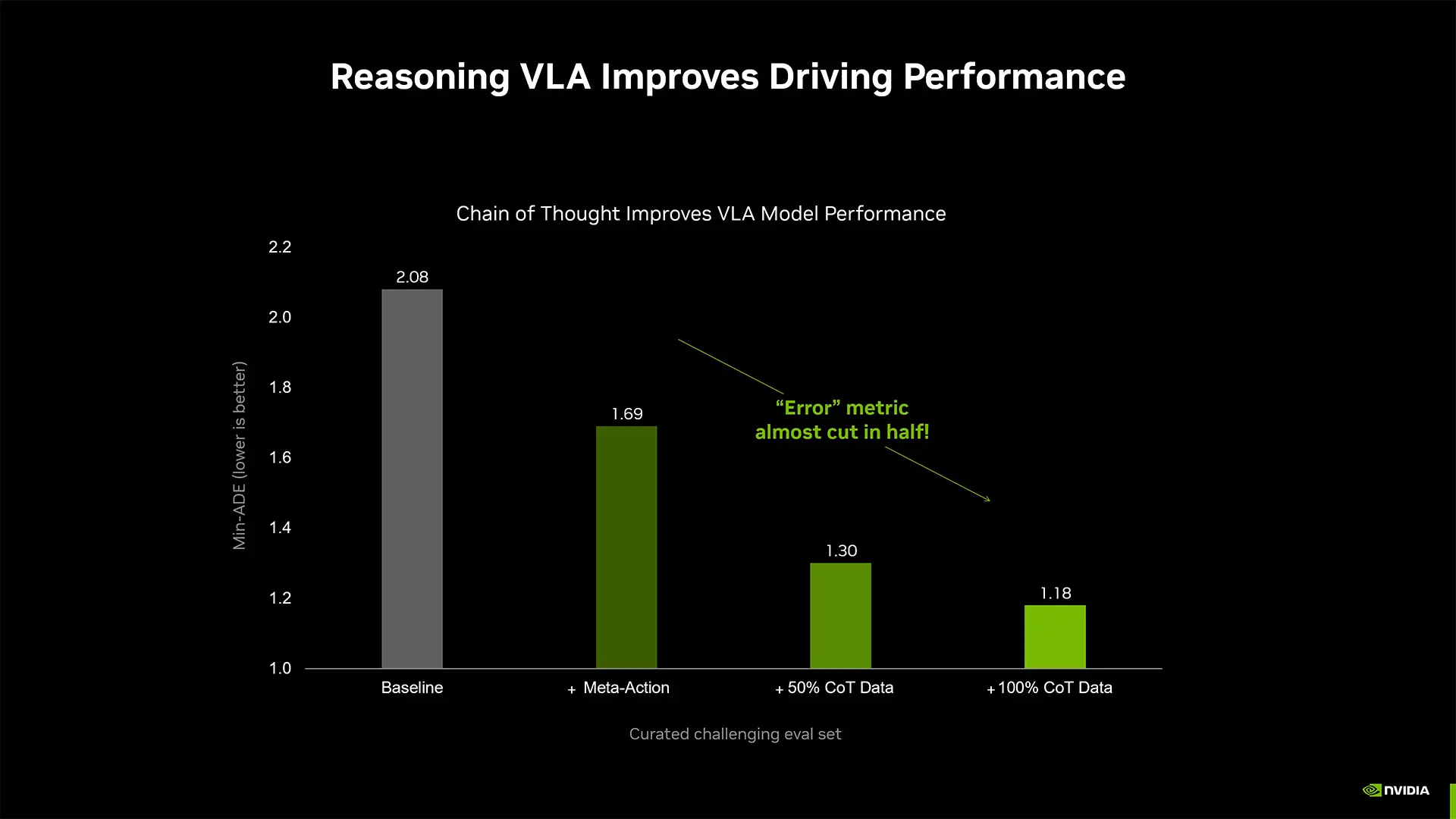
The NVIDIA Alpamayo portfolio of open reasoning vision language action (VLA) models is central to accelerating robotaxi development, providing developers with adaptable building blocks for their data and technology stacks. These models, alongside simulation frameworks and physical AI datasets, enable programs to transform growing volumes of fleet data into increasingly capable driving intelligence. Training these complex models requires substantial computational power, which NVIDIA addresses with its DGX systems designed specifically for AI model training.
This focus on efficient training is critical as the projected global robotaxi market is expected to reach $400 billion by 2035, demanding rapid advancements in autonomous vehicle technology. NVIDIA’s approach extends beyond training to encompass comprehensive simulation and validation, utilizing its Omniverse and Cosmos platforms on RTX PRO systems.
Recognizing that real-world driving alone cannot capture the breadth of potential scenarios, the company reconstructs real-world events with NuRec models and generates physically based variations using Cosmos world foundation models. This allows developers to expand thousands of corner cases into millions of simulated driving conditions, encompassing variations in traffic, weather, and sensor data. The resulting simulations are not merely for testing; they are integral to building a robust safety foundation through NVIDIA Halos, which provides a production-ready safety foundation through Halos OS, and a validation framework spanning inspection, system validation, and continuous testing.
Several key players in the autonomous vehicle space are already using NVIDIA’s full-stack platform. NVIDIA’s robotaxi ecosystem spans every region where commercial robotaxi services are emerging today: Asia, Europe, the Middle East and North America. Uber is scaling its fleet of NVIDIA Hyperion, with plans to reach 28 cities by 2028.
Uber and NVIDIA are also building a robotaxi AI data factory on NVIDIA Cosmos to curate fleet driving data for rare scenarios. Together, Uber and NVIDIA are collaborating with Autobrains, Avride, Lucid, May Mobility, Mercedes-Benz, Momenta, Nissan, Nuro, Pony.
From cloud-based model training to in-vehicle processing, NVIDIA’s platform aims to provide a complete solution for robotaxi development, with nearly every layer of the system being developed on NVIDIA accelerated computing. This commitment to a full-stack approach positions NVIDIA as a central provider of the infrastructure required to support the anticipated operation of over 6 million commercial robotaxi vehicles by 2035.
NVIDIA Omniverse & Cosmos Accelerate AV Simulation with Real-World Data
Robotaxi programs are increasingly reliant on NVIDIA’s Omniverse and Cosmos platforms to expand testing beyond real-world mileage, reconstructing driving scenarios from sensor data and generating physically based variations of them. This capability addresses the limitations of relying solely on physical miles to capture the breadth of potential, and often rare, driving conditions encountered by autonomous vehicles. Running on NVIDIA RTX PRO Servers, the combined Omniverse and Cosmos workflow supports closed-loop simulation and validation, critical for ensuring safety and robustness.
The NVIDIA AlpaSim simulation framework further refines this process by specifically targeting the training and evaluation of reasoning-based autonomous-driving models, helping developers proactively identify and address potential weaknesses before deployment. This approach moves beyond simple scenario replay to a system capable of generating and evaluating a vast array of edge cases, accelerating model development and improving overall system performance. The company reports, highlighting the integrated nature of its full-stack solution.
NVIDIA Hyperion & DRIVE AGX Deliver Fail-Operational In-Vehicle Computing
NVIDIA Hyperion 10 pairs dual NVIDIA DRIVE AGX Thor systems-on-a-chip, built on the NVIDIA Blackwell platform, with a comprehensive sensor suite of 14 high-definition cameras, nine radars, three lidars, and 12 ultrasonics for real-time, 360-degree sensor fusion. This redundant compute and sensing design is engineered to maintain fail-operational driving capabilities even if a sensor or compute component experiences failure, a critical safety feature for driverless systems.
The dual DRIVE AGX Thor configuration is specifically designed to handle modern AI workloads, including large language action models, for perception, reasoning, path planning, and driving actions. The development of robust autonomous systems relies heavily on data, and NVIDIA Cosmos variations are expanding the scope of AV training data through both real-world corner cases and thousands of synthetic permutations encompassing behavioral and content variations.
Waymo is actively collaborating with NVIDIA to construct its autonomous computing system, while several other companies are integrating NVIDIA technologies into their robotaxi programs. Nissan and Uber are jointly developing a global robotaxi program utilizing a prototype vehicle that combines Nissan’s vehicle engineering expertise, Wayve’s embodied AI, and the NVIDIA Hyperion platform. Autobrains is also building robotaxi programs with Uber in Munich and VinFast in Southeast Asia, using NVIDIA Hyperion and its own Agentic AI technology.
Zoox utilizes NVIDIA DRIVE for both in-vehicle computing and cloud-based training and simulation, while Momenta is developing its software stack based on NVIDIA DRIVE AGX running on DriveOS. Pony. ai has developed a new-generation autonomous-driving domain controller with NVIDIA Hyperion and DRIVE AGX Thor, and Tensor is building a level 4 Robocar equipped with eight NVIDIA DRIVE AGX Thor systems-on-a-chip within its in-vehicle supercomputer. Waabi is expanding into the robotaxi market through a deployment collaboration with Uber, with its Waabi Driver platform built on NVIDIA DRIVE AGX Thor.
Robotaxi Ecosystem Scales with NVIDIA’s Full-Stack AI Platform
The projected $400 billion global robotaxi market by 2035 is driving rapid integration of NVIDIA’s full-stack AI platform across the industry, with automakers increasingly relying on the company’s modular approach to accelerate development and deployment. Collaboration is central to this expansion, with Uber and NVIDIA jointly working with a broad consortium of companies including Autobrains, Avride, Lucid, and Mercedes-Benz to integrate NVIDIA technology into the Uber platform.
NVIDIA’s robotaxi and AV platform brings these capabilities together in a three-computer solution: the model training computer, simulation and validation computer, and in-vehicle computer. This collaboration extends beyond hardware and software, incorporating NVIDIA’s simulation tools and datasets to prioritize safety through reasoning-based autonomy.




See today’s quantum computing news on Quantum Zeitgeist for the latest breakthroughs in qubits, hardware, algorithms, and industry deals.