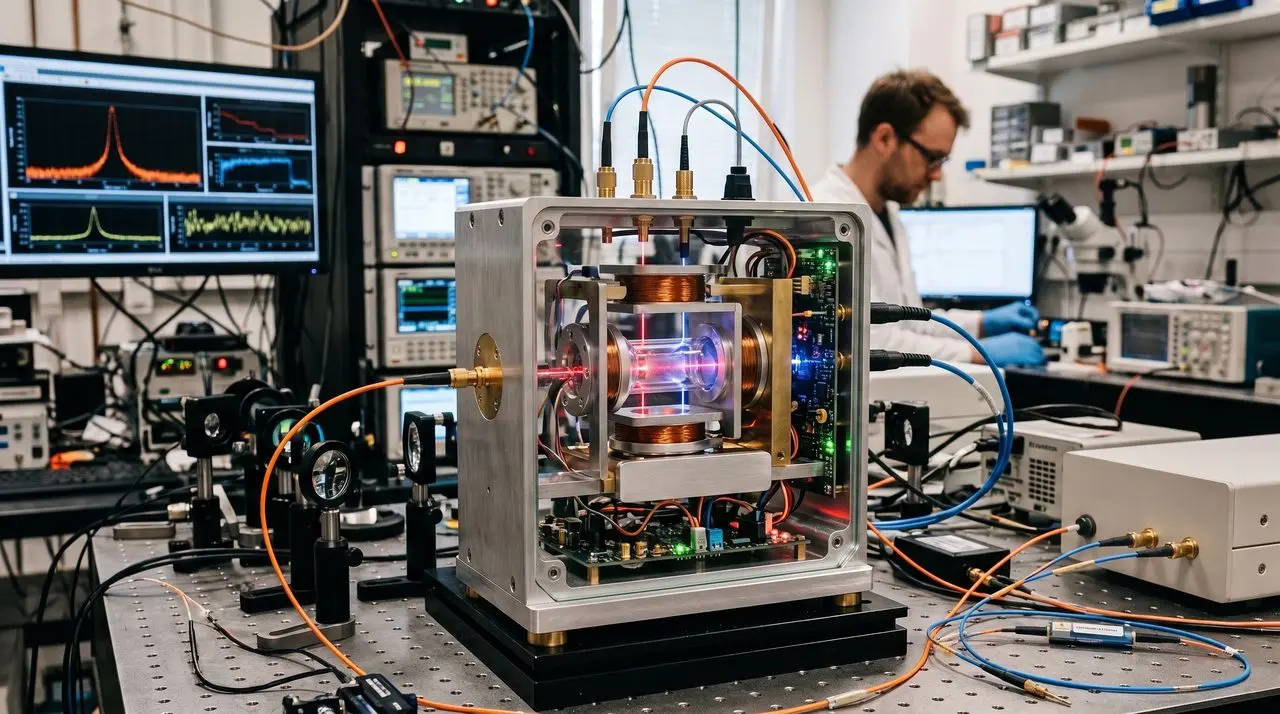
The U.S. National Science Foundation announced Project Triad on July 14, 2026, initiating an effort to combine quantum sensing, quantum networking, and quantum computing into a single, functioning system. This initiative marks the first time these three quantum technologies will be integrated, moving them beyond laboratory research and toward practical applications in areas like healthcare, energy, and national security. According to NSF performing the duties of director Brian Stone, “NSF Project Triad will unite the research enterprise to advance the administration’s vision, ensuring public investments translate into strategic advantages in quantum technology for all Americans.” Project Triad aligns with the executive order “Ushering in the Next Frontier of Quantum Innovation,” and will systematically identify and accelerate the most promising quantum breakthroughs from research to commercialization through collaboration between government, universities, and private industry.
Project Triad Integrates Quantum Sensing, Networking, and Computing
Project Triad represents a decisive step beyond isolated advancements in quantum technologies. The U.S. effort focuses on creating a cohesive platform capable of translating quantum potential into practical applications across diverse sectors like healthcare, energy, and national security, rather than simply improving individual components. The integrated system will allow for capabilities currently limited by classical physics, such as navigation in GPS-denied environments and highly precise subsurface imaging. The ambition of Project Triad lies in its systematic approach to scaling quantum breakthroughs, a process NSF Chief Science Officer Simon Malcomber describes as requiring “exceptional fundamental scientific work alongside translational research to utilize quantum data to its utmost.” Unlike previous efforts focused on individual quantum disciplines, this program actively prioritizes projects poised for real-world deployment, streamlining the journey from discovery to application.
NSF National Quantum Virtual Laboratory (NSF NQVL) will serve as the core of this integration, delivering a proof-of-concept system for experimentation and testing, with accelerated implementation of several projects planned by December 2026, pending funding. This initiative is structured around three interlocking programs. NSF X-Labs will focus on solving critical scientific challenges, specifically those related to interconnects and photonics, essential for transferring quantum information between devices. Simultaneously, NSF Quantum+X will forge direct partnerships with industry to pinpoint promising applications for integrated quantum technology, initially targeting sectors like energy, finance, biotechnology, and pharmaceuticals. By leveraging existing NSF quantum research programs and fostering a skilled workforce, Project Triad aims to solidify American leadership in this rapidly evolving field and ensure that quantum innovation benefits both the economy and national interests.
Achieving Project Triad will require exceptional fundamental scientific work alongside translational research to utilize quantum data to its utmost.
Simon Malcomber, NSF Chief Science Officer


See today’s quantum computing news on Quantum Zeitgeist for the latest breakthroughs in qubits, hardware, algorithms, and industry deals.