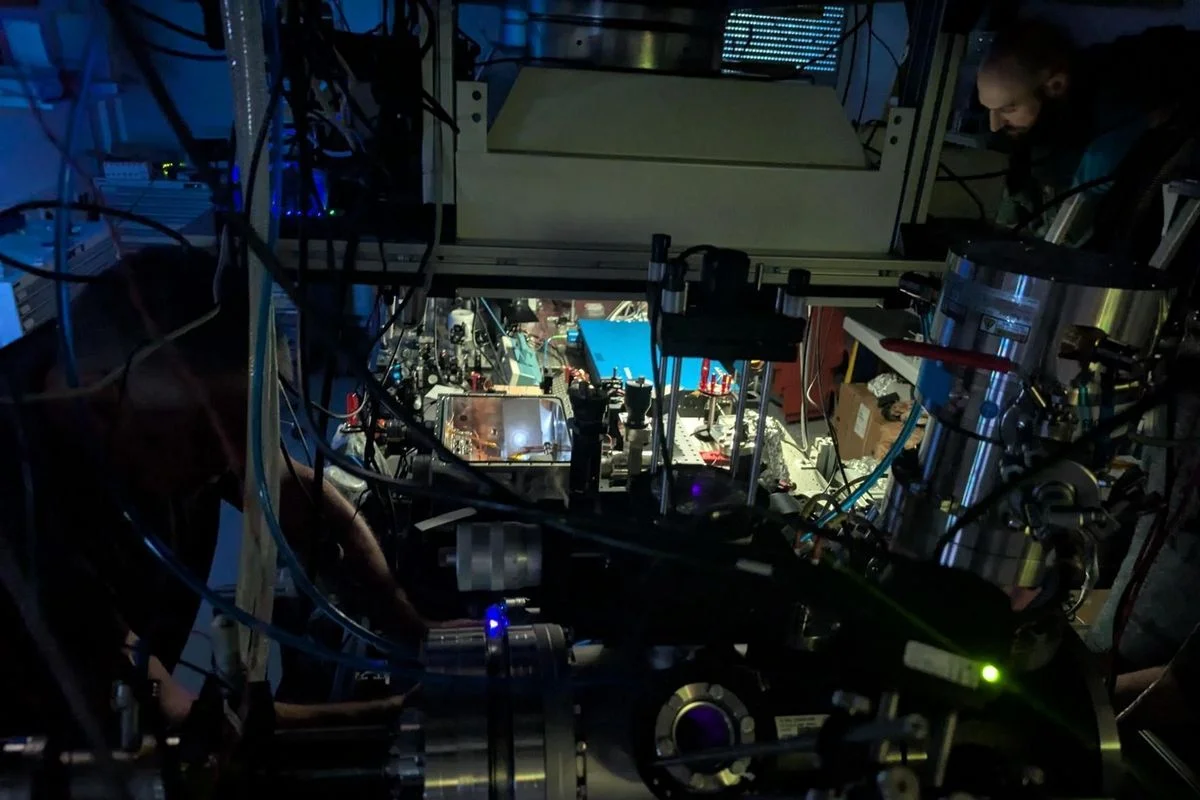
Researchers at TU Wien have built the world’s first prototype nuclear clock, a device that relies on a thorium crystal within a vacuum chamber to measure time rather than the cesium or rubidium used in conventional atomic clocks. The team reports demonstrating self-stabilization of the system for over 24 hours without intervention, a key step toward achieving precision in timekeeping. This technology promises to significantly surpass existing atomic clocks and enable measurements of physical quantities with previously unattainable precision.
Thorium Nuclei Enable Self-Stabilizing Nuclear Clock Prototype
The prototype nuclear clock at the Institute of Atomic and Subatomic Physics at TU Wien demonstrated self-stabilization for over 24 hours, a duration achieved without external intervention and marking a critical step toward practical nuclear timekeeping. Researchers used a laser to interact with the thorium nuclei, initiating a feedback loop that maintains the clock’s precise rhythm. The core principle involves manipulating the energy states of thorium-229 nuclei; the team selected this isotope due to its unique characteristic of possessing closely spaced energy levels, TU Wien says.
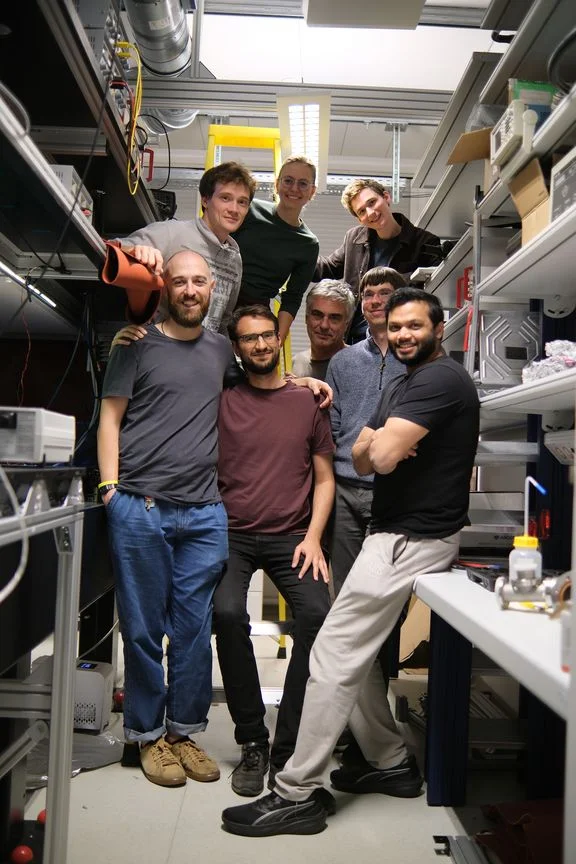
“The basic idea is simple: you have a laser and you have thorium. The laser changes the energy state of the thorium nuclei, and the thorium nuclei are used to stabilize the frequency of the laser,” explained Thorsten Schumm, detailing the clock’s operational foundation.
The laser’s frequency is finely tuned to induce transitions between these nuclear energy states, and any deviation from the optimal frequency is immediately corrected by the thorium nuclei themselves. Luca Toscani de Col was observed adjusting the laser, a process essential for maintaining the precise wavelength required for excitation of the thorium nuclei. The clock’s design addresses a common challenge in precision timekeeping: maintaining a stable laser frequency.
“The oscillation of this laser light can be used for timekeeping, but the laser frequency can shift slightly from time to time, for example due to temperature fluctuations,” Schumm noted. Traditional atomic clocks employ atoms to achieve this stabilization, but the TU Wien team innovated by using thorium nuclei, which offer the potential for significantly enhanced precision, according to the company. The team produced the thorium crystal at TU Wien, an important component in the clock’s functionality.
The potential for increased precision stems from the size and properties of atomic nuclei. “The great advantage of the new nuclear clock in Vienna is that, if you use atomic nuclei rather than atoms, much higher precision is possible in principle,” Schumm stated. Atomic nuclei are over ten thousand times smaller than atoms, making them less susceptible to external disturbances and more reliable as timekeepers.
This inherent stability translates to a theoretical capacity for far more accurate time measurements than currently achievable with atomic clocks. Initial tests revealed the prototype’s precision to be approximately 10 to the power of minus 15, equating to an error of roughly one second over 30 million years. While this level of accuracy does not yet surpass the world’s leading optical atomic clocks, researchers emphasize its significance as a first demonstration of a self-stabilizing nuclear clock.
The team intends to further refine the clock’s performance through improvements such as stronger lasers and higher-quality thorium crystals, the company says. The development of this self-stabilizing capability is a key advancement, distinguishing this prototype from earlier iterations. The team’s success places them alongside a research group in China that recently announced the construction of a similar device, TU Wien reports. The parallel advancements highlight the growing momentum in this field and the potential for nuclear clocks to revolutionize precision metrology.
The ability to measure physical quantities with greater accuracy could have far-reaching implications for fields such as fundamental physics, navigation and materials science. The team’s findings, published in Nature, detail the process of achieving and maintaining this self-stabilization.
The research builds upon earlier work in April 2024, when the team first demonstrated the excitation of thorium nuclei with laser beams. This initial success cleared the way for the development of the current prototype and the demonstration of its self-stabilizing capabilities, the company’s account states.
The clock’s performance was investigated over the course of a day, confirming its sustained stability over the 24-hour period. “This is not yet at the level of the world’s best optical atomic clocks, but for a first prototype it is a fantastic result,” Schumm concluded, expressing optimism for future improvements and the potential of nuclear clocks to redefine the limits of precision timekeeping.
The great advantage of the new nuclear clock in Vienna is that, if you use atomic nuclei rather than atoms, much higher precision is possible in principle.
Thorsten Schumm




See today’s quantum computing news on Quantum Zeitgeist for the latest breakthroughs in qubits, hardware, algorithms, and industry deals.