TOPPAN Holdings, AISIN CORPORATION, Asahi Kasei Corporation, SoftBank Corp., AGC Inc., and DIC Corporation will jointly begin research and development on a quantum-computing-based materials development platform in fiscal 2026. The six companies, spanning automotive parts, chemicals, telecom and more, entered into an agreement following selection by the New Energy and Industrial Technology Development Organization (NEDO) for the project. This collaboration aims to integrate quantum-computing calculations with artificial intelligence to accelerate materials innovation and address limitations in current data-driven and computational science methods.
Quantum Computing & AI Integration for Materials Discovery
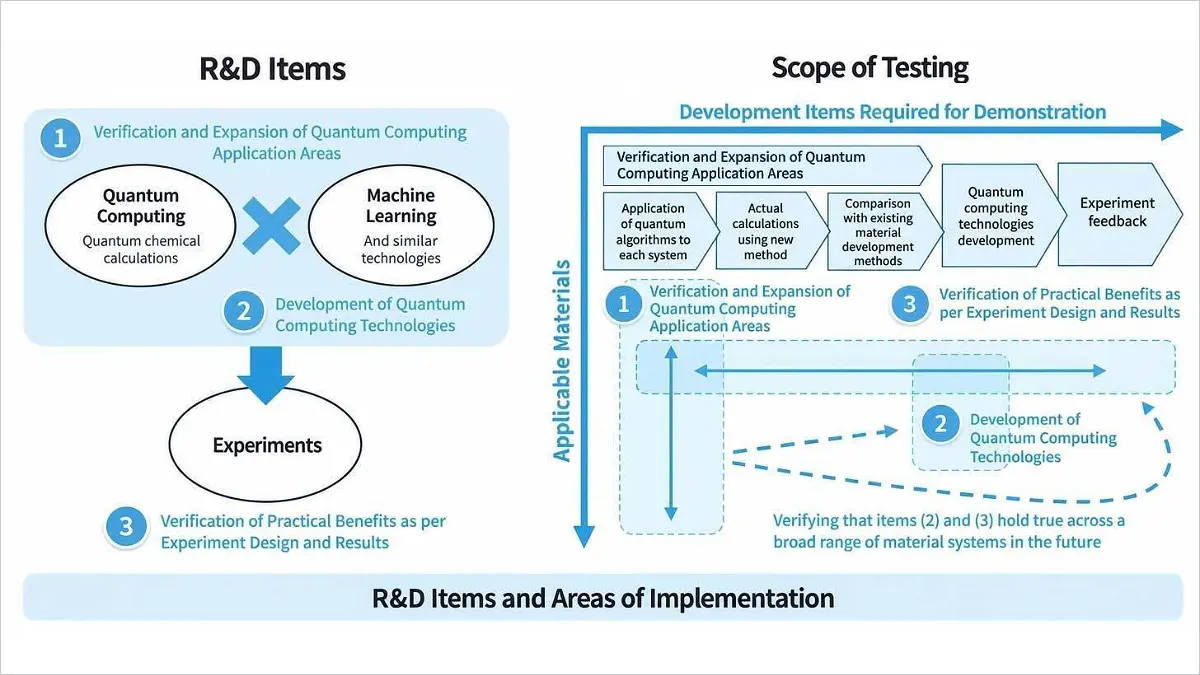
NEDO’s selection of the joint research proposal, “Research and Development of Innovative Materials Development Platforms Using Quantum Technology,” demonstrates practical use cases that integrate quantum computing and AI technologies. The Project was chosen under NEDO’s solicitation and the six companies entered into a joint agreement to conduct research and development on constructing a new materials development platform using quantum computers from fiscal 2026 (the year ending March 31, 2027) through fiscal 2028.
The Project aims to establish a materials development platform by integrating quantum-computing-based calculations with AI technologies such as machine learning, thereby bridging the gap between demonstration and real-world application. The materials development technologies will be applied cross-sectionally across a broad range of industrially vital materials systems, with each of the six companies handling verification in their respective domains of strength.
The six companies will also verify platforms using quantum computing for materials development across a range of compounds, including organic electrolytes, polymer materials and inorganic electrodes, incorporating feedback from experimental results to improve the platform’s predictive power. DIC Corporation will integrate quantum computing, simulation and data science technologies to predict key material properties for colorants and semiconductor materials, aiming to establish and validate novel research methodologies.
By combining data on quantum computing and AI with the experimental data obtained through the Project, the six companies will work toward constructing a continuously evolving materials development platform, contributing to cross-industry innovation, according to the joint announcement.
Cross-Industry Verification of Quantum Applications in Key Materials
Each of the six companies will spearhead verification efforts within its area of expertise, applying quantum computing to materials important to its operations, including batteries, optical materials and superconductors. This distributed approach aims to accelerate the translation of quantum calculations into tangible industrial applications, rather than remaining confined to theoretical exploration. Collaboration with specialized quantum computing institutions will be central to verifying the applicability of these methods across diverse materials systems, ensuring broad relevance and practical value.



See today’s quantum computing news on Quantum Zeitgeist for the latest breakthroughs in qubits, hardware, algorithms, and industry deals.