

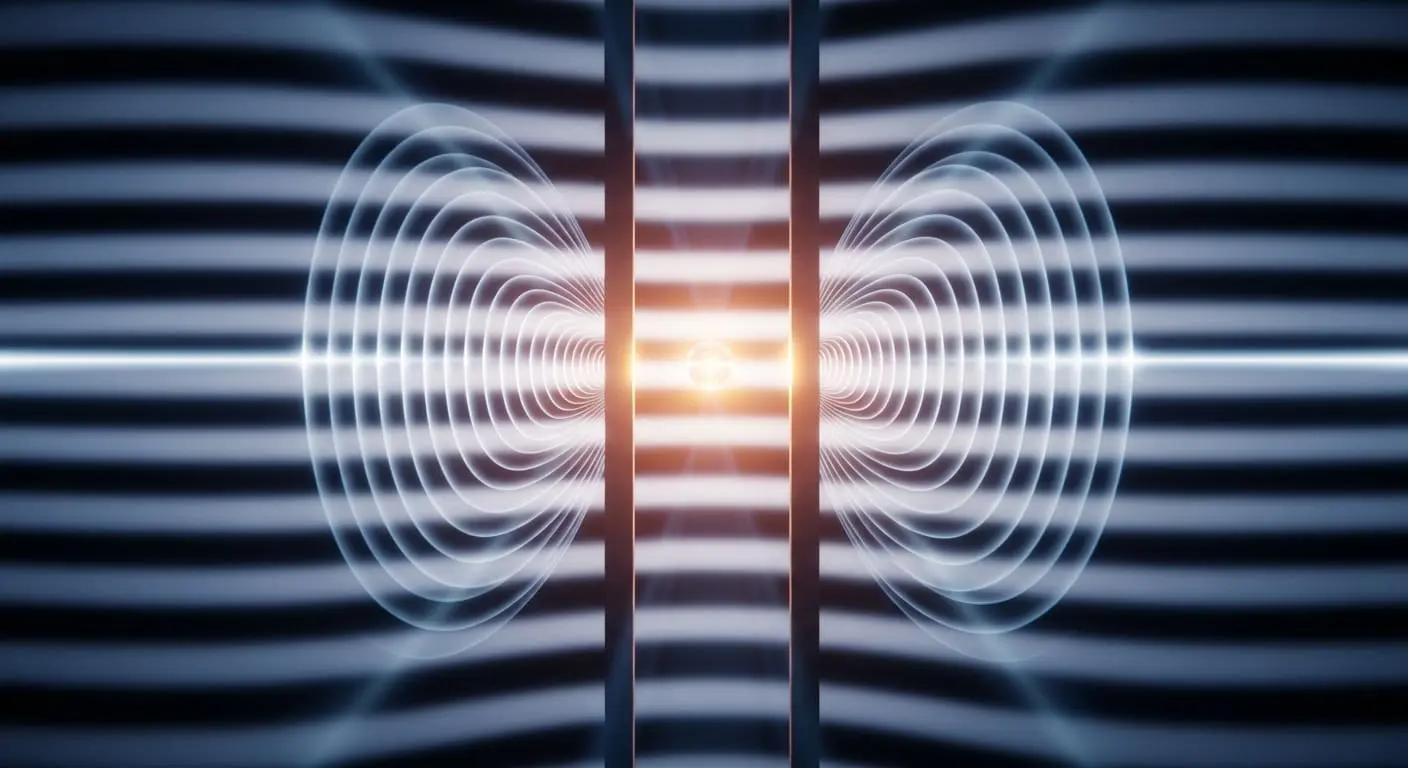
Researchers are refocusing the search for elusive toroidal transitions within atoms, revealing that the most promising signals will likely emerge from examining transitions involving low principal quantum numbers. This work builds upon a 2022 Science Advances proposal by I. Kuprov et al., to directly observe these transitions in hydrogen and alkali atoms, but identifies a key underestimation of the challenges posed by additional contributions from diamagnetic coupling. Unlike more familiar electric and magnetic multipoles, toroidal transitions represent a lesser-known family of atomic properties, and this study provides a more comprehensive analysis of their behavior. The researchers, affiliated with the Nanyang Technological University and National University of Singapore, demonstrate that a differential measurement technique can isolate the weaker toroidal contribution from dominant electric dipole effects.
Toroidal Multipoles Compared to Electric and Magnetic Dipoles
Atomic transitions are typically understood through the familiar lens of electric and magnetic multipoles, but a lesser-known family of interactions is now receiving renewed scrutiny. Toroidal multipoles represent a fundamental addition to how we understand light-matter interactions. These toroidal structures, distinct from their electric and magnetic counterparts, arise from unique arrangements of current and charge distributions, and recent work is refining the search for their direct observation within atoms. The core distinction lies in symmetry. While electric and magnetic multipoles dominate conventional electromagnetic decomposition, toroidal multipoles emerge when considering time-dependent sources. As the paper explains, dynamic multipoles can be defined on electronic transitions, with non-zero contributions arising from the matrix element between any two states.
Toroidal transitions share spatial parity with electric transitions, meaning they can occur between the same orbitals, but possess temporal parity similar to magnetic transitions, potentially enabling spin-flipping events otherwise forbidden. This unique combination allows for a spin toroidal dipole transition to be uniquely distinguished from the well-studied electric and magnetic transitions. However, detecting these transitions is far from straightforward. The current research highlights a critical flaw: additional contributions from diamagnetic coupling. The analysis demonstrates that electric coupling always dominates, necessitating a refined approach to isolate the toroidal contribution. To overcome this challenge, the researchers suggest focusing the search on transitions with low principal quantum numbers. The researchers characterized the matrix elements between states, considering radial, angular, and spin components, and validated their results against established numerical methods. Ultimately, understanding and harnessing toroidal multipoles could unlock new avenues for manipulating light and matter at the quantum level.
Dirac Equation Derivation and Hamiltonian Approximations
The search for toroidal transitions within atoms has intensified, demanding a rigorous re-evaluation of theoretical frameworks used to predict and interpret experimental results. A recent proposal, such as the 2022 Science Advances work by I. Kuprov et al., Science Adv. 8 abq6751 (2022), explores the possibility of a direct observation of optical toroidal transitions in hydrogen and alkali atoms in the presence of a large magnetic field that decouples the spin and the angular momentum of the electron. This coupling significantly complicates the isolation of the comparatively weak toroidal signals from dominant electric dipole transitions. Researchers have now focused on refining the Hamiltonian used to model these transitions, beginning with the Dirac equation itself. The process involves a second-order Foldy-Wouthuysen expansion, a standard technique for separating relativistic effects in atomic physics.
This expansion, truncated at the appropriate order, allows for the inclusion of terms responsible for the spin-toroidal transition, which emerges as a consequence of the angular magnetoelectric (AME) term. The team decomposed the total Hamiltonian into components representing the Bohr hydrogenic Hamiltonian, Zeeman shifts, the diamagnetic term, and the electric dipole (E1) transition, acknowledging that traditionally neglected terms, like the AME term, are crucial for accurate modeling. Matrix elements are computed between uncoupled states, leveraging recurrence relations and Gaunt coefficients for efficient calculation. The researchers explicitly considered an electron bound to a hydrogenic potential within a static magnetic field, extending the methodology to encompass alkali atoms. They worked within the Coulomb gauge, assuming the electromagnetic field does not affect the nuclear spin, and focused solely on electronic degrees of freedom.
Recent work, however, reveals that previous attempts to detect these transitions significantly underestimated the influence of diamagnetic coupling, an interaction arising from the electron’s response to magnetic fields, complicating the interpretation of experimental results.
👉 More information
🗞 Toroidal Transitions in Hydrogenic and Alkali Atoms
✍️ Kai Xiang Lee, Vincent Mancois, Kelvin Lim and David Wilkowski
🧠 ArXiv: https://arxiv.org/abs/2607.19832




See today’s quantum computing news on Quantum Zeitgeist for the latest breakthroughs in qubits, hardware, algorithms, and industry deals.



