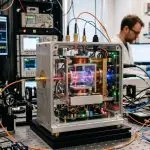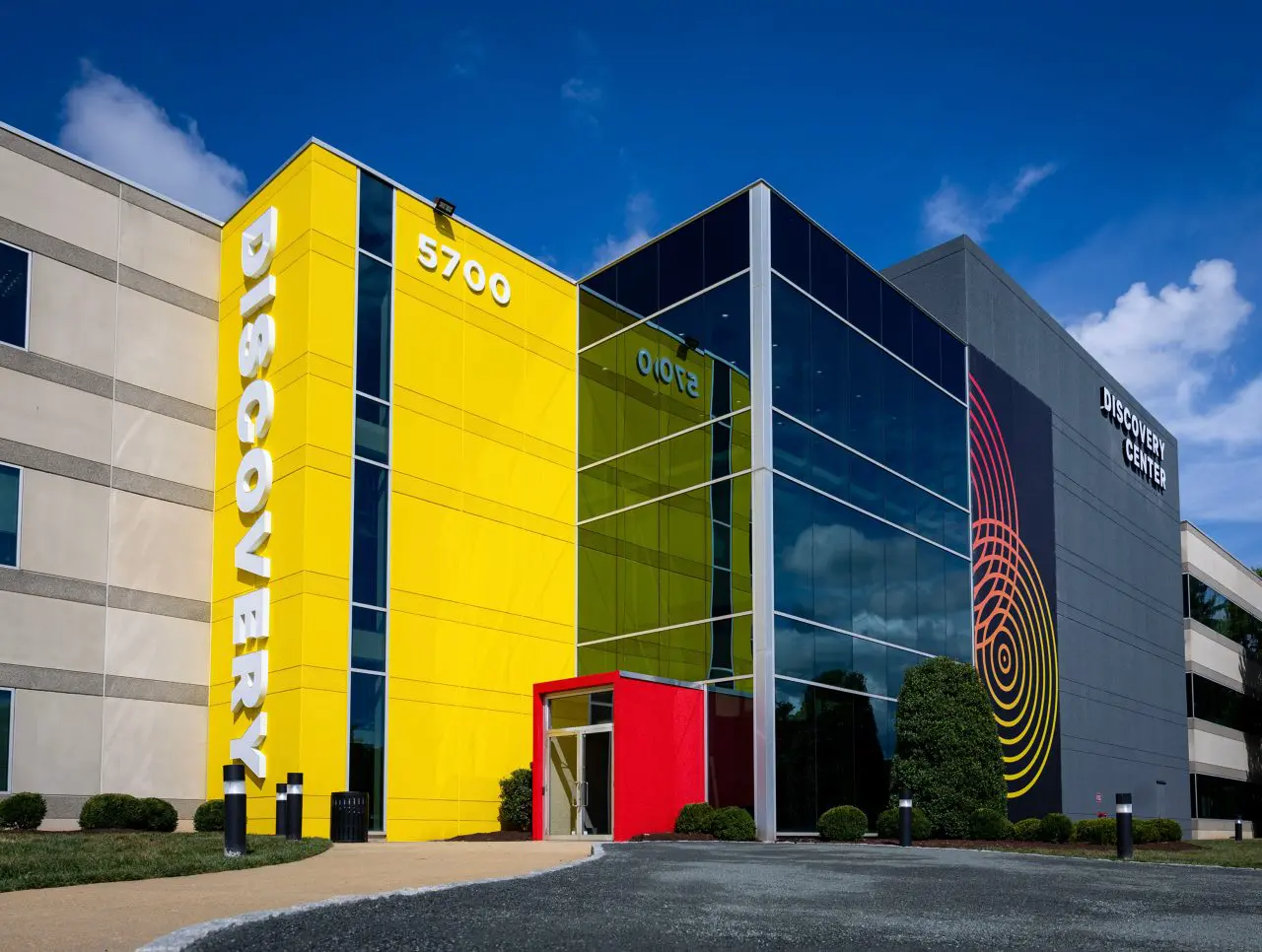
Microsoft Quantum has opened a research center in Maryland, providing its Majorana 2 quantum chip for independent testing and evaluation by the Defense Advanced Research Projects Agency (DARPA). The center, built in collaboration with the University of Maryland and supported by Governor Wes Moore’s Capital of Quantum Initiative, includes a dedicated hardware makerspace and will fund quantum postdoctoral positions at UMD.
Dr. Charles Tahan, Partner, Microsoft Quantum, stated that as advances in AI and quantum accelerate scientific discovery, bringing together talent, skilling, infrastructure, and execution is becoming increasingly important. This new facility aims to accelerate the move from quantum research to practical implementation, with DARPA gaining full access to Microsoft’s latest topological system on site.
Maryland Center Hosts DARPA Testing of Topological Qubits
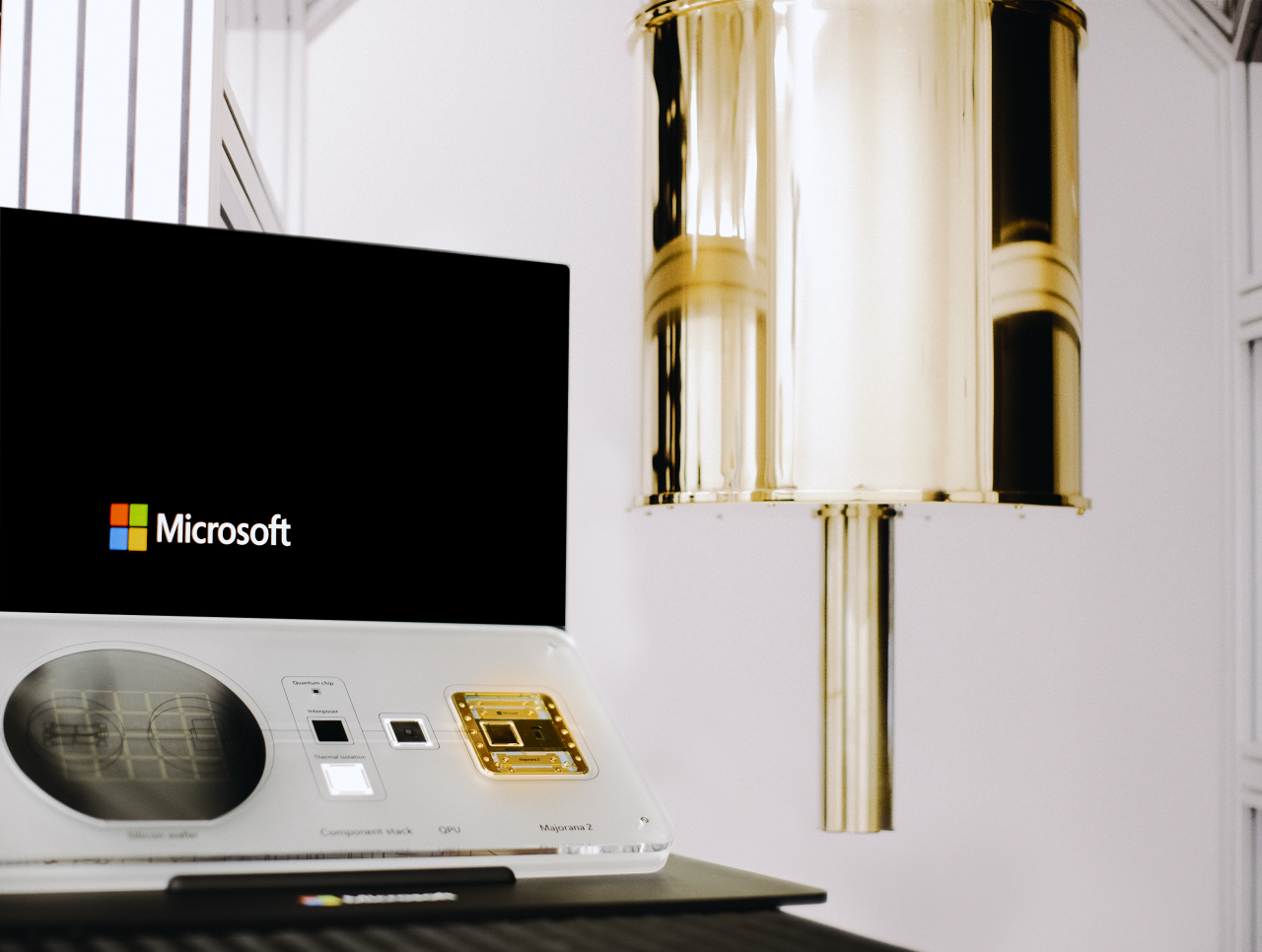
This delivery follows Microsoft’s advancement to the final stage of DARPA’s Underexplored Systems for Utility-Scale Quantum Computing program, part of the Quantum Benchmarking Initiative, signaling external scrutiny of its hardware development. The Majorana 2 chip utilizes a new material stack, replacing aluminum with lead for increased performance, a change Microsoft hopes will demonstrate improved qubit stability and coherence. Dedicated areas within the center accommodate Microsoft’s proprietary research, DARPA’s topological system and future prototypes, and collaborative spaces for partner companies, fostering a shared environment for innovation, the company says.
Microsoft views DARPA’s test and evaluation team as uniquely positioned to assess the entire computing stack, from hardware controls to software applications, providing comprehensive feedback on the system’s capabilities. Beyond hardware provision, Microsoft Quantum is investing in the quantum workforce through direct funding of postdoctoral positions at the University of Maryland and the launch of an annual research workshop series.
This commitment extends beyond internal research, aiming to cultivate a broader ecosystem of skilled professionals capable of driving future advancements in the field. Microsoft’s approach centers on designing quantum computers for utility scale, focusing on solving real-world problems beyond the reach of classical computers, and DARPA’s involvement is intended to help validate that path.
Majorana 2 Chip Advances Performance with Lead Material Stack
The Majorana 2 chip’s performance gains stem from a redesigned material stack, substituting aluminum with lead for increased performance, a critical factor in maintaining quantum information, according to the company’s recent delivery to DARPA. This material shift addresses a key challenge in topological qubit development, aiming to reduce error rates and improve the stability of quantum states during computation. Microsoft Quantum reports this change is a significant step toward building a scalable and economically viable quantum computer, a goal central to its long-term roadmap targeting a million physical qubits.
This comprehensive assessment allows validation of their topological approach and identification of areas for further optimization, according to DARPA. The company views DARPA’s expertise as uniquely positioned to assess the system’s performance across all layers, providing valuable insights beyond internal testing. This collaboration extends beyond hardware, encompassing joint research initiatives with Fermilab to broaden the applicability of quantum-control technologies across diverse platforms.
Quantum Hardware Makerspace Enables Workforce Development & Partnerships
The newly opened Microsoft Quantum Research Center in Maryland houses a dedicated quantum hardware makerspace intended to accelerate collaboration between industry, academia, and government entities. Companies and developers can now assess how the platform impacts their specific missions, streamlining the process of scaling quantum technologies and delivering value to customers. Beyond facilitating partner integration, the center is designed to address a critical need: a skilled quantum workforce.
This commitment to workforce development is underscored by the makerspace itself, where participants can assemble small-scale, functional quantum computers using components from leading companies in the field. Dr. Charles Tahan, Partner, Microsoft Quantum, said, “Ultimately, our hope is that as we continue to pilot this approach with our partners, the lessons, educational content, and collaborative model pioneered in Maryland will serve as a broadly scalable framework for workforce development in quantum hardware.” This evaluation effort includes collaboration with the Air Force Research Laboratory, Johns Hopkins University Applied Physics Laboratory, and several national laboratories, Los Alamos, Oak Ridge, Lawrence Berkeley, and Lawrence Livermore, creating a robust network for assessing system performance. The emphasis on hands-on experience and rapid prototyping reflects Microsoft Quantum’s focus on building quantum computers for utility-scale applications.
As AI expands the scope of scientific exploration, Microsoft believes that execution and intuition regarding system construction will become increasingly important, and the Maryland center is positioned to cultivate both. The center’s infrastructure and collaborative model is a blueprint for quantum workforce development, ensuring a sustainable pipeline of talent for the growing field.
Measurement-Based Computing Workshops & UMD Postdoctoral Research
These positions will focus on areas of shared interest between UMD faculty and Microsoft Quantum researchers, extending collaborative efforts beyond hardware development and into fundamental quantum information science. The commitment to advancing measurement-based computing is formalized through an annual research workshop series, designed to push the boundaries of measurement speed and accuracy.
Microsoft recognizes that in this computing paradigm, the speed and fidelity of measurements are not merely performance metrics, but integral components of the computer’s architecture, directly influencing error-correcting codes and verification protocols. Beyond internal research, Microsoft is fostering a collaborative ecosystem through the new center, designed to support integration with partner technologies.
The emphasis on adaptable partnerships and continuous collaboration is central to Microsoft’s long-term vision. Maryland has proven itself as a hub for conceiving, testing, and implementing quantum computing ideas. While topological qubit computation remains unverified as of April 2026, the company’s investment in workforce development and collaborative research signals a sustained commitment to realizing the potential of quantum computing.
Source: https://quantum.microsoft.com/en-us/insights/blogs/microsoft-quantum-research-center-maryland
See today’s quantum computing news on Quantum Zeitgeist for the latest breakthroughs in qubits, hardware, algorithms, and industry deals.