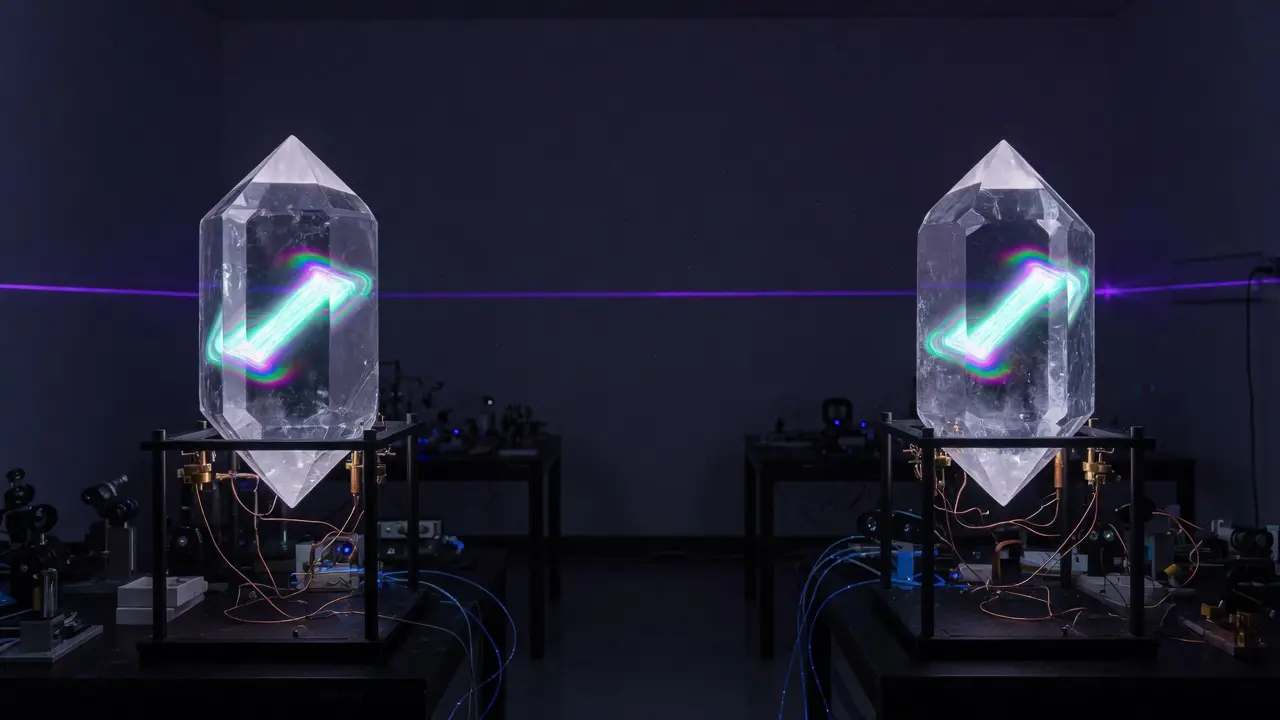
Researchers at Oak Ridge National Laboratory have, for the first time, directly observed a violation of a fundamental physical rule governing matter, using a novel combination of laser excitation and neutron observation. The team drove a magnetic material far from equilibrium with rapid laser pulses and then used the Spallation Neutron Source to reveal an unexpected imbalance in energy-related events.
“No one before has directly probed a detailed balance violation in a condensed matter system,” said ORNL’s Chengyun Hua. “Theoretically it makes sense it can happen, but experimentally it was pretty awesome to see.” This discovery not only establishes a platform for studying other quantum states but also suggests potential benefits for quantum technologies reliant on long-lived magnetic signals for data transfer.
Laser-Driven Magnetism Violates Detailed Balance in Matter
The Spallation Neutron Source at Oak Ridge National Laboratory played a large part in an unusual observation. Researchers paired neutron scattering with laser-driven excitation of a magnetic material, a methodology not typically employed in studies of systems far from equilibrium. This combined approach revealed a violation of detailed balance within the material under laser excitation, a surprising result that challenges established physics principles governing energy transfer.
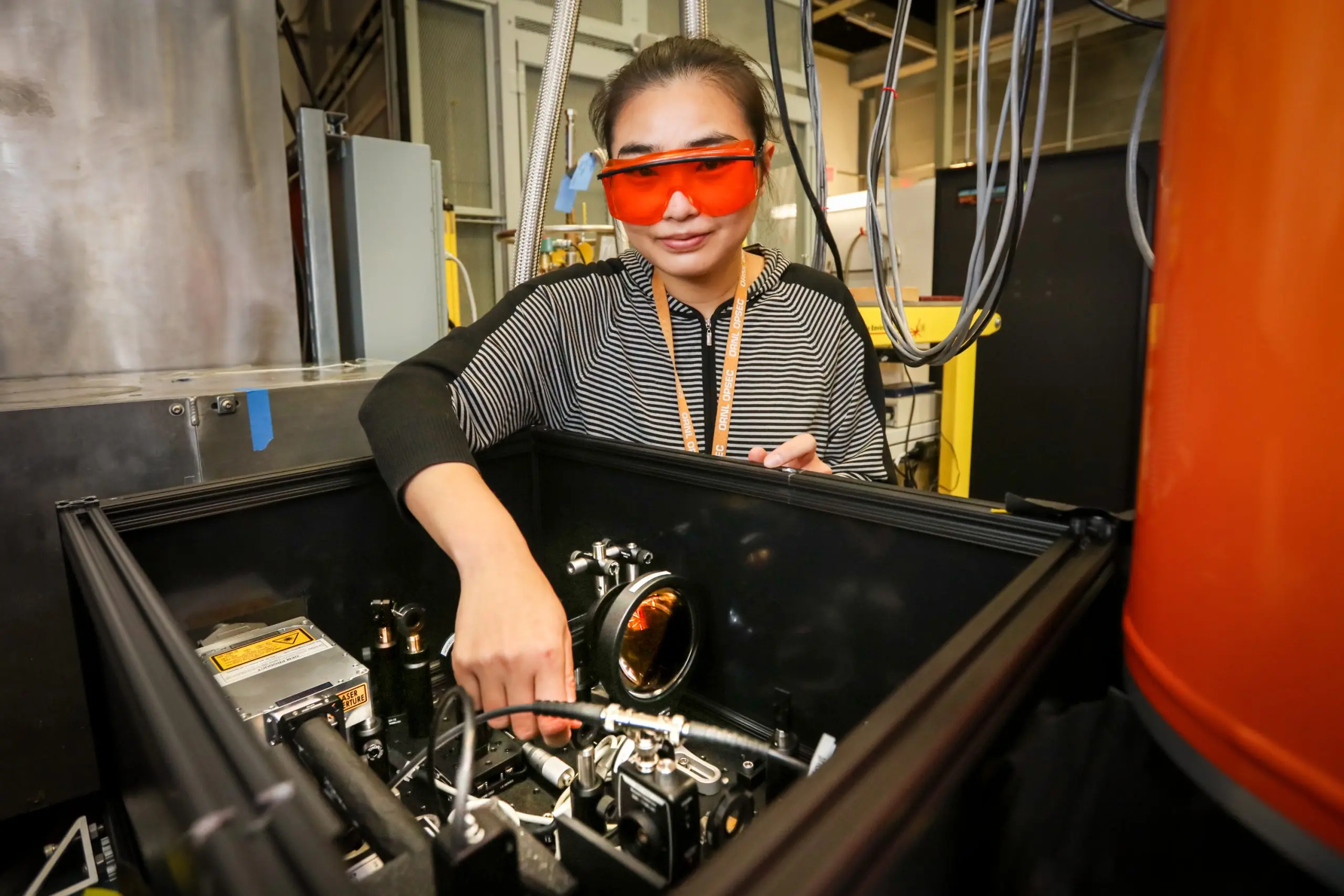
The neutron data specifically showed excess signals appearing on only one side of the energy exchange, directly indicating the breakdown of this fundamental rule. This breakdown wasn’t a fleeting phenomenon; the lopsided excess of magnons, quantum quasiparticles central to magnetic behavior, persisted, demonstrating a long-lived, non-equilibrium steady state sustained by the periodic laser pulsing.
Magnons are capable of carrying information, and their observed longevity suggests potential benefits for data transfer and memory devices within future quantum technologies. The team’s work builds on a multi-year effort at ORNL to develop the specialized infrastructure necessary for these types of investigations, initially supported by an internal seed grant focused on high-risk, high-reward physics. This observation not only provides a new avenue for studying other non-equilibrium quantum states but also establishes a benchmark for the capabilities of neutron scattering when observing actively driven materials, rather than static systems.
Because we were taking a new approach, mechanics, safety personnel, hardware and software engineers, and the research team all had to think outside the box to make this project work.
ORNL’s Chengyun Hua
Spallation Neutron Source Reveals Long-Lived Quantum Magnons
The insights gained from this study could also guide the development of low-loss electronics, offering potential improvements in energy efficiency. Beyond specific applications, the experiment provides a new benchmark for neutron scattering, demonstrating its ability to characterize materials under active manipulation and opening avenues for real-time observation of complex quantum phenomena.
No one before has directly probed a detailed balance violation in a condensed matter system.




See today’s quantum computing news on Quantum Zeitgeist for the latest breakthroughs in qubits, hardware, algorithms, and industry deals.