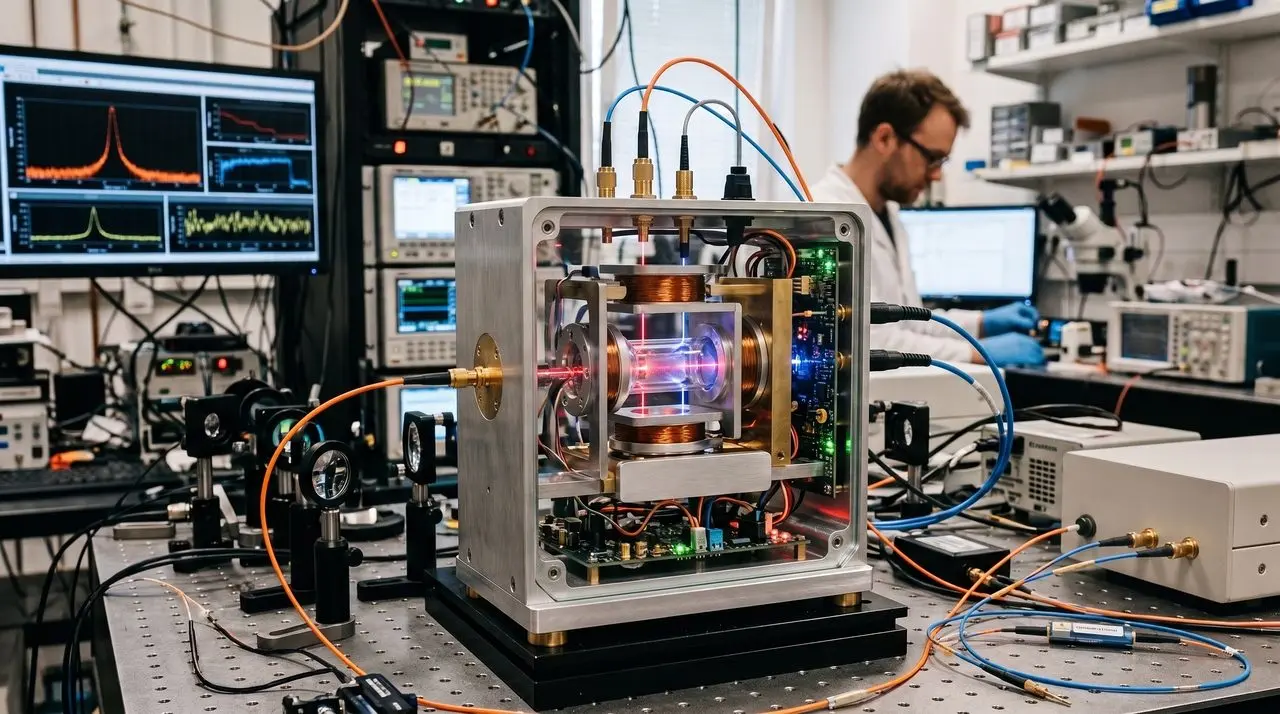
Q-BIOMED demonstrated the potential of quantum sensing to transform healthcare at the UK National Quantum Technologies Showcase 2026 in London on November 5. The event, organised by Innovate UK in collaboration with the UK National Quantum Technologies Programme, brought together researchers, businesses and policymakers to explore translating quantum research into practical applications. At the Showcase, Q-BIOMED highlighted work including optically pumped magnetometers for magnetoencephalography and nitrogen-vacancy nanodiamonds demonstrated by researchers, the company says.
The programme also featured a session exploring the role of the UK Quantum Hubs in advancing quantum capability and supporting the UK’s ambitions to become a leading quantum economy. Q-BIOMED Co-Director Professor Dame Molly Stevens joined representatives from the other Quantum Hubs for a panel discussion on the future of the UK quantum sector, exploring the importance of collaboration across academia, industry and government.
Optically Pumped Magnetometers Advance Magnetoencephalography
The demonstration allowed attendees to explore how these nanodiamonds could contribute to advancements in biomedical science and healthcare diagnostics, complementing other quantum sensing technologies on display. Dr Colin Stephen and Karishma Gokani presented the technology, engaging with industry representatives, clinicians and fellow researchers to highlight its versatility and potential for integration into future healthcare solutions. The Showcase provided a platform for Q-BIOMED to present advancements in optically pumped magnetometers (OPMs) for magnetoencephalography (MEG), a technique used to measure brain activity.
The Hub highlighted OPM technology originating, which recently joined the Q-BIOMED network through the Accelerating Capability programme. This collaboration aims to improve the accessibility and practicality of MEG by potentially removing the need for large, expensive and magnetically shielded rooms traditionally required for the procedure.
Dr Tim Tierney, Lecturer in Neuroscience, presented the team’s work on performing MEG outside of these conventional rooms, detailing how combining OPMs with active shielding techniques could revolutionize brain imaging. This research is helping to make advanced brain imaging more accessible and practical in real-world settings, according to Q-BIOMED representatives. During his presentation, Tierney focused on enhancing signal clarity and reducing interference. Chaired by Liam Boyle from EPSRC, the panel emphasized the critical need for a skilled workforce to support the continued growth of the quantum sector.
Panellists highlighted the importance of developing diverse training pathways, including professional and Master’s-level programs, to inspire future quantum professionals and equip them with the necessary skills to implement these technologies. The discussion also highlighted the value of collaborative efforts across academia, industry and government, both domestically and internationally.
A key theme was the need to prioritize applications that deliver tangible benefits while simultaneously building the necessary infrastructure and long-term support for translating quantum research into real-world impact. Quantum City, also exhibiting at the Showcase, supported this collaborative spirit by providing a platform for sharing events, educational resources and outreach activities, increasing visibility and access to quantum-related opportunities throughout the UK. The UK National Quantum Technologies Showcase, therefore, served as a valuable forum for showing progress and supporting connections within the rapidly evolving quantum community.


See today’s quantum computing news on Quantum Zeitgeist for the latest breakthroughs in qubits, hardware, algorithms, and industry deals.