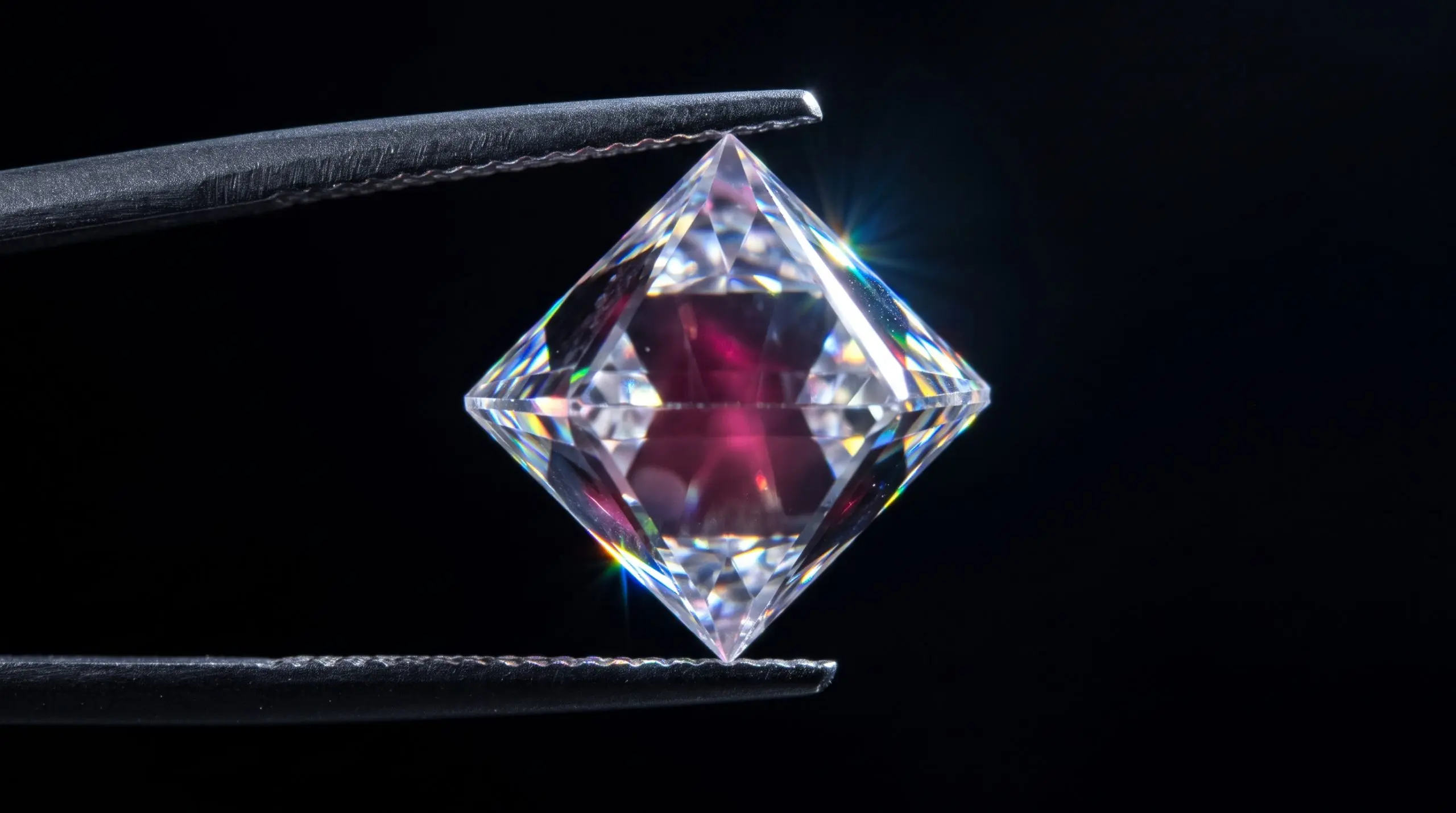
Researchers from Q-BIOMED used a striking visual demonstration at New Scientist Live, illuminating nitrogen-vacancy (NV) diamonds with a green laser to produce characteristic red fluorescence, to explain the core of their quantum sensing applications, the company says. The team presented how the sensitivity of these diamonds to magnetic fields is driving development of new biomedical tools.
These include endoscopic magnetometers designed to track magnetic particles during cancer surgery and fluorescent nanodiamonds explored as labels in ultra-sensitive lateral flow tests. For Q-BIOMED, the event was an opportunity to make quantum biomedical sensing tangible and start conversations about its future in healthcare.
Q-BIOMED Demonstrates NV Diamond Sensing for Biomedical Applications
This display explained the core technology driving their biomedical sensing applications, allowing visitors to directly observe the principle behind their work. The characteristic red glow originates from imperfections within the diamond lattice, specifically where nitrogen atoms replace carbon atoms, creating sensitivity to external magnetic fields. This sensitivity is the key to several ongoing development projects within the organization. This technology aims to improve surgical precision by providing real-time feedback on the location of magnetically labelled cancer cells, potentially enabling more complete tumour removal.
These nanodiamonds offer the potential to dramatically increase the accuracy of these common diagnostic tools, detecting biomarkers at concentrations previously undetectable. The event provided a platform for direct engagement with over 2,000 visitors, ranging from families to experts already working in quantum science. Researchers fielded questions about the underlying science, potential career paths and realistic timelines for technology deployment.
Feedback from younger attendees was particularly positive, with many describing the experience as “creative”. This enthusiastic response highlights the potential for inspiring the next generation of quantum scientists and engineers. For Q-BIOMED, New Scientist Live was more than a technology showcase; it was an opportunity to translate complex quantum concepts into tangible experiences. The ability to physically demonstrate the principles of NV diamond sensing, and discuss its potential applications, proved invaluable in encouraging understanding and sparking new collaborations, according to Q-BIOMED.
The demonstration of NV diamond sensing was part of a larger initiative, Quantum City, which brought together all five UK Quantum Technology Hubs. This collaborative effort aimed to highlight the breadth of the UK’s quantum research and its potential impact across multiple sectors.
Q-BIOMED’s contribution demonstrated how quantum sensing is moving research towards practical applications in healthcare, offering a glimpse into a future where quantum technologies will be important in diagnostics and treatment. The organization intends to continue this outreach through Quantum City, creating further opportunities for public engagement and exploration of quantum possibilities.
See today’s quantum computing news on Quantum Zeitgeist for the latest breakthroughs in qubits, hardware, algorithms, and industry deals.