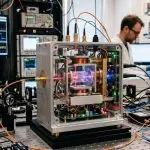
Mercury Ming, a fourth-year Psychology student at the University of Waterloo, investigated the link between magnesium isotopes and neuron function this summer through the Faculty of Science’s Summer Undergraduate Research Fund. Her work in Dr. Travis Craddock’s Quantum Neurobiology Lab focused on tubulin polymerization, a process critical for intracellular transport within neurons.
Previous research indicates that the rate of tubulin depolymerization exceeding repolymerization correlates with neuronal function loss in neurodegenerative diseases. Ming hopes this research will contribute to understanding these complex processes. The experience also strengthened Ming’s laboratory skills as she prepares for a healthcare career.
Magnesium Isotopes and Tubulin Polymerization in Neurons
Ming investigated the effect of magnesium isotopes on the polymerization of structural proteins in neurons within the Quantum Neurobiology Lab. The significance of tubulin dynamics extends to the underlying mechanisms of neurodegenerative diseases; previous research establishes a correlation between accelerated tubulin depolymerization and the subsequent loss of neuronal function. Ming explained that when tubulin structure depolymerizes faster than it can repolymerize, it leads to cognitive and motor impairments observed in these conditions. Ming’s research experience was supported by the Summer Undergraduate Research Fund (SURF), an initiative designed to expand undergraduate research opportunities.
The hands-on experience proved invaluable, bridging theoretical knowledge gained in coursework with practical application. “One of the most rewarding aspects was seeing the concepts I learned in class applied to real-world research,” Ming said, highlighting the benefit of the program in strengthening her wet lab skills and bolstering confidence in pursuing a healthcare career.
The Quantum Neurobiology Lab, situated within the Department of Physics and Astronomy, provided an environment for Ming to explore potential quantum effects within biological systems. The research emphasises the importance of structural proteins like tubulin in maintaining cellular function and offers a potential avenue for future therapeutic interventions targeting neurodegenerative disorders.


See today’s quantum computing news on Quantum Zeitgeist for the latest breakthroughs in qubits, hardware, algorithms, and industry deals.