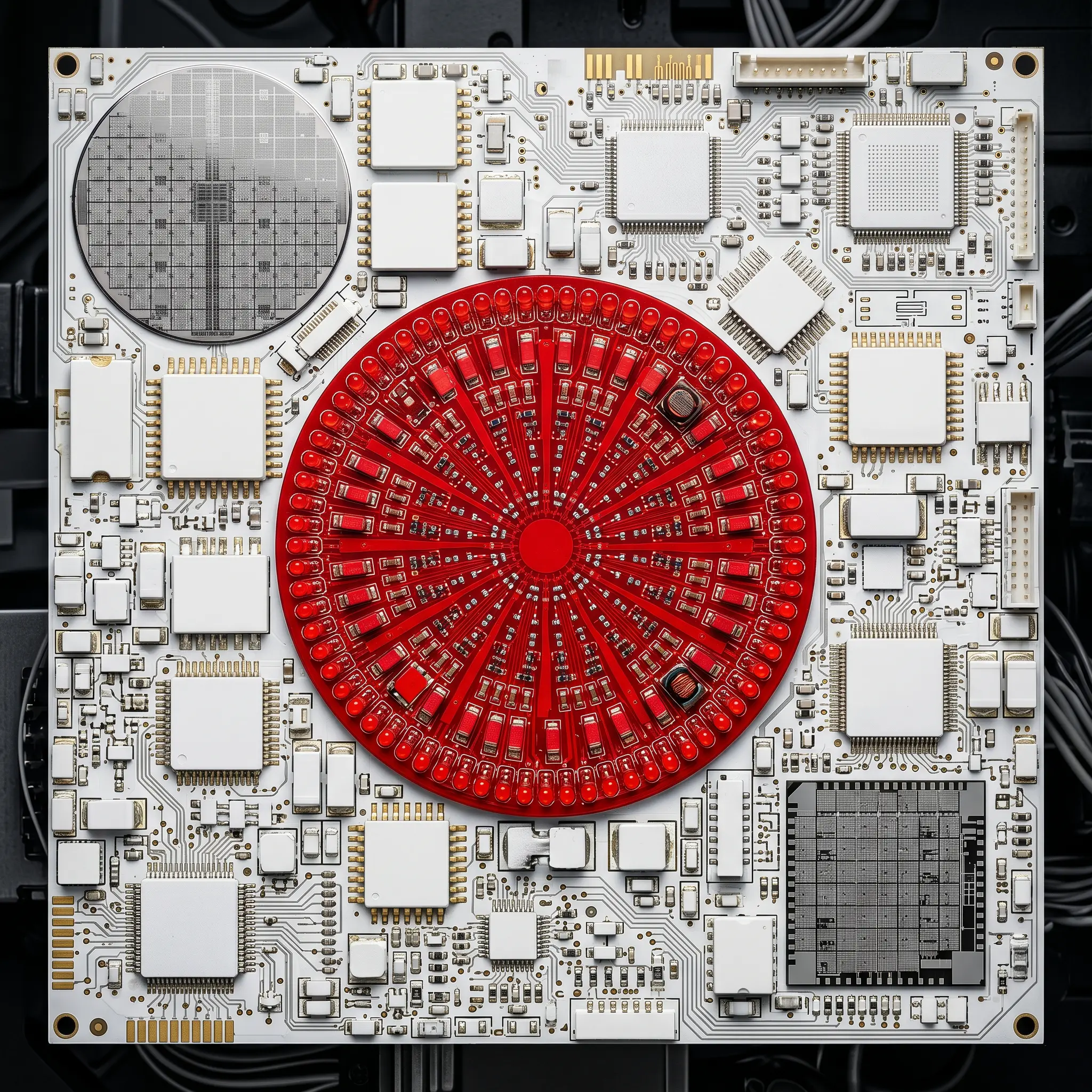
The leading japan quantum computing companies in 2026 sit inside one of the deepest national quantum-computing programmes in Asia, anchored by the JPY 1.05 trillion national quantum-investment strategy designating 2025 as the first year of quantum industrialisation, the Riken Center for Quantum Computing (RQC) at Wako, the AIST national lab at Tsukuba, the Q-STAR industry alliance of 112 corporate members (Toyota, NEC, Hitachi, Fujitsu and more), and a multi-modal commercial-vendor stack that spans superconducting, trapped-ion, photonic, annealing, and QKD. Ten anchor vendors lead this guide, and the full directory below runs to 41 japan quantum computing companies spanning hardware, software, components, and research.
Why Japan crossed the quantum-industrialisation threshold in 2025
The Cabinet Office quantum strategy page for japan quantum computing companies and the national programme is the primary policy source. Japan declared 2025 the first year of quantum industrialisation under the JPY 1.05 trillion (roughly $7B) national quantum-investment strategy, the largest single Asian quantum-computing-programme commitment outside China. The April 2025 Riken-Fujitsu 256-qubit superconducting quantum computer became the deepest commercial-hardware milestone of the year, the AIST G-QuAT testbed brought a QuEra neutral-atom system and Keysight 1,000-qubit control online at Tsukuba, and the broader Riken Kobe IBM Heron 156-qubit deployment plus the July 2025 Osaka University Fujitsu deployment built out the multi-site national hardware infrastructure.
The 2026 roadmap is the most aggressive in Asia outside China. Riken plus Fujitsu target a 1,000-qubit superconducting system at Fujitsu Technology Park by year-end 2026, with the 2030 horizon at 10,000+ qubits on the same Fujitsu-Riken platform. NVIDIA committed 540 Blackwell GPUs for the quantum-integration system (part of 2,140 GPUs across two new RIKEN NVIDIA systems) spinning up operationally in spring 2026, the deepest single GPU-accelerated quantum-classical-hybrid programme in the world. The Q-STAR industry alliance of 112 corporate members coordinates the broader commercial-sector engagement, and the Fujitsu Digital Annealer plus QunaSys quantum-chemistry pipeline plus Toshiba QKD network deployments give Japan a deep commercial-application stack on top of the hardware investment.
JPY 1.05 trillion national quantum-investment strategy
The Japanese national quantum-investment strategy directs roughly JPY 1.05 trillion (approximately $7B) through 2030 across the MEXT (Ministry of Education, Culture, Sports, Science and Technology), METI (Ministry of Economy, Trade and Industry), and the broader Cabinet Office quantum-strategy coordination programme. The funding stack includes Riken core-research budget allocations, AIST G-QuAT research-programme funding, university-level deployments at Tokyo, Osaka, Kyoto, Tohoku, and Hokkaido, and the broader Q-STAR industry-alliance corporate co-investment programme that anchors 112 corporate members.
The deepest single funding instrument is the Cabinet Office Moonshot Research and Development programme, which directs roughly JPY 100B to fault-tolerant quantum computing as Moonshot Goal 6 and funds the broader Riken-Fujitsu 10,000-qubit-by-2030 roadmap. The Cross-ministerial Strategic Innovation Promotion Programme (SIP) directs another JPY 40B to applied quantum-computing research, and the National Institutes for Quantum Science and Technology (QST) coordinates fundamental quantum-physics research alongside the broader university and corporate stack. The Fujitsu partnership with Riken alone extends through March 2029 under the national initiative.
The top japan quantum computing companies
Ten anchor vendors lead the japan quantum computing companies covered in this guide, and the full directory below runs to 41 companies across hardware, software, components, and research. Three are major Japanese corporates with deep quantum-computing programmes (Fujitsu, NEC, Toshiba). Two are national research labs anchoring hardware development (Riken, AIST). One is the deepest Japanese commercial quantum-software pure-play (QunaSys). Two are non-Japanese-headquartered vendors with substantial Japanese commercial operations (Quantinuum Japan via the Mitsui & Co. partnership, IBM Quantum Japan at the University of Tokyo). One is the deepest Japanese corporate research lab in photonic quantum (NTT Research). One is the major academic anchor outside the Tokyo region (Osaka University QIQB).
Riken (RQC, Center for Quantum Computing)
Superconducting hardware + national lab · Wako, Saitama, Japan · Founded 1917 (Riken); RQC 2021
Riken is the largest single national research institute in Japan and the academic anchor of the japan quantum computing companies ecosystem, with the Riken Center for Quantum Computing (RQC) coordinating superconducting hardware development, quantum-error-correction research, and quantum-HPC integration alongside Fujitsu, IBM, Quantinuum, and NVIDIA. The April 2025 256-qubit superconducting quantum computer with Fujitsu, the 2026 target for a 1,000-qubit superconducting system at the Fujitsu Technology Park, and the 2025 deployment of a 156-qubit IBM Heron processor at the Kobe facility (Japan’s first quantum-HPC integrated system) define the deepest commercial hardware footprint inside Japan. The collaboration also produced Japan’s first fully domestically produced quantum computer including dilution refrigerator, in partnership with QIQB and Fujitsu, and the broader NVIDIA allocation of 540 Blackwell GPUs to the RQC quantum-integration system (part of 2,140 GPUs across two new RIKEN NVIDIA systems) for spring 2026 operations anchors the HPC-quantum integration roadmap. The Fujitsu partnership extends through March 2029 under Japan’s national quantum initiative.
Superconducting hardware with RIKEN (256 qubits, 2025) + Digital Annealer + cryo-CMOS · Tokyo, Japan · Digital Annealer since 2018; RIKEN collaboration since 2020
Fujitsu is the deepest single corporate anchor of the japan quantum computing companies ecosystem, coordinating the RQC-Fujitsu Collaboration Center in Wako alongside Riken and producing the 256-qubit superconducting quantum computer launched April 2025 (a 4x upgrade from the previous 64-qubit system). The 2026 roadmap targets a 1,000-qubit superconducting system on the same Fujitsu-Riken platform with 10,000+ qubits planned by 2030. The Fujitsu Digital Annealer product line is the deepest commercial Japanese annealing-quantum technology, deployed with Toyota Systems in May 2025 to deliver 20x acceleration on automotive-connector-design workloads on standard computing hardware. The July 2025 University of Osaka quantum-computer launch added a second Fujitsu-supplied Japanese university deployment, complementing the Kobe Riken and Fujitsu Technology Park installations. Fujitsu also serves as the deepest Japanese corporate member of the broader Q-STAR industry alliance with 112 corporate members including Toyota, NEC, and Hitachi.
National Institute of Advanced Industrial Science & Technology · G-QuAT quantum-AI testbed · Tsukuba · Founded 2001
AIST is the second major Japanese national research lab inside the japan quantum computing companies ecosystem, anchoring the neutral-atom and control side of the national programme through its G-QuAT centre at Tsukuba. Its G-QuAT (Global Research and Development Center for Business by Quantum-AI Technology) evaluation testbed pairs a QuEra neutral-atom quantum computer with a Keysight 1,000-qubit control system and Bluefors cryogenics, co-located with the ABCI-Q supercomputer for hybrid quantum-classical work. AIST also coordinates the national quantum-application research programme alongside Riken on the academic side and Q-STAR on the corporate-industry side, hosting the broader Japanese MEXT and METI quantum-computing research initiatives that anchor the JPY 1.05 trillion quantum-investment strategy. The Tsukuba Science City location places AIST inside the deepest single concentration of Japanese national research institutes, and its logical-qubit context sits within our cross-modality quantum logical-qubit leaderboard.
Quantum annealing hardware (superconducting parametron, ParityQC architecture) · Tokyo, Japan
NEC is the third major Japanese corporate anchor in the japan quantum computing companies ecosystem, with a multi-modal quantum-computing programme that includes quantum annealing for optimisation, gate-based superconducting research, and a commercial ParityOS deployment in partnership with ParityQC. The 80-patent-family portfolio covers superconducting qubits, quantum annealing, and quantum-error correction, the deepest single Japanese corporate IP footprint in quantum computing. The application targets cover logistics optimisation, financial modelling, and traffic management across the broader Japanese telecoms-and-transport industry, with University of Tokyo on annealing algorithms (2020), the National Institute for Materials Science on quantum materials (2021), and Osaka University on gate-based quantum computing (2022) anchoring the research-partnership stack. NEC also serves the Amazon Web Services enterprise customer base as one of the first AWS Braket enterprise integrations on the Japanese side.
Quantum chemistry + molecular simulation software · Tokyo, Japan · Founded 2018
QunaSys is the deepest commercial Japanese quantum-chemistry-software pure-play in the japan quantum computing companies ecosystem, founded in Tokyo in 2018 to commercialise quantum-chemistry algorithms for pharmaceutical research, materials science, and drug discovery. The product portfolio centres on the QSCI (Quantum-Selected Configuration Interaction) Technical Portal and the broader quantum-enhanced molecular-simulation platform licensed to pharmaceutical companies for accelerated drug-discovery workloads. Total funding exceeds $29.7M+ across eight institutional backers including IBM Ventures, Mitsubishi Electric, Zeon Corporation, Global Brain, JIC Venture Growth, and Lightspeed Venture Partners. Commercial customers and partnerships include Biogen, Dow Chemical, Accenture, and the broader Japanese pharma-and-chemicals industry footprint. The 24-patent-family portfolio covers quantum-chemistry algorithms and variational-quantum-eigensolver technology, the deepest Japanese commercial quantum-software IP position.
Trapped-ion quantum computing (US/UK parent) · Tokyo office, Otemachi, Japan · Mitsui partnership since 2022
Quantinuum Japan is the deepest non-Japanese-headquartered commercial vendor inside the japan quantum computing companies ecosystem, with its Japanese presence anchored by the Mitsui & Co. partnership and an APAC distribution agreement. Mitsui & Co. joined Quantinuum’s $300M January 2024 round, led by JPMorgan Chase, with a roughly $50M strategic investment and a Japan distributorship that routes Quantinuum access to Japanese enterprise customers. The company also works with Mitsui and QSimulate through the QIDO drug-and-materials-discovery platform, and its engagement with Japanese research institutions runs alongside the Riken-Fujitsu superconducting and NEC-Fujitsu annealing programmes to give Japan multi-modal commercial-vendor coverage. The architectural primitive that Quantinuum brings is its 98-qubit Helios trapped-ion platform, whose published error-corrected demonstrations reach dozens of logical qubits.
IBM Quantum System One (Kawasaki, University of Tokyo-administered) + IBM Quantum System Two at RIKEN Kobe · Kawasaki and Kobe, Japan · System One since July 2021; System Two since June 2025
IBM Quantum operates two Japanese deployment sites that define the IBM footprint inside the japan quantum computing companies ecosystem. The original IBM Quantum System One deployment at the University of Tokyo (Hongo campus) became operational in 2023 as Japan’s first IBM Quantum System installation and serves the broader Japan-IBM Quantum Network of enterprise members. The 2025 deployment of a 156-qubit IBM Heron processor at the Riken Kobe facility created Japan’s first quantum-HPC integrated system, combining IBM Heron superconducting hardware with the broader Riken supercomputing infrastructure. The Japan-IBM Quantum Network includes Toshiba, Hitachi, JSR Corporation, Mizuho Financial Group, Mitsubishi Chemical, Mitsubishi UFJ Financial Group, Sony, and Yokogawa Electric as enterprise members, the deepest single-vendor enterprise quantum-computing footprint inside Japan after the Riken-Fujitsu state-coordinated programme.
Photonic quantum + Coherent Ising Machine · Tokyo + Sunnyvale lab · NTT Research established 2019
NTT Research is the deepest Japanese corporate research lab in the japan quantum computing companies ecosystem with a substantial international footprint, running the Coherent Ising Machine (CIM) photonic-quantum platform alongside the broader NTT Basic Research Laboratories portfolio that anchors much of the foundational photonic-quantum-computing research in Japan. The CIM platform implements quantum-inspired optimisation through degenerate-optical-parametric-oscillator networks, the architectural primitive that differentiates NTT from the gate-model-quantum-computing programme at Riken and Fujitsu. The NTT IS Labs in Atsugi and the NTT Research Physics & Informatics Lab in Sunnyvale California coordinate the Japanese photonic-quantum-research foundation, and the broader NTT corporate footprint includes the NTT Communications quantum-secure-network deployment alongside Toshiba on the Japanese side and the global NTT data-centre infrastructure. NTT Research is a strategic partner of Q-STAR.
Japan quantum-secure communications and QKD vendors
Toshiba (QKD)
Quantum key distribution systems and quantum-secure networking · Tokyo, Japan and Cambridge, UK · QKD research since 1999
Toshiba operates the deepest Japanese commercial QKD programme in the japan quantum computing companies ecosystem, with the Toshiba Cambridge Research Laboratory (UK) anchoring the global research-and-development side and the Toshiba Energy Systems & Solutions Tokyo corporate footprint anchoring the Japanese commercial deployment. The Toshiba QKD platform competes globally with the ID Quantique commercial QKD portfolio (now an IonQ subsidiary since May 2025) and serves the broader Japanese banking-and-government quantum-secure-network procurement programme, the JPY-equivalent of the European EuroQCI and the South Korean SK Telecom + ID Quantique deployment. Toshiba also participates in the broader IBM Quantum Network Japan as an enterprise member, the deepest single Japanese-corporate engagement that combines QKD-hardware-supply with downstream gate-based-quantum-computing customer integration.
Research university centre (QIQB); hosts Japan’s third superconducting quantum computer, 64 qubits, RIKEN-supplied chip · Suita, Osaka, Japan
The Osaka University Center for Quantum Information and Quantum Biology (QIQB) is the third major academic anchor in the japan quantum computing companies ecosystem after Riken and AIST, hosting a Fujitsu-supplied superconducting quantum computer that launched in July 2025 as part of the broader Japanese national quantum-investment strategy. QIQB coordinates the gate-based-quantum-computing research programme at Osaka University and serves as a regional academic anchor distinct from the Tokyo-region Riken-Fujitsu-AIST cluster. The Osaka deployment is the second Fujitsu-supplied Japanese university quantum computer after the Riken Wako installation, and the broader Osaka academic-quantum ecosystem includes the Osaka University Faculty of Science, Engineering Science, and the broader regional research footprint. QIQB participates in the Q-STAR industry alliance and the broader JPY 1.05 trillion national quantum-investment programme designating 2025 as the first year of quantum industrialisation in Japan.
International vendors deploying quantum hardware in Japan
IQM Quantum Computers (Japan)
Superconducting quantum hardware vendor (Finland) · Espoo, Finland · 20-qubit IQM Radiance purchased by TOYO Corporation, Tokyo; delivery by end of 2026
IQM is the Finnish superconducting-hardware vendor that chose Japan as the anchor of its Asia-Pacific expansion, and its 20-qubit IQM Radiance system purchased by TOYO Corporation, announced April 2026, is billed as the first enterprise purchase of a quantum computer in Japan. The agreement makes TOYO the local channel for IQM and gives Japanese enterprise customers on-premise access to a full-stack superconducting machine rather than cloud-only time. QZ covered the deal in IQM’s Asia-Pacific base and Japan’s first quantum computer deal. That milestone places IQM alongside Quantinuum and IBM as a non-Japanese-headquartered vendor with a concrete commercial footprint inside the japan quantum computing companies ecosystem.
Photonic quantum systems; PT-2 deployed in Japan via Toyota Tsusho · London, UK
ORCA Computing is the UK photonic-quantum vendor whose PT-2 system reached a Japanese enterprise customer on 16 June 2026, its first enterprise deployment in Japan, delivered under a distribution partnership with Toyota Tsusho. The room-temperature photonic architecture connects to standard data-centre infrastructure and pairs quantum sampling with classical GPU pipelines for near-term hybrid workloads, a contrast to the cryogenic superconducting systems that dominate the rest of the market. QZ reported the deployment in ORCA and Toyota Tsusho’s first quantum system in Japan. Together with the IQM and TOYO agreement, it marks 2026 as the year international hardware vendors began landing commercial systems on Japanese soil across the japan quantum computing companies ecosystem.
Neutral-atom quantum hardware · Chiyoda-ku, Tokyo, Japan · Founded 2025
Yaqumo is a Kyoto-based quantum-hardware startup developing cold-atom quantum computers in partnership with research groups at Kyoto University and the Institute for Molecular Science. The company secured strategic backing from Quantonation in April 2026, its first Japanese investment, and signed a memorandum of understanding with Singapore-based Entropica Labs to integrate hardware and software for fault-tolerant systems under the witness of Singapore and Japan governments. Yaqumo’s neutral-atom approach uses individually addressable atoms held in optical tweezers as qubits, the same modality pursued at scale by QuEra and Atom Computing. The team plans staged hardware milestones culminating in scalable fault-tolerant operation, and has stated ambitions to operate as a vertically integrated Japanese hardware vendor.
Qubitcore is a Yokohama-based quantum computing startup, founded in July 2024 as a spinoff from the Okinawa Institute of Science and Technology (OIST). The company develops distributed quantum computing systems built on ion trap technology with photonic interconnects.
Led by CEO Ryuta Watanuki and CSO Prof. Takahashi, Qubitcore raised pre-seed funding in January 2025, and in April 2026 it raised a JPY 1.53 billion seed round led by SBI Investment, advancing Japan’s first trapped ion quantum computer initiative. Its roadmap calls for a testbed system by 2028, a 1,000-qubit prototype by 2029, and commercial deployment by 2030. The company’s R&D center sits at OIST in Okinawa, using the institute’s research facilities. Through 2025, Qubitcore continued developing its distributed ion trap architecture, marking Japan’s entry into trapped ion quantum computing.
Nanofiber cavity-QED quantum hardware and quantum interconnects · Shinjuku-ku, Tokyo, Japan · Founded 2022
Nanofiber Quantum Technologies (NanoQT) is Japan’s first startup focused on quantum computer hardware development. It uses a nanofiber-based Cavity QED (Quantum Electrodynamics) method to build universal quantum computers, drawing on more than a decade of engineering innovation to develop a proprietary nanofiber cavity. That cavity unlocks the advantage of cavity QED while staying compatible with optical fiber and existing quantum processing unit architectures.
The company’s interconnect technology is engineered for neutral-atom QPUs and offers a path beyond per-unit scalability limits. NanoQT announced the first closing of its $14 million Series A financing, led by Phoenix Venture Partners, following more than $20 million in government R&D grants across Japan and the United States.
Photonic (optical) quantum computers · Toshima-ku, Tokyo, Japan · Founded 2024
OptQC Corp. is a Japanese photonic quantum computing company building scalable, general-purpose optical quantum computers that operate at room temperature using time-domain multiplexing technology. The company draws on 25 years of optical quantum computing research at the University of Tokyo, and it runs HIQALI (Hub for Innovation in Quantum And Light-driven Industry), an innovation center focused on applying quantum and optical technology across optimization, AI, and machine learning.
In November 2025, OptQC signed a collaboration agreement with NTT Corporation to develop optical quantum computers targeting 10,000 qubits by 2027 and 1 million qubits by 2030. The partnership draws on Japan’s photonics and telecommunications expertise. The company’s experimental laboratory has been operational since May 2025, with its first commercial optical quantum computer scheduled for April 2026 and a 10,000 quantum mode processor targeted for 2028. Its technology emphasizes scalability, fast processing, energy efficiency, and compatibility with existing optical telecommunication infrastructure.
Silicon quantum hardware R&D + tensor-network optimisation · Shibuya, Tokyo, Japan · Founded 2008 (as MDR)
blueqat is one of Japan’s longest-running quantum software companies, headquartered in Tokyo since its founding in 2008 by Yuichiro Minato. The firm publishes the open-source blueqat SDK for quantum-circuit programming, operates the blueqat Cloud platform for running jobs on third-party hardware backends, and runs a community of more than 8,000 Japanese developers through Quantum Computing Tokyo and the Quantum Software Project. blueqat has consulted with manufacturers, financial institutions, and government bodies on quantum-readiness and benchmark studies, and it partners with multiple hardware vendors to expose trapped-ion, superconducting, and annealing back-ends through a unified Python API. The company has been a constant in the Japanese ecosystem longer than nearly every other domestic quantum venture.
Quantum algorithm and materials-simulation software; subsidiary of TerraSky · Chuo-ku, Tokyo, Japan · Founded 2019
Quemix is a Japanese quantum software company specialising in materials and chemistry simulation, headquartered in Tokyo and spun out of work originating at TIS Inc., its parent company. The Quemix team has published variational quantum-algorithm work targeting drug discovery, catalyst design, and battery-materials simulation, and offers a proprietary platform combining classical density-functional theory with near-term quantum-circuit routines for hybrid workflows. The company partners with Japanese chemical and pharmaceutical companies on use-case proofs, and its researchers contribute to academic publications in collaboration with the University of Tokyo and Tohoku University. Quemix represents the growing class of small Japanese quantum-software ventures that are turning academic research into commercial chemistry workflows ahead of fault-tolerant hardware.
IT services and systems integration; quantum computing consulting and algorithm partnerships · Koto-ku, Tokyo, Japan · Founded 1988
NTT Data Corporation is a Japanese multinational information technology service and consulting company founded in 1967 and headquartered in Tokyo. Part of the NTT Group, it provides quantum computing services for enterprise clients, including quantum algorithm development, quantum consulting, and quantum software engineering.
NTT Data collaborates with quantum computing providers to offer quantum expertise and implementation services across industries, exploring applications for financial services, telecommunications, manufacturing, and the public sector. The company serves global enterprises that need quantum computing services and technology consulting, and it contributes to Japan’s quantum technology ecosystem by advancing quantum software development and supporting enterprise quantum transformation for business optimization and computational advantage.
Fixstars Amplify is a Tokyo-based company established in 2021 that offers a cloud platform built for combinatorial optimization problems, integrating quantum annealing, Ising machines, and gate-model quantum computers. The platform provides an SDK and execution environment for Ising machines, automating logical model conversion, physical model conversion, and machine execution to make quantum annealing programming more accessible. It is compatible with the company’s own Fixstars Amplify Annealing Engine (AE) as well as all available quantum annealing and Ising solvers, mathematical optimization solvers, and gate-based quantum computers. The GPU-based Amplify AE processes large-scale problems of more than 100,000 bits at high speed.
Since becoming publicly available in 2021, Amplify has processed more than 45 million user requests as of October 2024. It has been adopted in the Mitou Target Program since 2021, with positive feedback on SDK ease of use and performance. The platform also offers Toshiba’s Quantum-Inspired Optimization Solution SQBM+.
Sigma-i is a Tokyo-based quantum computing startup founded in 2019 as a spinout from Tohoku University. It holds world-leading quantum annealing technologies and develops solutions that use quantum computers with annealing techniques.
The company partners with Toppan on quantum computing research focused on logistics optimization. In 2021, Sigma-i and Toppan began pilot tests that used quantum annealing to improve the efficiency of logistics operations from pickup through to receipt of goods, with the goal of launching logistics DX solutions in 2025. The two companies also research overall optimization solutions based on quantum annealing for sectors beyond logistics.
Sigma-i is part of Japan’s growing quantum startup ecosystem, which received major government backing in 2025 with roughly 130 billion yen ($855 million) for quantum research and technology development.
sigma-i.co.jp →
Jij Inc
Annealing · Tokyo, Japan · Founded 2018
Jij Inc. is a Japanese quantum computing company focused on quantum annealing. It develops the open-source software OpenJij for solving Ising Model and QUBO (Quadratic Unconstrained Binary Optimization) problems, and provides quantum annealing algorithms and tools that help enterprises apply quantum optimization to logistics, scheduling, and combinatorial optimization. The company connects academic quantum annealing research with practical industrial use in the Japanese market.
Through 2025, Jij continued to develop its quantum software platform and developer tools, with a focus on improving algorithm efficiency and expanding use cases. Engagement with the quantum developer community drives much of its product direction.
Groovenauts is a Japanese cloud and AI company partnering with the Institute for Molecular Science on cold atom quantum computer commercialization platform development. The company focuses on building cloud infrastructure and software platforms to make quantum computing accessible to enterprises and researchers. Groovenauts brings extensive cloud computing expertise to Japan’s quantum computing ecosystem, bridging the gap between quantum hardware and practical commercial applications.
Qubit control hardware · Hachioji, Tokyo, Japan · Founded 2021
QuEL is an Osaka University-affiliated startup established in 2021 that supplies novel qubit controllers for quantum computing researchers. The company develops advanced control electronics and software for precise qubit manipulation in quantum computers. QuEL’s technology enables improved quantum gate fidelity and better overall quantum computer performance through sophisticated control systems.
Silicon spin qubits + research · Tokyo, Japan · Founded 1910
Hitachi runs one of Japan’s most established corporate quantum-research programmes through Hitachi Research and Development Group and Hitachi Cambridge Laboratory in the United Kingdom. The company has been developing silicon-based quantum-dot qubits since the early 2000s, building on its existing CMOS expertise to pursue scalable spin-qubit fabrication compatible with industrial semiconductor processes. Hitachi is a member of the Quantum Strategic Industry Alliance for Revolution (Q-STAR), participates in Japan’s national quantum hub at Riken, and delivers quantum-inspired optimisation services on its CMOS Annealing Machine that has been used for traffic-flow, logistics, and portfolio applications. The breadth of the parent organisation gives Hitachi uncommon ability to apply quantum techniques across rail, energy, healthcare, and manufacturing verticals.
www.hitachi.com/rd/research/computing/quantum →
Mitsubishi Electric
Quantum-safe networking + QKD · Tokyo, Japan · Founded 1921
Mitsubishi Electric is a long-standing player in Japan’s quantum-safe communications and cryptography programmes, with R&D running across its Information Technology R&D Center. The company has been an early adopter of post-quantum cryptography, contributing to NIST’s standardisation process, deploying lattice-based key-exchange schemes in its own products, and partnering with NICT on Tokyo QKD network field tests. Mitsubishi Electric also participates in Q-STAR alongside Toshiba, NEC, Fujitsu, and Hitachi, helping to set Japanese industry standards for quantum readiness across critical infrastructure. The firm’s product reach into power systems, defence, satellites, and factory automation positions it to integrate post-quantum security across operational technology, not just IT.
Quantum repeaters and quantum communication · Yokohama, Japan · Founded 2020
LQUOM, formerly QWAVE Dynamics, is a Japanese quantum communication company founded in 2020 as a spin-out from Yokohama National University’s Horikiri Laboratory. It develops long-distance quantum communication technologies, including the quantum repeaters needed to realize the quantum internet. The company holds all the elemental technologies for quantum repeaters: quantum entanglement generators, quantum memory, wavelength conversion, and frequency stabilization.
In 2024, LQUOM commercialized the LQ-PS-100, a cavity-integrated two-photon entangled light source. In February 2025, it signed a joint research agreement with Quantinuum, Keio University, SoftBank, Mitsui & Co., Mitsubishi Electric, and Yokohama National University to work toward deployable and scalable quantum information processing.
The company was selected by NEDO for post-5G research and has raised $3.36M in Series B funding from SBI Investment, ORIX Capital, Bio Sight Capital, Anritsu, and SMBC Venture Capital.
KDDI Corporation is a Japanese telecommunications operator founded in 1984 and headquartered in Tokyo. The company conducts quantum networking research, deploying quantum key distribution (QKD) networks and quantum-safe telecommunications infrastructure in Japan.
KDDI collaborates with quantum technology providers to advance practical quantum communications deployments, including quantum encryption for secure communications, and it explores quantum networking technologies for ultra-secure telecommunications and quantum internet infrastructure. The company serves Japanese telecommunications markets, enterprise customers, and government agencies that need quantum-safe communications and quantum network infrastructure, and it contributes to Japan’s National Quantum Technology Innovation Strategy by advancing quantum communications for the telecommunications industry.
Photonics components for quantum systems · Hamamatsu, Japan · Founded 1953
Hamamatsu Photonics manufactures photonic devices and optical sensors for quantum technologies, including photomultiplier tubes (PMTs), single-photon avalanche diodes (SPADs), and qCMOS cameras for trapped ion and neutral atom quantum computing. Recent products include the ORCA-Quest 2 qCMOS camera with faster readout and enhanced UV sensitivity, plus their first commercial optically pumped magnetometer (OPM) for ultra-low magnetic field detection in quantum sensing. Hamamatsu acquired NKT Photonics in 2024, a deal delayed by a Danish foreign-investment review, to strengthen its quantum photonics capabilities.
Test and measurement for quantum computing · Atsugi, Japan · Founded 1895
Anritsu Corporation is a Japanese manufacturer of telecommunications test and measurement equipment, founded in 1895 and headquartered in Atsugi, Kanagawa.
Anritsu provides test equipment for quantum communication systems, including optical network analyzers, signal analyzers, and specialized instruments for validating quantum key distribution (QKD) networks and quantum communication infrastructure. It also develops testing solutions for quantum-safe telecommunications and post-quantum cryptography. The company serves telecommunications operators, quantum technology companies, research institutions, and quantum network developers, supplying the precision test and measurement capabilities that quantum networking deployments and quantum-safe telecommunications validation require.
ULVAC CRYOGENICS INC. is a Japanese company developing next-generation dilution refrigerators for quantum computers with input from IBM, strengthening Japan’s domestic supply of the cryogenic systems that quantum research and commercialization depend on. ULVAC runs evaluation tests in collaboration with IBM, including testing at IBM’s quantum data center in Poughkeepsie, New York, with industry deployment scheduled for early 2026.
The system maintains cryogenic temperatures at the 10mK level, uses a scalable modular design suited to future large-scale quantum environments, and relies on in-house manufacturing of core components including dilution refrigerators, pulse-tube cryocoolers, and vacuum components. In April 2025, ULVAC installed a dilution refrigerator at the University of Osaka Center for Quantum Information and Quantum Biology, supporting Japan’s first fully domestically built quantum computer. The company is establishing a domestic production framework to reduce dependence on overseas manufacturers.
www.ulvac-cryo.co.jp →
Fujikura
Cryogenic cabling and superconducting wire · Tokyo, Japan · Founded 1885
Fujikura Ltd. is a major Japanese manufacturer founded in 1885 that produces superconducting wires, cables, and materials for quantum computing and telecommunications. The company manufactures high-temperature superconducting (HTS) wire and cable products, drawing on more than 135 years of cable and wire manufacturing expertise.
Fujikura’s superconducting solutions support quantum processors, superconducting qubits, quantum interconnects, and cryogenic quantum systems that need ultra-low-resistance electrical conductivity at cryogenic temperatures. The company serves quantum computing manufacturers, research institutions, telecommunications companies, and cryogenic equipment providers that rely on superconducting wire and cable for quantum computing infrastructure, quantum communication networks, and quantum sensing systems.
Telecom operator, quantum computing and quantum networking R&D · Tokyo, Japan · Founded 1986
SoftBank Group Corp. is a Japanese multinational conglomerate founded in 1981 and headquartered in Tokyo, Japan.
SoftBank invests in quantum technology companies through the SoftBank Vision Fund and its corporate ventures, including quantum computing startups and quantum technology providers. Its telecommunications division explores quantum-safe security for mobile networks and quantum communications technologies. By supporting quantum startup growth and quantum technology development, SoftBank contributes to both the Japanese and global quantum technology ecosystem, representing Japanese technology investment in the quantum computing sector worldwide.
Kyoto University is a national research university founded in 1897 in Kyoto, Japan, and the country’s second oldest university. Its physics department and research institutes conduct quantum research spanning quantum physics, quantum materials, and quantum information science, with contributions to both theoretical and experimental quantum physics, quantum computing, and quantum technology development.
The university’s quantum research programs have produced Nobel Prize winners in physics. Kyoto University collaborates with Japanese quantum companies and international research institutions, and through fundamental research and education it advances the scientific foundations of quantum technology and supports Japan’s quantum research excellence.
University research center · Yokohama, Japan · Founded 2018
Keio University Quantum Innovation Center is IBM’s first quantum innovation center in Asia, established in December 2023 to provide quantum computing resources and research collaboration opportunities. The center provides Japanese researchers and students with access to IBM quantum systems while fostering quantum education and workforce development. This partnership represents Japan’s strategy to accelerate quantum computing adoption and build domestic quantum expertise through collaboration with leading international quantum technology providers.
Multi-modal coverage from superconducting to photonic and annealing
Japan covers four major quantum-computing modalities in parallel through different corporate and academic programmes. Superconducting runs at Riken-Fujitsu (256 qubits April 2025, 1,000-qubit target 2026, 10,000+ by 2030), at IBM Quantum Japan (Kobe Heron deployment), and at the University of Tokyo IBM Quantum System One. Trapped-ion and neutral-atom work runs through Quantinuum’s Mitsui-anchored Japan presence and the AIST G-QuAT testbed, which pairs a QuEra neutral-atom system with Keysight 1,000-qubit control. Photonic runs at NTT Research through the Coherent Ising Machine programme. Quantum annealing runs at the Fujitsu Digital Annealer commercial platform and the NEC quantum-annealing research programme.
The multi-modality coverage gives Japan an architectural-hedge similar to the German BMBF programme strategy and substantially deeper than the French commercial-vendor portfolio (Pasqal neutral-atom + Alice & Bob cat-qubits + Quobly silicon-spin), the UK silicon-spin + QEC focus, or the Swiss QKD + control-electronics specialisation. The cross-modality view in our quantum logical-qubit leaderboard places Quantinuum’s Helios error-corrected results inside the top tier of global logical-qubit demonstrations and the Riken-Fujitsu 256-qubit superconducting platform inside the top tier of physical-qubit-count platforms.
The Q-STAR industry alliance and corporate participation
The Quantum Strategic Industry Alliance for Revolution (Q-STAR) is the central corporate-coordination organisation of the japan quantum computing companies ecosystem, with 112 corporate members including Toyota, Honda, Nissan, Hitachi, NEC, Fujitsu, NTT, Toshiba, Mitsubishi Chemical, JSR Corporation, Mizuho Financial Group, Mitsubishi UFJ Financial Group, Sony, and the broader Japanese keiretsu industrial base. Q-STAR coordinates corporate-sector engagement with the Riken-AIST national-laboratory research stack and serves as the deepest single industry-coordination structure in the broader Japanese quantum-industrialisation strategy.
The Q-STAR corporate-coordination model is structurally distinct from the US JPMorgan Chase + IBM Quantum Partnership Programme model (single-enterprise + single-vendor bilateral deals) and the European EuroHPC quantum-flagship model (state-coordinated multi-vendor multi-customer programme). The Japanese Q-STAR approach reflects the broader keiretsu industrial structure that pools resources across corporate members for technology-development programmes, and the Q-STAR membership stack covers automotive, finance, pharmaceuticals, materials, electronics, and the broader Japanese manufacturing-industry footprint.
When Japan matters for your quantum-computing strategy
Automotive and manufacturing optimisation
The Japanese automotive industry is the deepest single enterprise-vertical customer base in the japan quantum computing companies ecosystem, anchored by Toyota, Honda, Nissan, Mazda, Mitsubishi Motors, and the broader Japanese keiretsu manufacturing footprint. Fujitsu Digital Annealer delivers 20x acceleration on automotive-connector design (Toyota Systems, May 2025), the broader NEC quantum-annealing platform serves logistics and traffic-management workloads, and the Q-STAR industry alliance includes Toyota, Honda, and Nissan as anchor automotive members. The Japanese automotive-manufacturing footprint is structurally comparable to the German BMW + Volkswagen + Mercedes-Benz quantum-computing-engagement stack at deeper national-laboratory integration.
Pharmaceuticals and chemistry
The Japanese pharmaceutical and fine-chemicals industry anchors the second major enterprise-vertical customer base. Takeda Pharmaceutical, Astellas Pharma, Daiichi Sankyo, Eisai, Otsuka, Mitsubishi Chemical, Sumitomo Chemical, JSR Corporation, and the broader Japanese keiretsu chemicals footprint engage with the QunaSys quantum-chemistry-software platform, the IBM Quantum Network Japan enterprise programme, and the Riken-Fujitsu superconducting hardware roadmap. The QSCI Technical Portal launched by QunaSys is the deepest commercial Japanese quantum-chemistry-software deployment, and the broader Japanese pharma-and-chemicals engagement footprint matches the German BASF + Boehringer Ingelheim engagement at comparable scale.
Financial services and quantum security
The Japanese financial-services industry anchors the third major enterprise-vertical customer base. Mizuho Financial Group, Mitsubishi UFJ Financial Group, Sumitomo Mitsui Banking Corporation, Nomura Holdings, Daiwa Securities, and the broader Japanese banking-and-insurance industry footprint engage with the IBM Quantum Network Japan, the Toshiba QKD commercial-deployment programme, and the broader Japanese quantum-secure-network strategy. The Toshiba QKD platform competes with the ID Quantique commercial QKD portfolio (now an IonQ subsidiary since May 2025) and serves the Japanese banking sector at deeper commercial scale than the equivalent European or Korean deployments.
Who are the leading japan quantum computing companies in 2026?
Ten anchor vendors lead the guide, and the full directory runs to 41 companies. Riken (Wako, RQC superconducting + 256Q Apr 2025 + 1,000Q target 2026 + 10,000Q by 2030) anchors the national-laboratory side with Fujitsu (Tokyo, RQC partner + Digital Annealer + Toyota Systems 20x acceleration May 2025). AIST (Tsukuba, G-QuAT quantum-AI testbed with QuEra neutral-atom hardware and Keysight 1,000-qubit control) is the second national lab. NEC (Tokyo, annealing + gate-based + ParityOS) and Toshiba (Tokyo + Cambridge UK, QKD) are the other major corporates. QunaSys (Tokyo, quantum chemistry, $29.7M+) is the deepest Japanese commercial pure-play. Quantinuum Japan (Mitsui partnership plus APAC distribution) and IBM Quantum Japan (University of Tokyo + Kobe Heron 156Q 2025) anchor the non-Japanese-HQ commercial footprint. NTT Research (Coherent Ising Machine) covers photonic. Osaka University QIQB (Fujitsu-supplied July 2025 system) is the major regional academic anchor.
What is the JPY 1.05 trillion national quantum strategy?
The Japanese national quantum-investment strategy commits roughly JPY 1.05 trillion (approximately $7B) through 2030 across the MEXT (Ministry of Education, Culture, Sports, Science and Technology), METI (Ministry of Economy, Trade and Industry), and Cabinet Office quantum-strategy coordination programme. The strategy designates 2025 as the first year of quantum industrialisation, funds Riken-Fujitsu superconducting hardware development, AIST national-lab research, university-level deployments at Tokyo, Osaka, Kyoto, Tohoku, and Hokkaido, and the broader Q-STAR industry-alliance corporate co-investment programme. The Cabinet Office Moonshot Research and Development programme directs JPY 100B alone to fault-tolerant quantum computing as Moonshot Goal 6, the deepest single Japanese funding instrument for quantum-computing research and the foundation of the Riken-Fujitsu 10,000-qubit-by-2030 roadmap.
What is the Riken-Fujitsu collaboration?
Riken and Fujitsu run a deep multi-year collaboration on superconducting quantum-computing hardware development at the RQC-Fujitsu Collaboration Center in Wako, Saitama. The partnership produced the April 2025 256-qubit superconducting quantum computer (a 4x upgrade from the previous 64-qubit Riken-Fujitsu system), targets a 1,000-qubit system at Fujitsu Technology Park by year-end 2026, and projects 10,000+ qubits on the same platform by 2030. The collaboration also produced Japan’s first fully domestically produced quantum computer including dilution refrigerator (with QIQB and Fujitsu), and the broader Fujitsu partnership extends through March 2029 under Japan’s national quantum initiative. NVIDIA committed 540 Blackwell GPUs for the Riken quantum-integration system (part of 2,140 GPUs across two new RIKEN NVIDIA systems) operational spring 2026, the deepest single GPU-accelerated quantum-classical-hybrid programme.
What is Q-STAR?
The Quantum Strategic Industry Alliance for Revolution (Q-STAR) is the central corporate-coordination organisation of the japan quantum computing companies ecosystem, with 112 corporate members including Toyota, Honda, Nissan, Hitachi, NEC, Fujitsu, NTT, Toshiba, Mitsubishi Chemical, JSR Corporation, Mizuho Financial Group, Mitsubishi UFJ Financial Group, Sony, and the broader Japanese keiretsu industrial base. Q-STAR coordinates corporate-sector engagement with the Riken-AIST national-laboratory research stack and reflects the broader keiretsu industrial structure that pools resources across corporate members for technology-development programmes. The Q-STAR membership stack covers automotive, finance, pharmaceuticals, materials, electronics, and the broader Japanese manufacturing-industry footprint.
How does Japan compare with China and the US on quantum computing?
Japan sits between the US and China on absolute funding scale: the JPY 1.05 trillion (roughly $7B) national-investment commitment through 2030 is smaller than the Chinese 14th Five-Year Plan quantum-computing budget (estimated $15-25B) and the US federal quantum-computing R&D budget (DARPA QBI plus NSF QLCI plus DOE quantum-information-science programmes, roughly $5B per year). Japan leads on deployed superconducting hardware after the April 2025 Riken-Fujitsu 256-qubit system, and the Q-STAR corporate-alliance footprint is the deepest single industry-coordination structure in Asia outside China. The 2030 roadmap targets a Japanese 10,000-qubit superconducting system that would match or exceed the planned IBM Kookaburra-class and Chinese USTC-Hefei superconducting systems.
What does AIST run at its G-QuAT quantum centre?
AIST at Tsukuba Science City runs the G-QuAT (Global Research and Development Center for Business by Quantum-AI Technology) evaluation testbed, whose confirmed hardware includes a QuEra neutral-atom quantum computer, a Keysight 1,000-qubit control system, and Bluefors cryogenics, co-located with the ABCI-Q supercomputer. The centre coordinates the broader Japanese quantum-application research programme and has signed procurement and collaboration agreements across several international vendors as part of Japan’s national quantum-investment strategy. Quantinuum reaches the Japanese market chiefly through its Mitsui & Co. partnership rather than an AIST install, with Mitsui joining Quantinuum’s $300M January 2024 round led by JPMorgan Chase at a roughly $50M strategic investment plus a Japan distributorship.
What is QunaSys and what does it do?
QunaSys is the deepest commercial Japanese quantum-chemistry-software pure-play in the japan quantum computing companies ecosystem, founded in Tokyo in 2018 to commercialise quantum-chemistry algorithms for pharmaceutical research, materials science, and drug discovery. The product portfolio centres on the QSCI (Quantum-Selected Configuration Interaction) Technical Portal and the broader quantum-enhanced molecular-simulation platform licensed to pharmaceutical companies for accelerated drug-discovery workloads. Total funding exceeds $29.7M across eight institutional backers including IBM Ventures, Mitsubishi Electric, Zeon Corporation, Global Brain, JIC Venture Growth, and Lightspeed Venture Partners. Commercial customers and partnerships include Biogen, Dow Chemical, Accenture, and the broader Japanese pharma-and-chemicals industry footprint.
What is the Coherent Ising Machine at NTT Research?
The Coherent Ising Machine (CIM) is NTT Research’s photonic-quantum-inspired optimisation platform, implementing optimisation through degenerate-optical-parametric-oscillator networks rather than gate-model quantum computation. The CIM architecture differentiates NTT Research from the Riken-Fujitsu superconducting programme, the AIST QuEra neutral-atom deployment, and the broader gate-model-quantum-computing ecosystem inside Japan. NTT Research operates the broader photonic-quantum-computing-research foundation through the NTT IS Labs in Atsugi and the NTT Research Physics and Informatics Lab in Sunnyvale California, and the broader NTT corporate footprint includes the NTT Communications quantum-secure-network deployment alongside Toshiba on the Japanese side and the global NTT data-centre infrastructure stack.
Disclaimer. This article is for informational purposes only and does not constitute investment, financial or professional advice. The quantum technology industry evolves rapidly and information may become outdated. Always conduct your own research and consult qualified advisers before making investment decisions. Investing in quantum computing companies involves significant risk, including the potential loss of your entire investment, and past performance is not indicative of future results.
To provide the best experiences, we and our partners use technologies like cookies to store and/or access device information. Consenting to these technologies will allow us and our partners to process personal data such as browsing behavior or unique IDs on this site and show (non-) personalized ads. Not consenting or withdrawing consent, may adversely affect certain features and functions.
Click below to consent to the above or make granular choices. Your choices will be applied to this site only. You can change your settings at any time, including withdrawing your consent, by using the toggles on the Cookie Policy, or by clicking on the manage consent button at the bottom of the screen.
Functional
Always active
The technical storage or access is strictly necessary for the legitimate purpose of enabling the use of a specific service explicitly requested by the subscriber or user, or for the sole purpose of carrying out the transmission of a communication over an electronic communications network.
Preferences
The technical storage or access is necessary for the legitimate purpose of storing preferences that are not requested by the subscriber or user.
Statistics
The technical storage or access that is used exclusively for statistical purposes.The technical storage or access that is used exclusively for anonymous statistical purposes. Without a subpoena, voluntary compliance on the part of your Internet Service Provider, or additional records from a third party, information stored or retrieved for this purpose alone cannot usually be used to identify you.
Marketing
The technical storage or access is required to create user profiles to send advertising, or to track the user on a website or across several websites for similar marketing purposes.