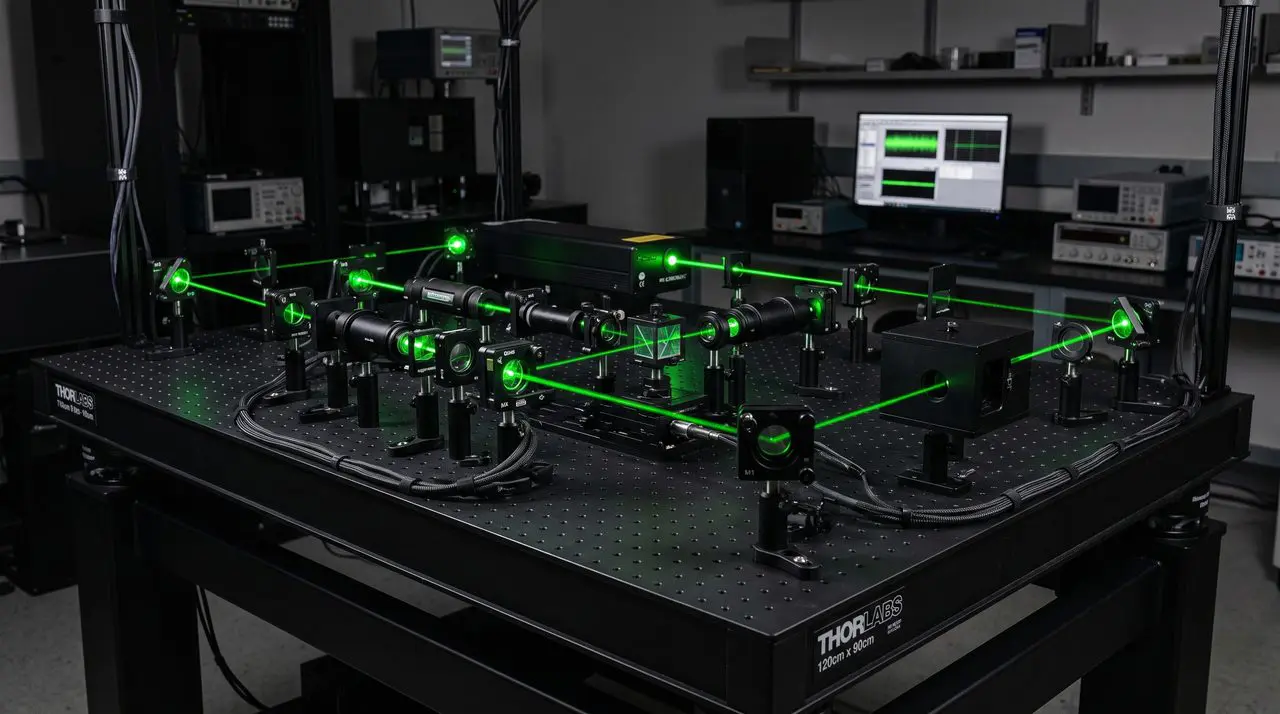
In 2026, ITMO University is launching the Institute of Photonics to address a critical challenge: developing domestic solutions for ultrafast data processing amid limited access to high-performance chips. The institute will focus on photonic technologies, aiming to dramatically reduce the energy demands of data centers, which currently require megawatts of power and have seen nearly a third of data center construction projects halted in Russia this year.
Out of 128 projects, 38 are frozen. “Building more and more power stations is not a solution,” says Sergey Makarov, the institute’s director; “This means we need to look for another way: to make computations fundamentally more energy-efficient with photonic technologies.” This new initiative directly supports the growing demands of artificial intelligence, which requires processing and rapidly exchanging ever larger amounts of information.
ITMO Institute Focus: Integrated & Computational Photonics for Telecom/Datacom
The Institute of Photonics at ITMO University is assembling a comprehensive “toolbox” of technologies to address challenges in data transmission and processing, according to the institute’s director, Sergey Makarov. This approach prioritizes six interconnected research areas, integrated photonics, computational photonics, optical communication systems, nanophotonics, materials for photonics, and optoelectronics, to create a complete technological chain for future applications.
The institute’s structure is a matrix interfaculty platform, drawing expertise from the Research and Educational Center for Photonics and Optical IT, the Higher School of Engineering and Technology, the Faculty of Physics, and the School of Computer Technologies and Control, fostering collaboration across disciplines. This deliberate integration aims to overcome the lack of a single established architectural paradigm for photonic chip and processor development. Currently, ITMO researchers are actively developing optical interconnects for data centers, devices designed for ultrafast data exchange between computational infrastructure components.
These solutions are projected to increase data transfer capacity while simultaneously reducing energy costs, a critical consideration given the escalating power demands of modern data centers. A prototype of this interconnect has already been assembled, and the institute is responding to external requests for new working prototypes tailored to various tasks, signaling early industry interest in the developing technology. The institute’s strategy extends beyond simply improving existing infrastructure; it is also focused on emerging segments of the photonics market, specifically architectures and approaches for integrated devices and photonic processors still under development.
The institute’s focus on telecom and datacom sectors is strategically aligned with the need for increased bandwidth, improved energy efficiency, enhanced reliability, and reduced operating costs in data infrastructure. This market-driven approach is intended to accelerate the translation of fundamental research into practical, research-intensive products.
ITMO is also establishing a joint enterprise, a design center in integrated photonics, to facilitate the implementation and commercialization of these new technologies with major clients. This collaborative model offers benefits to both researchers and industry partners; teams can quickly find expertise and fill gaps, while companies gain access to ITMO’s photonics capabilities.
The academic process at ITMO will also evolve to support this new industry focus, with an emphasis on training specialists capable of managing the entire technology creation cycle. This includes researchers investigating materials and physical effects, those designing components and systems, experts developing fabrication processes, and personnel conducting testing and overseeing device integration.
The institute views itself as a platform for effective internal collaboration, synchronizing applied projects and developing educational programs relevant to industry needs. “It’s something of a toolbox: parts of a single technological chain that make up the final result,” Makarov said.
The institute anticipates that this platform will foster a unified scientific agenda, streamline applied projects, and cultivate educational programs tailored to the demands of the photonics industry. The long-term vision is to establish ITMO as a leading center for frontier photonics research and development, driving innovation in data transmission and processing for years to come.
Building more and more power stations is not a solution. This means we need to look for another way: to make computations fundamentally more energy-efficient with photonic technologies.
Institute of Photonics: A Matrix Model for Interdisciplinary Research
The Institute of Photonics at ITMO operates on a matrix model, intentionally designed to use existing strengths across multiple departments rather than create a wholly separate entity. Sergey Makarov, the institute’s director, explains that this structure allows for rapid project assembly, enabling teams to quickly identify and address expertise gaps within ITMO itself. This internal collaboration is equally beneficial for industry partners seeking photonic specialists and resources.
Rather than researchers relocating to a new physical space, they maintain their departmental affiliations while contributing to specific, collaborative projects. This matrix model defines roles and responsibilities within the project, assigning tasks and contributions to individual participants based on their expertise. The institute functions as a facilitator, ensuring seamless integration of diverse skills and knowledge to accelerate innovation in photonic technologies.
This collaborative framework extends beyond internal teams, actively inviting industrial partners to participate in educational activities and shape the institute’s research agenda through its supervisory council. A key component of the institute’s strategy is the development of a role-based competency model in photonics. This includes specifying the tasks each specialist must perform, the level of independence required, and their overall responsibilities. By aligning educational programs with industry needs, the institute aims to ensure its graduates are not only employable but also equipped to establish new ventures in the future.
The institute’s prototype assembly and increasing external requests for new working prototypes demonstrate an immediate demand for its capabilities. This publication highlights the institute’s dedication to both foundational research and its translation into practical applications. This platform is designed to synchronize efforts across departments, ensuring that research aligns with industry demands and contributes to the development of a robust domestic photonics industry.
Role-Based Competency Model to Develop Future Photonics Specialists
This model moves beyond traditional academic silos by defining specific roles within the technology creation cycle, from initial concept to final implementation, and outlining the tasks, independence, and responsibilities expected of each specialist. Collaborating with industry partners and educational teams, the institute aims to pinpoint in-demand roles and tailor educational programs accordingly, fostering a workforce directly aligned with industry needs. This approach recognizes that successful development of photonic technologies requires a unified effort across multiple disciplines, including physics, engineering, and mathematics.
The institute’s matrix structure allows researchers to remain within their respective departments while contributing to specific projects, facilitating rapid expertise sharing and problem-solving. Teams can quickly identify and fill gaps in knowledge, accelerating the development of integrated devices for the datacom market, such as optical interconnects designed to increase data transfer capacity and reduce energy consumption in data centers.
These solutions are not merely academic exercises; the institute is already receiving external requests to develop working prototypes for diverse applications, signaling immediate industry interest. The competency model extends beyond technical skills, emphasizing the importance of understanding how individual contributions integrate into the larger technological chain. The institute’s strategy prioritizes frontier fundamental research, believing that new material properties and device operating principles are essential for creating original technologies with competitive performance characteristics.
Recent findings published in Nature Materials by the team of Dmitry Zhirikhin in topological photonics exemplify this commitment to both foundational science and practical application. This platform is designed to forge a single scientific agenda, ensuring that research directly addresses the challenges of telecom and datacom. The institute anticipates that this integrated approach will not only advance scientific expertise but also position Russian teams to develop their own solutions and achieve leading roles in specific areas of photonics.
It’s something of a toolbox: parts of a single technological chain that make up the final result.



See today’s quantum computing news on Quantum Zeitgeist for the latest breakthroughs in qubits, hardware, algorithms, and industry deals.