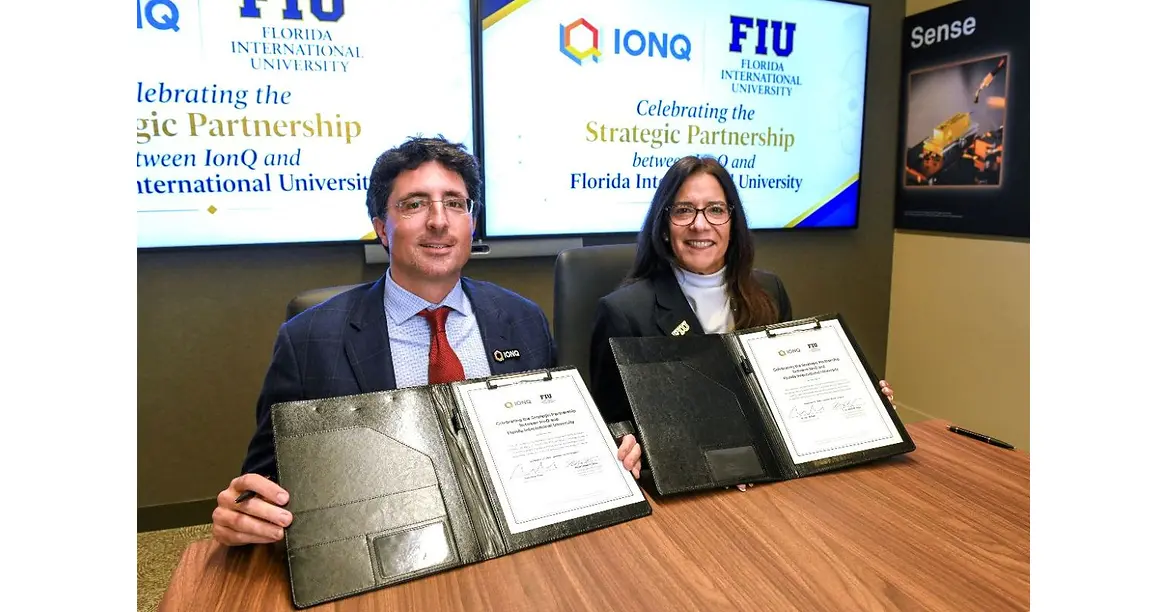
Florida International University will gain access to a 256-qubit quantum computer from IonQ (NYSE: IONQ) by late 2027, establishing it as the first university in Florida with this level of quantum computing hardware. The IonQ Superion system will place FIU researchers alongside those at the University of Chicago and University of Cambridge, providing a powerful tool to address problems beyond the reach of conventional computers.
“Bringing this extraordinary research tool to Miami is an investment in discovery, in our students, and in our country’s ability to compete in a rapidly developing field,” said FIU President Jeanette M. Nuñez. This partnership designates FIU as IonQ’s flagship academic partner in Florida, aiming to create a central hub for quantum research within a growing tech ecosystem.
IonQ’s Superion 256 System Expands FIU’s Quantum Computing Access
Florida International University will be the first in the state to house a 256-qubit quantum computer, the IonQ Superion 256, scheduled for installation in late 2027. The system’s arrival is expected to significantly bolster Florida’s growing quantum computing infrastructure and provide direct access for researchers and students to a full-stack, trapped-ion quantum computer. The Superion 256 is not simply a more powerful conventional computer; it utilizes a fundamentally different method of processing information, opening avenues for tackling problems beyond the reach of classical systems.
FIU researchers plan to focus initial efforts on three key areas: environmental and energy sustainability, national security and cybersecurity, and health and drug development. Specifically, they will explore new materials, battery technologies, and grid management strategies, alongside advancements in encryption and protection of critical infrastructure. The potential for studying molecular interactions and accelerating drug discovery also forms a core component of the planned research.
Niccolo de Masi, Chairman and CEO of IonQ, emphasized the significance of this collaboration, stating, “By housing our Superion 256 system directly on campus, FIU will lead the region in quantum research and training.” The university intends to use the new hardware to attract research funding, forge industry partnerships, and solidify South Florida’s position as a center for applied quantum discovery. FIU President Jeanette M. Nuñez views the acquisition as a critical investment in the nation’s future competitiveness.
The university’s research showcase and briefing center in Washington, D.C. will facilitate engagement with federal agencies and potential partners involved in quantum initiatives focused on sensing, cryptography, commercialization, and workforce development. Plans are already underway to develop new curricula, degree programs, and professional certifications in quantum computing, further expanding educational opportunities in the field. The university anticipates supporting its more than 1,800 faculty members and 55,000 students with access to this advanced computing architecture, alongside collaborations with numerous industry partners.
This key partnership with Florida International University represents a milestone in expanding direct physical access to IonQ’s industry-leading, high-performance quantum hardware.
Niccolo de Masi, Chairman and CEO of IonQ
Source: https://www.prnewswire.com/news-releases/miamis-first-quantum-computer-coming-to-fiu-302889535.html




See today’s quantum computing news on Quantum Zeitgeist for the latest breakthroughs in qubits, hardware, algorithms, and industry deals.