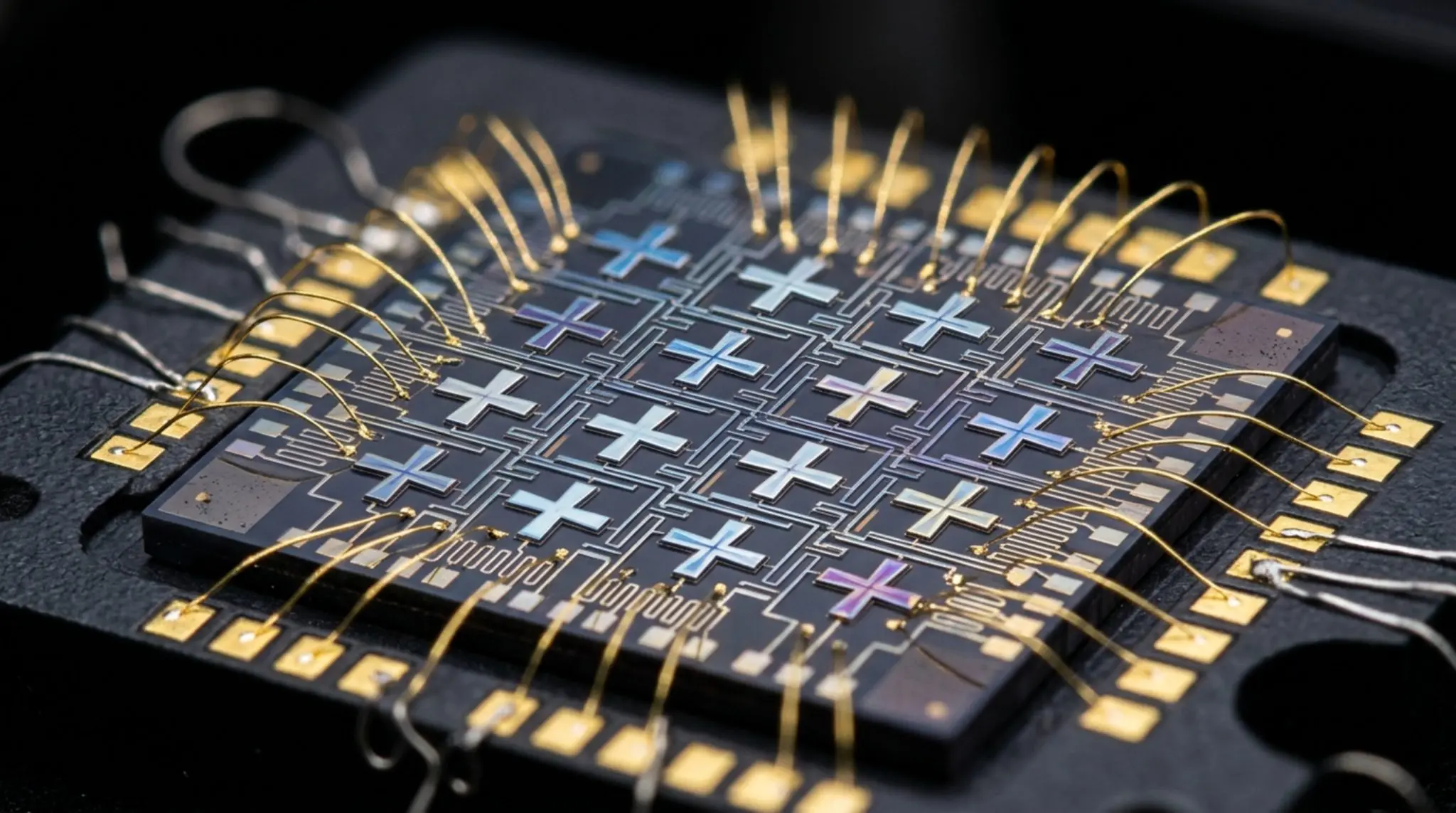
Superion 256 Platform: Rapid Fabrication and SkyWater Partnership
Working with SkyWater’s quantum foundry reduced IonQ’s typical nine-month design process to just two months, and increased wafer lot deliveries twelvefold over a six-month period compared to a previous manufacturing partner. This collaboration represents a fundamental shift toward semiconductor-style production for quantum processors, moving beyond bespoke, single-unit builds. The Superion platform’s architecture prioritizes scalability through consistent fabrication processes. Every subsequent generation, including the underway Superion 10K, will utilize the same ions, qubits, electronic control mechanisms, and chip fabrication techniques, creating a uniquely upgradeable system for users. IonQ is concurrently developing both the 256-qubit and 10K-qubit generations, with the 10K iteration integrating CMOS technology, a process already well-established at SkyWater, to further enhance scalability. Chris Ballance, President of Quantum Computing at IonQ, said, “The step from 256 to 10K qubits is being delivered by integrating CMOS onto the chip – something the semiconductor industry has done many times and SkyWater does every day.” He also stated that CMOS integration is expected to reach full fault tolerance in a 2027 lab setting at IonQ, and be manufacturable and commercially available in 2028. The transition to semiconductor-based control, facilitated by Oxford Ionics’ technology, is projected to reduce the cost per qubit by a factor of over 300 across IonQ’s roadmap. This advancement is coupled with the company’s Electronic Qubit Control (EQC) system, which utilizes on-chip electronics to manage trapped-ion qubits, replacing traditional laser systems, according to the company. Ballance added that “Superion is the result of two strategic acquisitions coming together to deliver this milestone, and marks the most important inflection point the quantum computing industry has yet seen. It accelerates our industry from one-off lab machines to quantum computers manufactured at scale with compelling unit economics and modest energy consumption.”Superion is the result of two strategic acquisitions coming together to deliver this historic milestone. Oxford Ionics enabled IonQ to control natural, trapped-ion qubits using standard electronics, and SkyWater unlocked the ability to manufacture at semiconductor costs and scale. Niccolo de Masi, Chairman and CEO of IonQ
More like this


Quantum Computing Business NewsProject Eleven and Relm Insurance map out quantum risks for digital assets
Quantum Research NewsHole spin qubits gain ground with in-plane control
Quantum Computing Business NewsSEALSQ highlights U.S. quantum investments at New York event
Quantum Research NewsVanderbilt and EPB build a quantum hub in Chattanooga
Stay current
See today’s quantum computing news on Quantum Zeitgeist for the latest breakthroughs in qubits, hardware, algorithms, and industry deals.