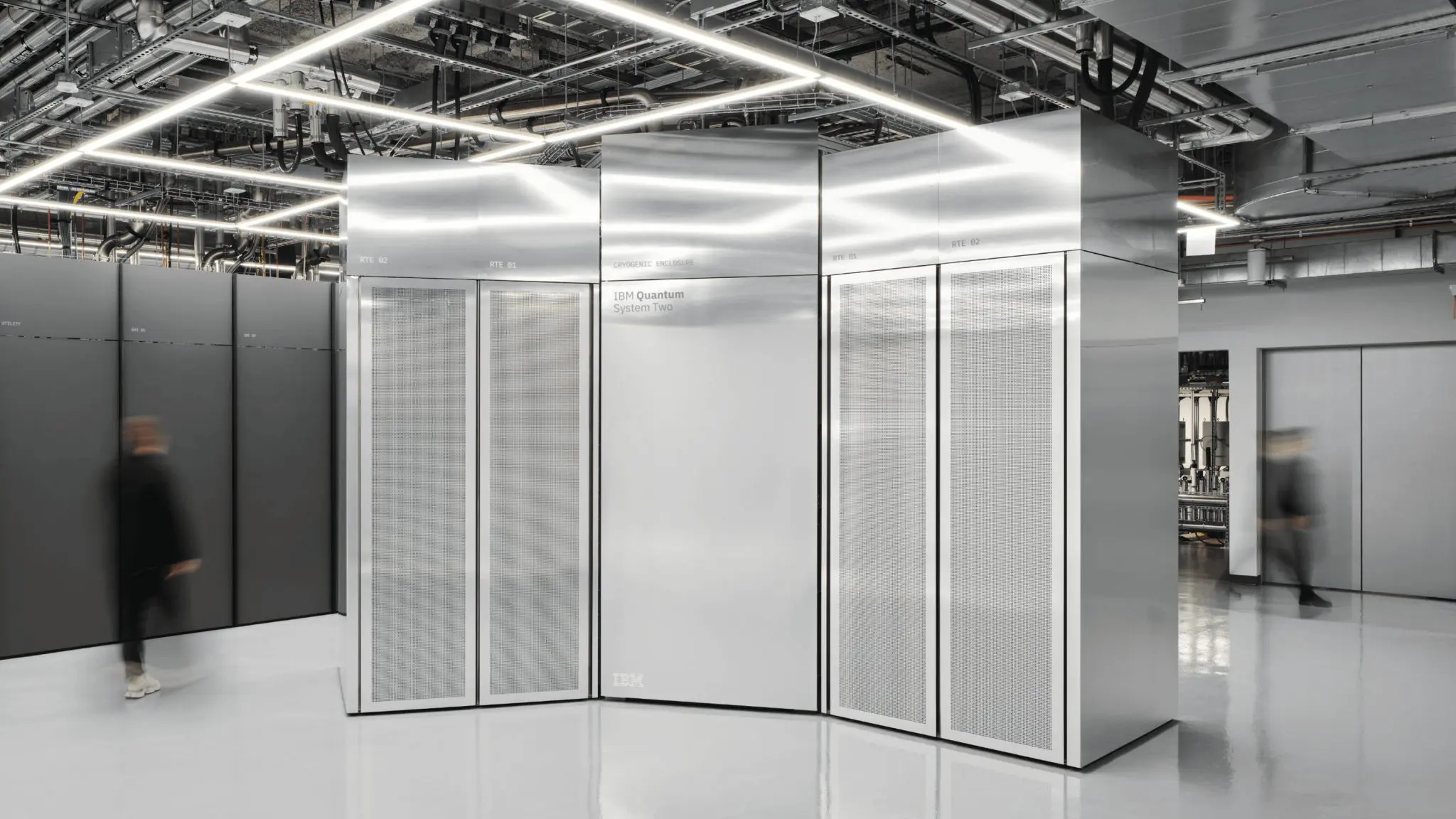
Lockheed Martin and IBM are jointly launching a quantum innovation hub at ETH Zurich, an initiative that will soon be anchored by Switzerland’s first IBM Quantum System Two. The advanced system, to be installed at the Swiss National Supercomputing Centre in Lugano, will give Swiss academia, research, and industry on-site access to one of IBM’s most advanced quantum computers, expected to be operational by the end of 2026.
This collaboration aims to expand quantum computing access across Swiss institutions and fuel the country’s growing quantum ecosystem, with IBM operating the computer and conducting joint research alongside partners like ETH Zurich and Lockheed Martin, who will explore the improvement of additive manufacturing of metallic alloys.
Lockheed Martin & IBM Launch Swiss Quantum Innovation Hub
This installation marks the first deployment of IBM’s flagship quantum system within the country, providing a dedicated resource for academic, industrial, and research applications. CSCS will provide the necessary technical infrastructure, including power, cooling, and security, to support the advanced system’s operation for an initial three-year period extending through 2029. The hub’s structure designates ETH Zurich as the coordinating body for access, offering expertise and technologies to Swiss industries, startups, and academic institutions.
IBM reports that the Quantum System Two has already demonstrated accurate computations on quantum circuits containing 7,500 gates, a key achievement on its quantum roadmap. This capability builds upon the concept of quantum-centric supercomputing, integrating quantum processors with classical high-performance computing resources. The company highlights that access to this technology enabled recent demonstrations of quantum advantage through trusted computation, suggesting potential benefits for complex problem-solving.
The initiative intends to cultivate a skilled quantum workforce by providing direct access to advanced quantum computing capabilities. Beyond the core research projects, the Swiss Quantum Innovation Hub will support a broader range of investigations, using the system’s power to tackle diverse scientific and industrial problems.
IBM reports that on August 26, 2026, it is targeting 100 million quantum operations by 2029, and also released Qiskit Fermions, a framework for simulating fermionic systems. This pre-existing collaboration underscores a long-term commitment to advancing quantum algorithms and exploring their potential applications. The hub’s establishment in Lugano positions Switzerland as a key player in the rapidly evolving field of quantum information science.
IBM Quantum System Two Installation at CSCS in Lugano
This placement is central to a new quantum innovation hub jointly launched by IBM and Lockheed Martin at ETH Zurich, designed to foster collaboration between academic institutions and industry partners. This access is coupled with resources and expertise from ETH Zurich, aiming to accelerate the growth of quantum computing capabilities within the nation. The initial agreement between IBM and ETH Zurich spans three years, extending through 2029, indicating a long-term commitment to this partnership.
Housed alongside the Alps supercomputer at CSCS, the system will allow exploration of complex materials, molecules, and chemical processes that pose challenges for classical computers alone. Beyond providing advanced hardware, the hub will also grant members access to the IBM Quantum Network and IBM Quantum Platform learning offerings, including coursework, certifications, workshops, and support for events like hackathons and conferences, all designed to cultivate a skilled quantum workforce.
The installation of the IBM Quantum Nighthawk r2 processor at the Swiss National Supercomputing Centre (CSCS) in Lugano, situated in the southern part of Switzerland, marks a significant expansion of accessible quantum computing power. This processor, IBM’s most advanced currently available to users, features 120 programmable qubits and a redesigned architecture capable of executing more than 100,000 circuits per second.
This performance represents a substantial increase, up to 25 times, in circuit throughput compared to processors within the IBM Quantum Heron family, enabling researchers to tackle more complex quantum workloads with greater efficiency. Beyond processing speed, the Nighthawk r2’s architecture incorporates a high-speed qubit reset, important for maintaining computational fidelity and accelerating iterative quantum algorithms.
This advancement builds on IBM’s broader commitment to superconducting qubit technology, a field where the company has invested heavily since its founding in 2016 and continues to refine with processors like the 1121-qubit Condor and the 156-qubit Heron R2. The availability of this technology at CSCS, alongside the Alps supercomputer, will allow for hybrid quantum-classical computations, utilizing the strengths of both paradigms to explore complex materials and molecular simulations. Initial research projects planned for the hub include explorations into quantum sensing applications for navigation and investigations into additive manufacturing of metallic alloys.
ETH Zurich Coordinates Access & Quantum Workforce Development
ETH Zurich will coordinate access to the newly installed IBM Quantum System Two, ensuring a structured pathway for Swiss institutions to utilize the advanced hardware alongside the Alps supercomputer. This centralized coordination extends beyond simply providing machine time; the university will actively manage access for industries, startups, and academic researchers, fostering a collaborative environment for quantum exploration. Organizations joining the hub through ETH Zurich will also benefit from cloud access to IBM’s broader quantum fleet, creating a tiered system of availability and accelerating research timelines across multiple disciplines.
Beyond immediate research endeavors, the hub will prioritize workforce development, recognizing that a skilled quantum workforce is essential for sustained innovation. ETH Zurich’s role in coordinating access includes providing expertise, resources, and technologies to cultivate quantum skills among students and researchers. The company reported on September 3rd that it is actively hiring MIT graduates to accelerate both AI and quantum work, further demonstrating its investment in talent acquisition.
This co-location with the Alps supercomputer will enable hybrid quantum-classical computing workflows, allowing researchers to tackle complex problems that are beyond the reach of either system alone. IBM’s Heron R2 processor, with 156 qubits, is a key component of this system, building on the company’s established expertise in superconducting qubit technology and its 2023 Condor processor featuring 1121 qubits.



See today’s quantum computing news on Quantum Zeitgeist for the latest breakthroughs in qubits, hardware, algorithms, and industry deals.