Approximately one-third of approved medicines target G-protein-coupled receptors (GPCRs), yet their complex structure and function have long challenged accurate simulation. Researchers from University College London, Technical University of Munich, Ludwig-Maximilians-Universität München (LMU), NVIDIA, Leibniz Supercomputing Centre (LRZ), QMatter and IQM Quantum Computers have created a simulation pipeline integrating GPU acceleration, conventional supercomputing and quantum computing via the NVIDIA CUDA-Q platform.
By applying this multiscale approach to GPCRs, a class of membrane proteins with over 800 subtypes, the team aims to preserve quantum-level detail within the broader biological context. This combination expands the role of computation in biomolecular science, enabling deeper insights into molecular mechanisms under realistic conditions.
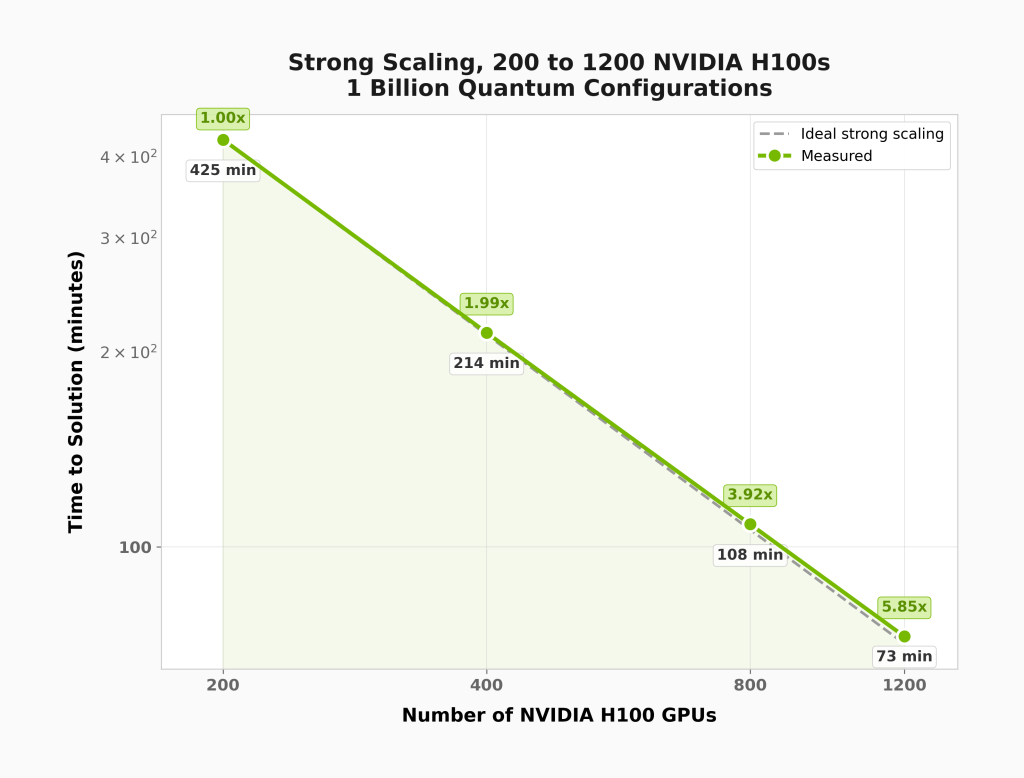
The integrated biomolecular simulation pipeline achieved a 5.85x speedup when scaling from 200 to 1,200 NVIDIA H100 GPUs, demonstrating strong scaling capabilities for future expansion, the company says. This approach applies different levels of computational accuracy across a biomolecular system, reserving quantum computing for chemically active regions and employing conventional methods for the surrounding environment. The team’s strategy preserves quantum-level detail for biochemical processes within their full biological context, from distant regions of the molecule to membranes and solvent.
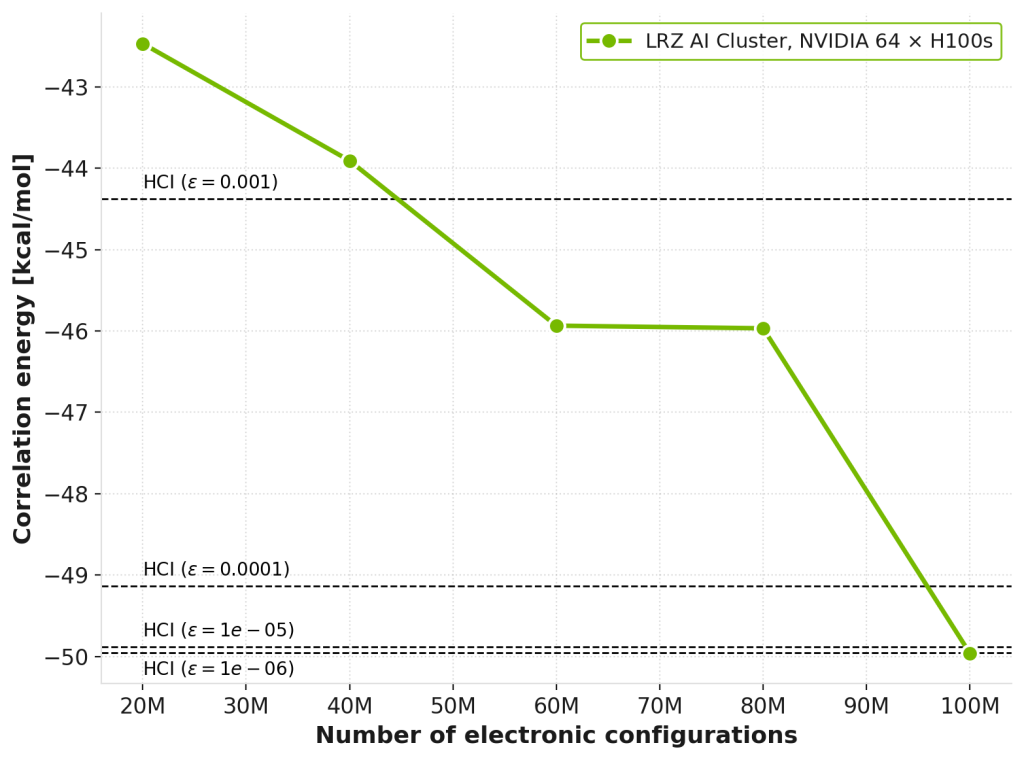
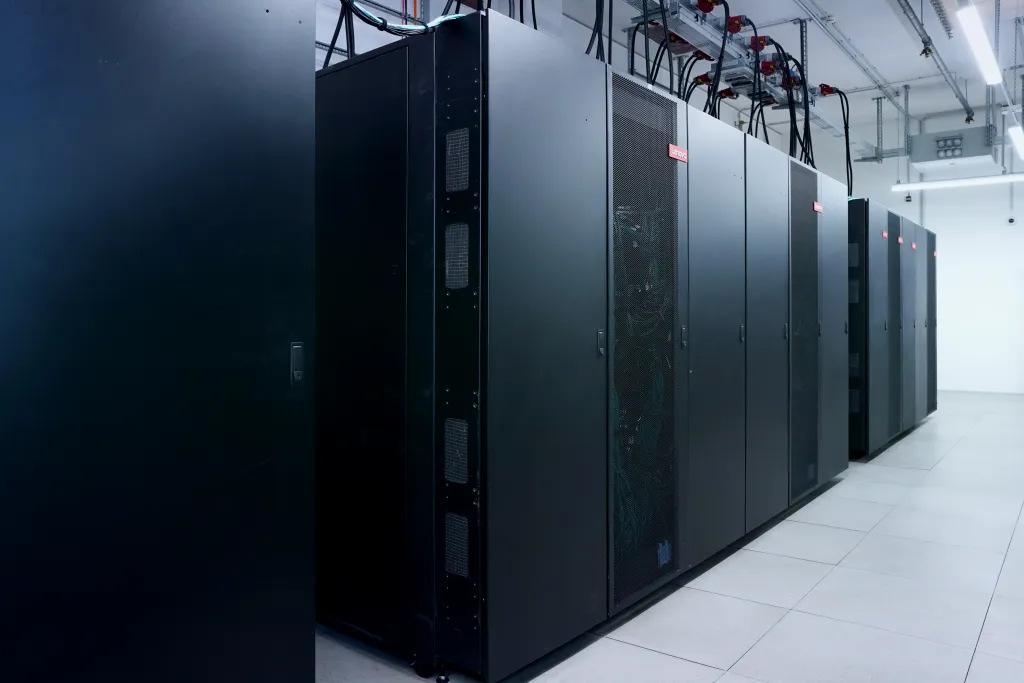
The pipeline’s quantum component ran on Euro-Q-Exa, an IQM 54-qubit system hosted at LRZ, where researchers evolved a quantum state to identify important configurations of electrons in molecular orbitals. Evaluating the energy of these configurations, a task well-suited to GPU acceleration, was then performed using NVIDIA Hopper GPUs on an AI cluster also hosted at LRZ, part of BayernKI, Bavaria’s academic AI research infrastructure.
Post-processing of the data, involving a billion quantum configurations, further used 1,200 NVIDIA H100 GPUs on the Eos cluster, highlighting the system’s capacity for large-scale analysis, according to the company. The researchers state that by integrating quantum computing into large-scale accelerated simulation workflows, the pipeline allows researchers to target the most challenging molecular effects while retaining the performance and scalability of modern supercomputing.
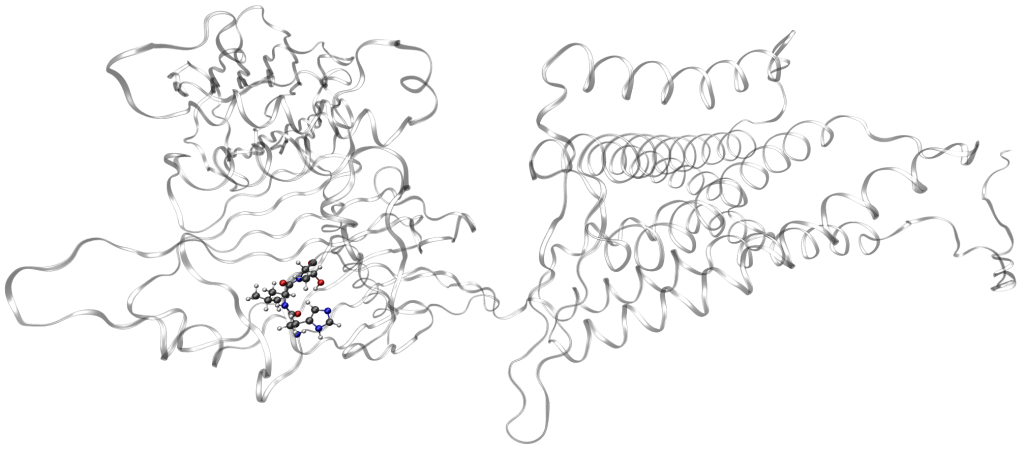
With over 800 identified subtypes, GPCRs present significant modeling challenges due to their size, structural complexity and membrane environment, particularly when considering the timescales of their signaling mechanisms. The multiscale, quantum-accelerated approach offers new possibilities for studying these biologically and pharmacologically important systems. The team anticipates building on these techniques to coordinate heterogeneous computing resources for even larger biomolecular simulations, with future studies focusing on iterative hybrid workflows across complementary architectures.



See today’s quantum computing news on Quantum Zeitgeist for the latest breakthroughs in qubits, hardware, algorithms, and industry deals.