On September 24 and 25, Gradiant will present advances in photonics, quantum technologies, and advanced communications at New Space España 2026 in Vigo. The technology centre focuses on solutions for key challenges facing new space platforms, including reducing power consumption and developing secure communications. Gradiant’s work addresses a central theme of the event: “Strategic autonomy from space,” signaling a push for independence in space capabilities. These innovations aim to increase on-board processing and enable real-time data analysis for satellites and other platforms.
Integrated Photonics for Efficient On-Board Space Processing
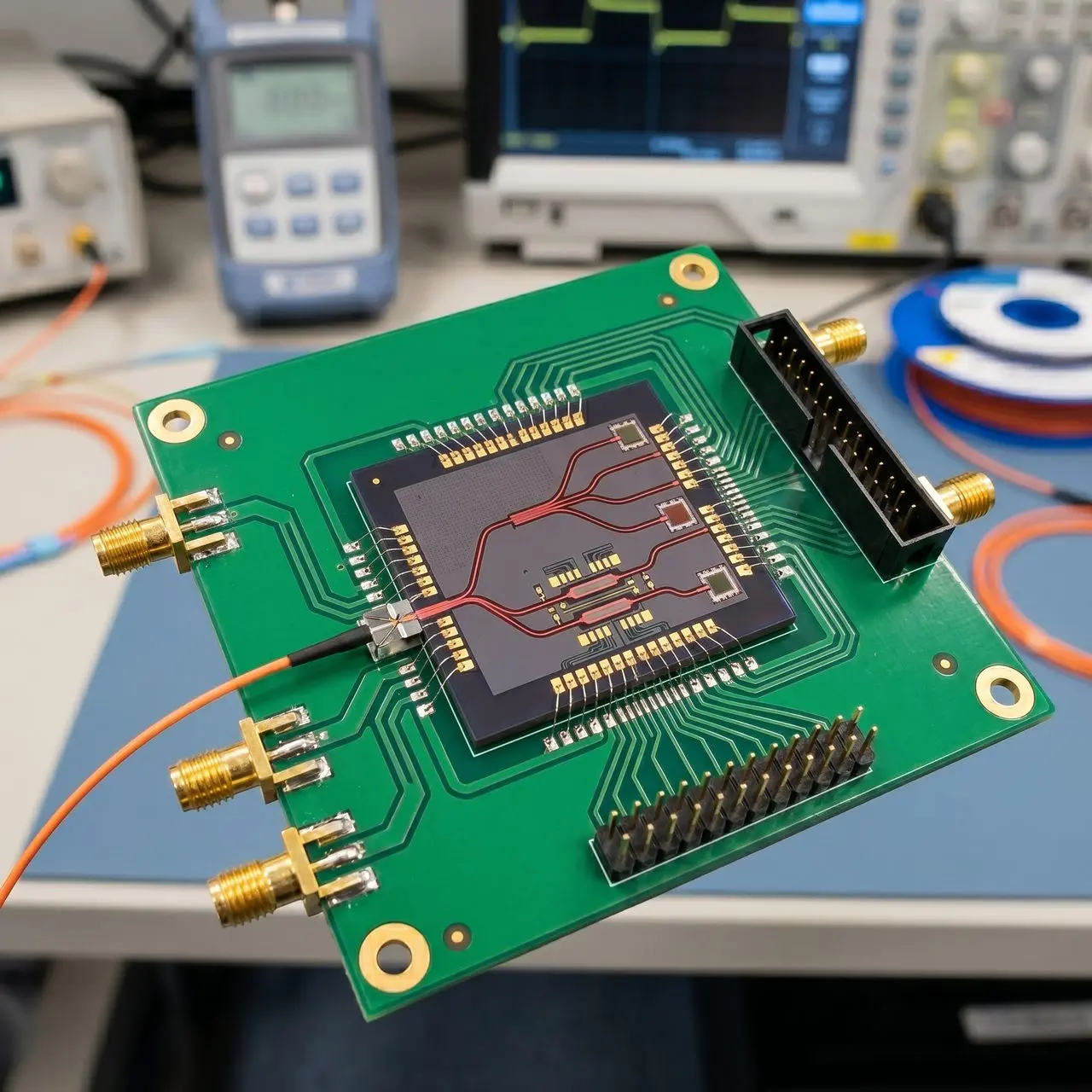
Gradiant is developing photonic circuits designed to process radio-frequency signals, images, and artificial intelligence applications directly on board space platforms. This shift from traditional electronic processing allows for the creation of more compact and efficient architectures for operations in space where size and power are severely limited. The technology centre focuses on transferring functions previously handled electronically into the photonic domain, a move intended to enhance processing capabilities without increasing energy demands.
These integrated photonic systems address a critical need for increased on-board processing capacity, a goal Gradiant pursues through the development of both photonic circuits and devices, alongside advanced signal processing techniques. Combining photonics with microelectronics, artificial intelligence, and embedded software allows for a comprehensive approach to optimizing performance in challenging space environments. The ultimate aim is to enable satellites and other platforms to analyze increasing volumes of information in real time, reducing reliance on ground-based data transmission.
Power consumption remains a central challenge in space-based systems, and Gradiant’s work directly targets this limitation. By processing data on board, the need to transmit raw data back to Earth is lessened, significantly reducing the energy required for communication. This is particularly important for constellations of satellites or missions operating in remote locations where bandwidth and power resources are constrained. The company’s approach isn’t simply about miniaturization; it’s about fundamentally altering how data is handled to achieve greater efficiency, Gradiant says.
Gradiant’s areas of work extend beyond circuit design to encompass complete architectures integrating multiple technologies. This includes developing methods for combining photonic components with existing microelectronic systems, ensuring seamless interoperability and maximizing performance. The integration of artificial intelligence algorithms into these photonic processing systems allows for intelligent data analysis and decision-making directly on the platform, further reducing the need for external control.
The development of these technologies is not solely focused on improving existing capabilities; it’s also about enabling new applications in space. Real-time data analysis opens up possibilities for autonomous operations, on-board anomaly detection, and rapid response to changing conditions. This is particularly relevant for missions requiring immediate action or operating in environments where communication delays are unacceptable. “Research and development at the heart of progress in the space sector,” reflects the company’s commitment to innovation and its understanding of the vital role of R&D in driving advancements in space technology, according to Gradiant.
Gradiant will participate in a round table discussion on this topic at New Space España 2026, with Luis Pérez Roca, Director of Advanced Communications, sharing insights into the importance of collaboration between industry, academia, and institutions. The company recognizes that transforming research into competitive systems requires a concerted effort from all stakeholders.
The event provides a platform to demonstrate how the company translates research into practical solutions with real-world applications in the space industry. By presenting its advancements in integrated photonics, quantum technologies, and advanced communications, Gradiant aims to contribute to the development of more efficient, secure, and connected space platforms, the firm reports. These technologies are designed to drive the development of systems that offer greater on-board processing capacity, more secure and resilient communications, and new connectivity solutions between Earth and space.
Gradiant believes that its work can help expand opportunities for space exploration, scientific discovery, and commercial applications, ultimately contributing to a more sustainable and accessible space future. The company’s presence at New Space España 2026 underscores its commitment to pushing the boundaries of space technology and collaborating with partners to address the challenges and opportunities facing the industry.




See today’s quantum computing news on Quantum Zeitgeist for the latest breakthroughs in qubits, hardware, algorithms, and industry deals.