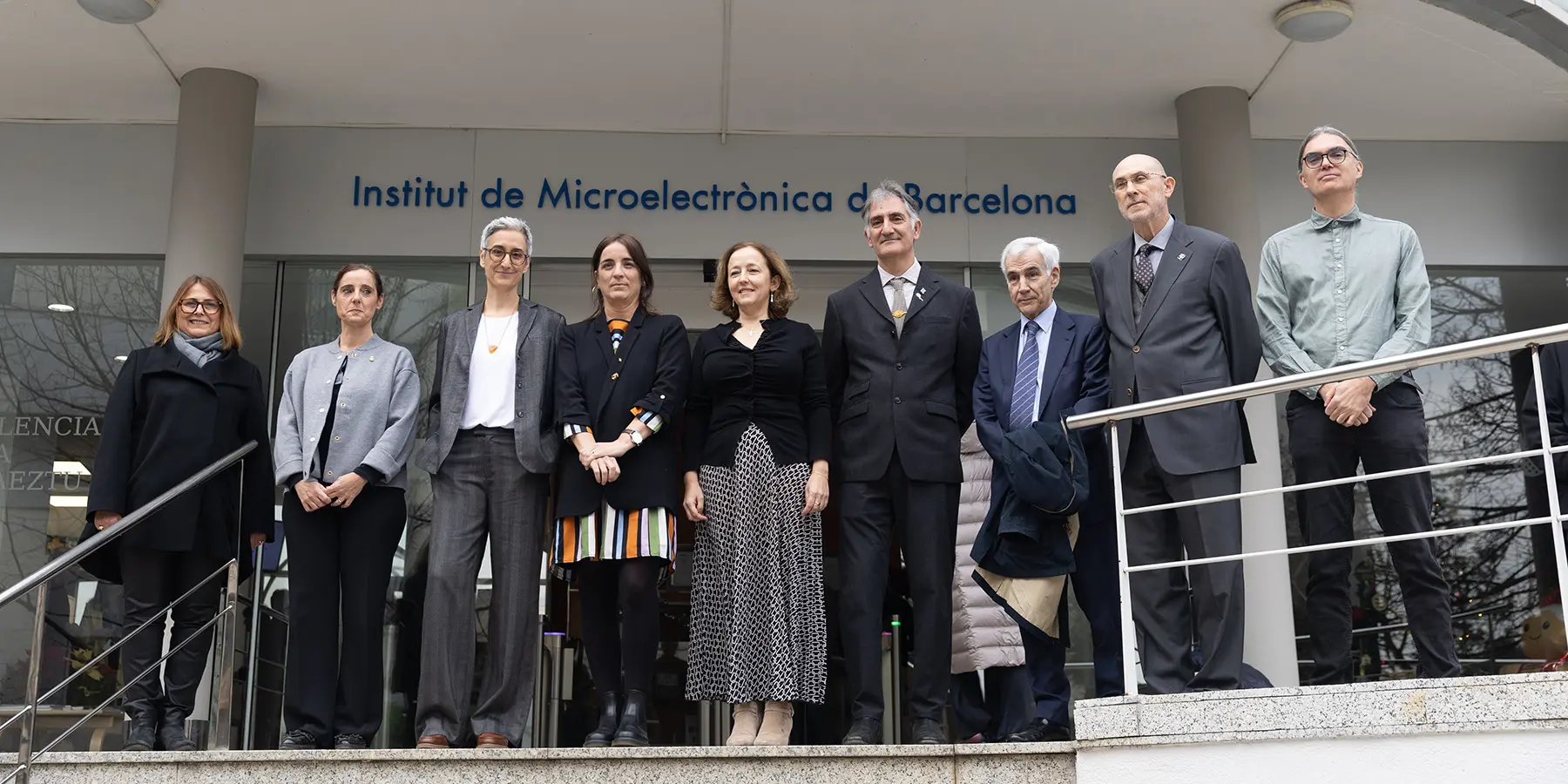
After four decades contributing to Spanish microelectronics, the Institute of Microelectronics of Barcelona (IMB-CNM-CSIC) is expanding its Micro and Nanofabrication Clean Room with over two million euros in co-financing. The expansion, announced alongside the institute’s 40th-anniversary celebration, aims to strengthen the nation’s capacity for high-impact scientific infrastructure and greater collaboration with industry. “It’s 40 years of shared history, of commitment to the country and society,” said Núria Montserrat, Minister of Research and Universities of the Generalitat de Catalunya, highlighting the institute’s successes in knowledge transfer and training.
IMB-CNM’s 40th Anniversary Marks Microelectronics Leadership in Spain
This investment announced during the institute’s 40th-anniversary celebration builds upon the Clean Room’s existing 1,500 square meters and solidifies its status as a Unique Scientific and Technical Infrastructure (ICTS) within the Micronanofabs network. Co-financing and European ERDF funds demonstrate a commitment to strengthening Spain’s capacity for high-impact scientific infrastructure and supporting the semiconductor ecosystem. The expansion is designed to enhance the institute’s contributions to knowledge generation, talent training, and technological support for deep-tech start-ups specializing in microelectronics, integrated photonics, and quantum technologies.
Montserrat highlighted the institute’s successes in technology transfer and training, noting the creation of a strong community around the IMB-CNM over the past four decades. Del Pino acknowledged the visionary founders and detailed current measures aimed at bolstering research and achieving technological sovereignty.
This emphasis on national self-sufficiency in technology reflects a broader strategic goal, positioning the IMB-CNM as a critical component in Spain’s efforts to participate in new European pilot lines and secure funding through initiatives like the PERTE Chip program. Looking ahead, IMB-CNM director Luis Fonseca articulated a vision beyond simply replicating existing technological models. “We don’t want to be the country where ‘they invent’ or ‘they manufacture’; we want to do our bit for technological innovation and excellence,” he said during his anniversary speech.
This ambition is underscored by the institute’s recent accreditation as a María de Maeztu Unit of Excellence, a recognition awarded by the State Research Agency. The IMB-CNM’s participation in two approved competence centers in Spain further demonstrates its commitment to advancing the field, particularly in areas like microelectronics and integrated photonics, which are vital for the development of technologies.
The institute’s evolution from the National Microelectronics Center, inaugurated in 1985, to its current form as IMB-CNM signifies a shift from basic chip manufacturing to a broader scope of research and innovation. Attendees at the event included representatives from the Ministry of Science, Innovation, and Universities, the Ministry of Digital Transformation, and the Barcelona City Council, alongside former IMB-CNM directors and the current leadership team.
A guided tour of the Micro and Nanofabrication Clean Room concluded the celebration, offering a firsthand look at the facilities that have driven four decades of microelectronics leadership. The institute’s continued success is a contribution to the broader national goal of establishing a robust and independent technological base for the future.
It’s 40 years of shared history, of commitment to the country and society.
Núria Montserrat, Minister of Research and Universities of the Generalitat de Catalunya




See today’s quantum computing news on Quantum Zeitgeist for the latest breakthroughs in qubits, hardware, algorithms, and industry deals.