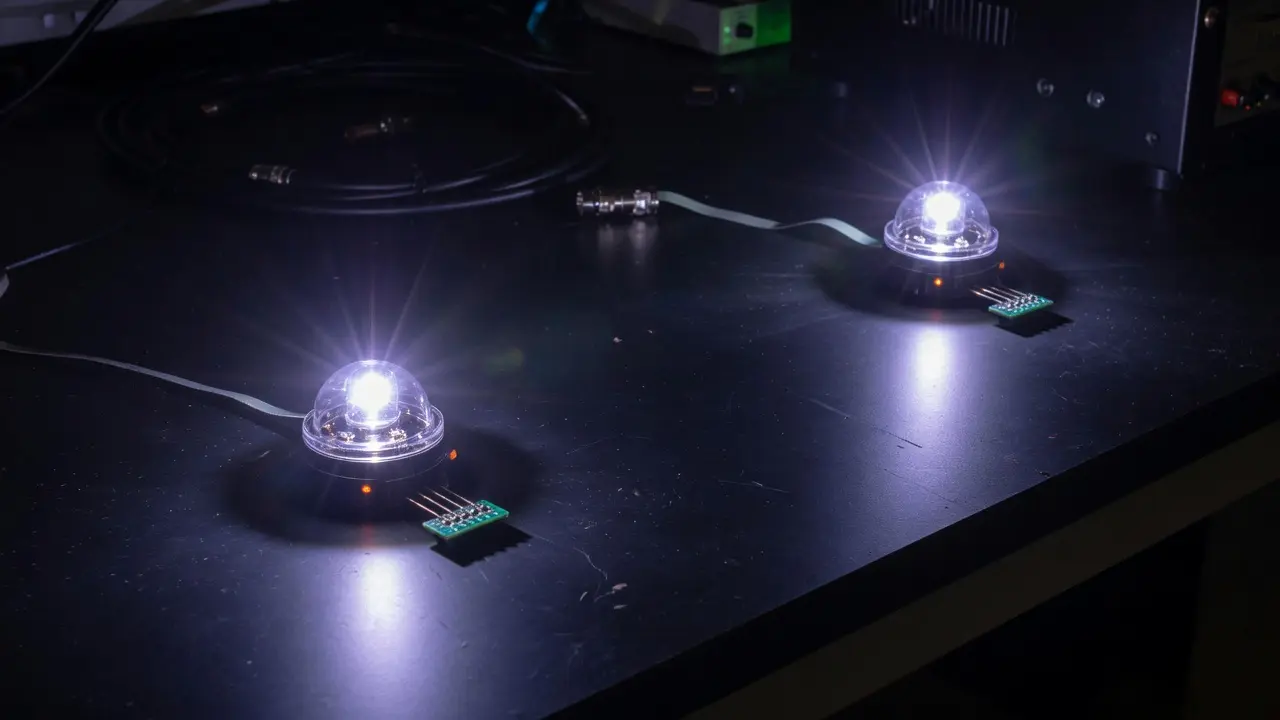
A $20,000 donation from PsiQuantum is enabling St, the company says. Francis de Sales High School to build a quantum science lab, a capability previously impossible due to longstanding budget constraints. The new lab, physically located on the school’s ground floor, aims to connect students with potential future job opportunities at the nearby Illinois Quantum & Microelectronics Park.
Jane Healy, who leads the Science Olympiad program at St. Francis de Sales, explained the impact. Principal Dr. Roni Facen hopes the lab will break barriers for students, stating, “I think this is breaking that glass ceiling and saying, ‘No, you can become a scientist.’”
$20,000 PsiQuantum Donation Funds New St. Francis de Sales Quantum Lab
The $20,000 donation directly addresses this constraint, allowing for a purpose-built space designed to encourage hands-on quantum learning. Santiago Velazquez, a junior currently studying AP Biology and STEM, lives only a couple of blocks from the park and anticipates the lab experience will be relevant even as he pursues a degree in civil engineering.
Roni Facen envisions the lab as a catalyst for broadening access to STEM fields, emphasizing the importance of providing equitable opportunities for students. Healy added that the school intends to share the resources received, stating, “We shouldn’t keep those resources we received just to ourselves.”
Pretty much everything in this room either is like 40 years old or it’s something I bought… we just don’t have the budget.
Jane Healy, Teacher and Science Olympiad Program Lead at St. Francis de Sales
South Side Access Expanded Through Quantum Science Programming
Principal Roni Facen, a product of the local community and an alumna of St. She notes longstanding disparities in access to technology and scientific exploration based on socioeconomic factors, and believes the new lab is actively dismantling those barriers. “It’s not outside their community they can hope and dream. They can do that here on the South Side,” she said, highlighting the importance of localized opportunities for students to envision themselves in STEM careers. The school’s per capita income of approximately $20,000 annually highlights the financial constraints faced by many families, making the lab’s accessibility particularly vital.
Healy anticipates this exposure will be transformative for students, stating, “I hope that kids come out of here and see they are just as capable and just as smart as a kid from the North Side.” She further explained that the physical presence itself, a tangible space dedicated to advanced science, is a powerful symbol of possibility demonstrating to students that success in STEM is attainable for all. Other schools are also taking part in the program, including Thomas Hoyne Elementary, Robert A. Black Elementary, Ninos Heroes Elementary, James Madison Elementary and Bowen High School.
I hope that kids come out of here and see they are just as capable and just as smart as a kid from the North Side.
Jane Healy, Teacher and Science Olympiad Program Lead at St. Francis de Sales
Source: https://iqmp.org/news/a-look-inside-st-francis-de-sales-high-schools-brand-new-quantum-science-lab/

See today’s quantum computing news on Quantum Zeitgeist for the latest breakthroughs in qubits, hardware, algorithms, and industry deals.