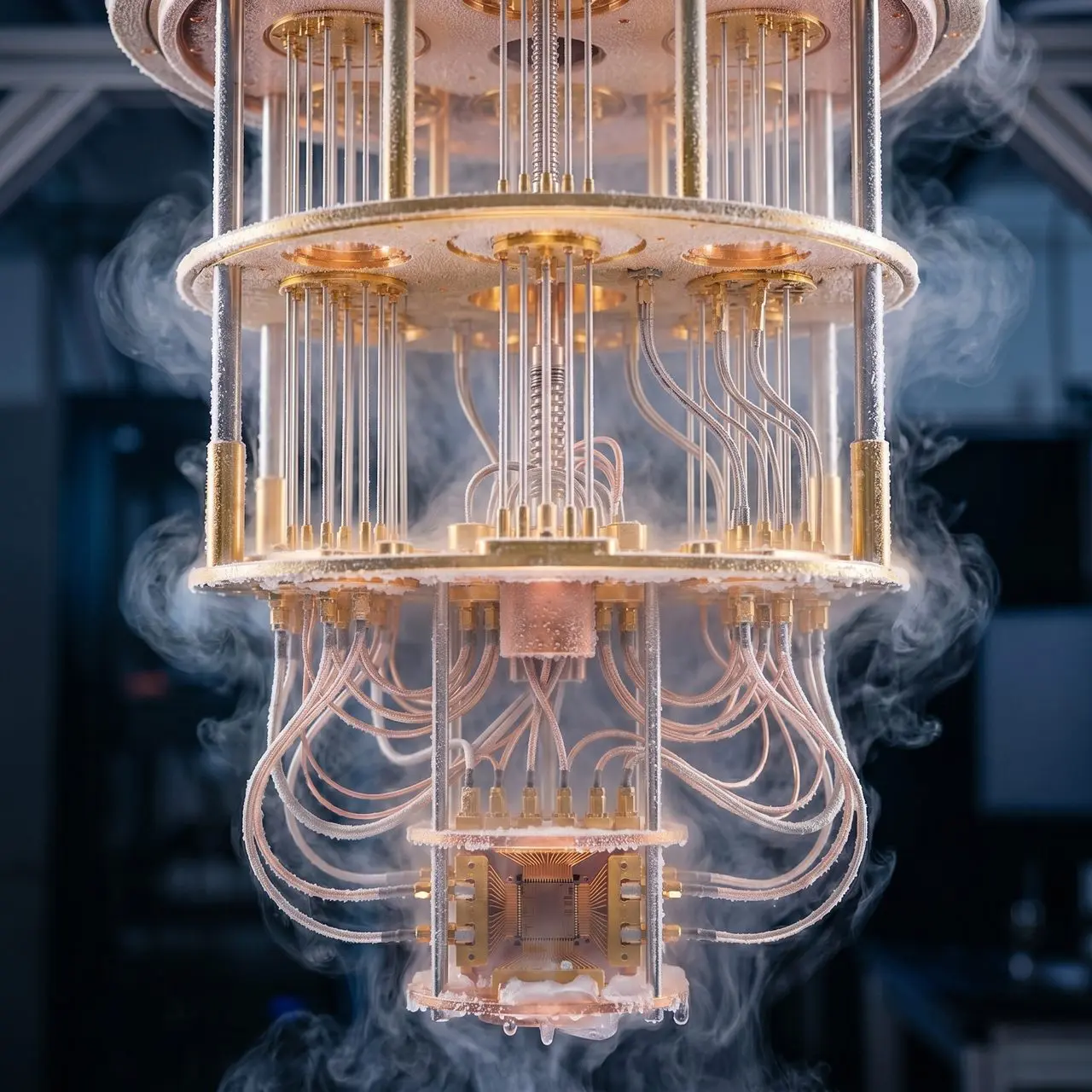
Germany’s Federal Ministry of Research, Technology and Space will invest €122 million in a project to build one of Europe’s most advanced quantum computers, with AQT selected as one of seven key partners. The consortium, led by QUDORA under the NFQC-1k project, aims to create a demonstrator with at least 1,000 physical qubits and 50 logical qubits.
“We are proud to be part of a major new German quantum computing initiative,” said a representative from AQT, which will contribute its expertise in trapped-ion quantum computing to the five-year effort. The project also includes plans for a pilot production line for ion-trap quantum processor units.
AQT Partners in €122 Million NFQC-1k Quantum Computer Project
AQT will contribute to the development of a trapped-ion quantum computer as one of seven members in a consortium building a European quantum computer. Hannover, Physikalisch-Technische Bundesanstalt, and NXP Semiconductors Germany GmbH are also partners in the initiative, uniting research institutions and industry. This collaboration provides an opportunity to apply its expertise to a landmark project advancing quantum computing. The company recently achieved a Quantum Volume of 32768 with its new LYNX Series, 19-inch rack-mounted quantum computers, which represents a milestone for a universal Quantum Computer designed, built, and located in Europe, AQT says.
AQT is also collaborating with Horizon Quantum to accelerate the development of real-world quantum applications by combining with Horizon’s software. On May 27th, 2026, the CHAMP-ION consortium held its international opening event in Villach, Austria, bringing together leading stakeholders from across the European quantum technologies ecosystem.


See today’s quantum computing news on Quantum Zeitgeist for the latest breakthroughs in qubits, hardware, algorithms, and industry deals.