Attosecond photoelectron interferometry offers an experimentally accessible method to certify entanglement in extreme ultraviolet radiation. Linking measurements of electron signals from multiple sidebands, central, upper and lower, to optical correlation functions provides witnesses for infrared-XUV entanglement and genuine multipartite entanglement without needing additional optical instruments. It is a flexible framework applicable across various frequencies for verifying quantum light properties.
A new technique confirms entanglement, a key quantum property, within extreme ultraviolet radiation. The method utilises existing tools measuring electrons; it avoids complex additional equipment needed by previous approaches at these wavelengths. By analysing patterns created when light interacts with matter, the approach directly verifies that this high-energy light is genuinely entangled and even demonstrates multipartite entanglement between multiple frequencies opening avenues for advanced control of spectroscopic signals.
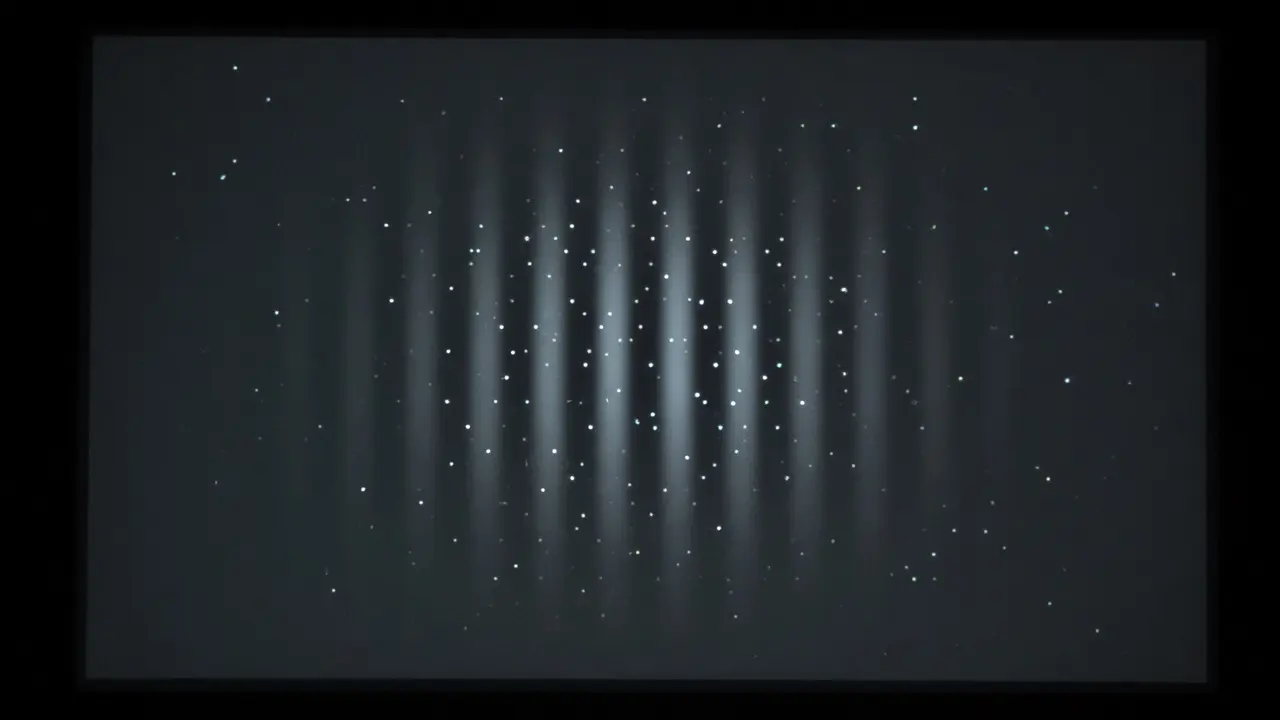
A new technique verifies entanglement, a key quantum property, within extreme ultraviolet radiation. The team’s approach uses attosecond photoelectron interferometry, which can be likened to bouncing extremely fast “quantum bullets” (photoelectrons) off of light waves and observing the resulting pattern to reveal information about their properties. By analysing patterns created when light interacts with matter, measurements of electron signals from multiple frequencies link directly to optical correlation functions, essentially checking whether different beams of light vary together in brightness like two people’s heartbeats syncing during an emotional experience.
Sideband Interferometry Certifies Infrared-XUV Entanglement and Multipartite Character
Attosecond photoelectron interferometry offers an experimentally accessible separability test that surpasses previous methods; it filled a key gap by providing direct solutions for certifying entanglement in extreme ultraviolet radiation. Mapping electron signals across multiple frequencies, those arising from central and upper/lower harmonic spectrum sidebands, onto calculations representing optical correlation functions bypasses complex instrumentation needed at these wavelengths. Essential because single-sideband analysis alone cannot confirm entanglement due to inherent limitations imposed by the Cauchy, Schwarz inequality, measurements from several sidebands reveal infrared-XUV entanglement while also offering sufficient evidence of genuine multipartite entanglement without auxiliary optical instruments.
A single ‘sideband’ frequency is insufficient to prove quantum entanglement given mathematical inequalities governing probability distributions. However, analysing signals across multiple sidebands allows measurement of important field correlations like U and V, alongside Q; these quantify how photons interact between infrared, XUV1 and XUV2 frequencies. Researchers established a threshold for detecting true three-way entanglement based on comparing measured values with calculated bounds derived using H(Udc,Vdc), but acknowledge that current sensitivity limits practical application in complex systems. Refinement through improved data acquisition techniques or more sophisticated theoretical modelling could further enhance this approach.
Certifying Extreme Ultraviolet Entanglement
Attosecond photoelectron interferometry, akin to bouncing extremely fast “quantum bullets” (photoelectrons) off light waves and observing the resulting pattern, proved central to certifying entanglement within extreme ultraviolet radiation. By directly measuring optical correlation functions rather than relying on inaccessible harmonic number correlations or auxiliary measurements, scientists sidestepped previously required complex instrumentation at these wavelengths.
The technique maps measurements of electrons ejected from multiple frequencies, specifically those arising from the central peak and upper/lower sidebands of the harmonic spectrum, onto calculations representing how different beams of light vary together like two people’s heartbeats syncing during an emotional experience.
Verifying Extreme Ultraviolet Entanglement Through Harmonic Number Correlations
This team’s technique offers a pathway to verifying entanglement in extreme ultraviolet radiation, light with wavelengths far shorter than visible colours, important for using its potential in advanced spectroscopy and imaging techniques. Demonstrating entanglement *between* two different XUV frequencies presents challenges; measuring harmonic number correlations currently remains inaccessible using standard equipment. This limitation highlights areas where future instrumentation development could significantly expand this method’s capabilities. Now providing a practical method to confirm entanglement in extreme ultraviolet radiation, it bypasses limitations previously encountered when characterising these quantum states generated through high-harmonic processes.
It will likely underpin next generation spectroscopy and imaging tools, offering a new way to explore materials at unprecedented scales here, potentially revolutionizing fields like material science and chemical analysis.
Attosecond photoelectron interferometry was demonstrated as a means of certifying entanglement within extreme ultraviolet (XUV) radiation. The research establishes that measuring optical correlation functions from electrons ejected by XUV light provides an experimentally accessible test for entanglement without requiring auxiliary measurements or inaccessible harmonic number correlations. This approach yields witnesses confirming infrared-XUV entanglement and genuine multipartite entanglement. Consequently, attosecond photoelectron interferometry offers a general framework for verifying the entangled nature of light across various frequencies.
👉 More information
🗞 Entanglement certification of attosecond light fields with photoelectron interferometry
✍️ Philipp Stammer (Affiliation: ICFO – Institut de Ciencies Fotoniques)
🧠 ArXiv: https://arxiv.org/abs/2610.31187

See today’s quantum computing news on Quantum Zeitgeist for the latest breakthroughs in qubits, hardware, algorithms, and industry deals.