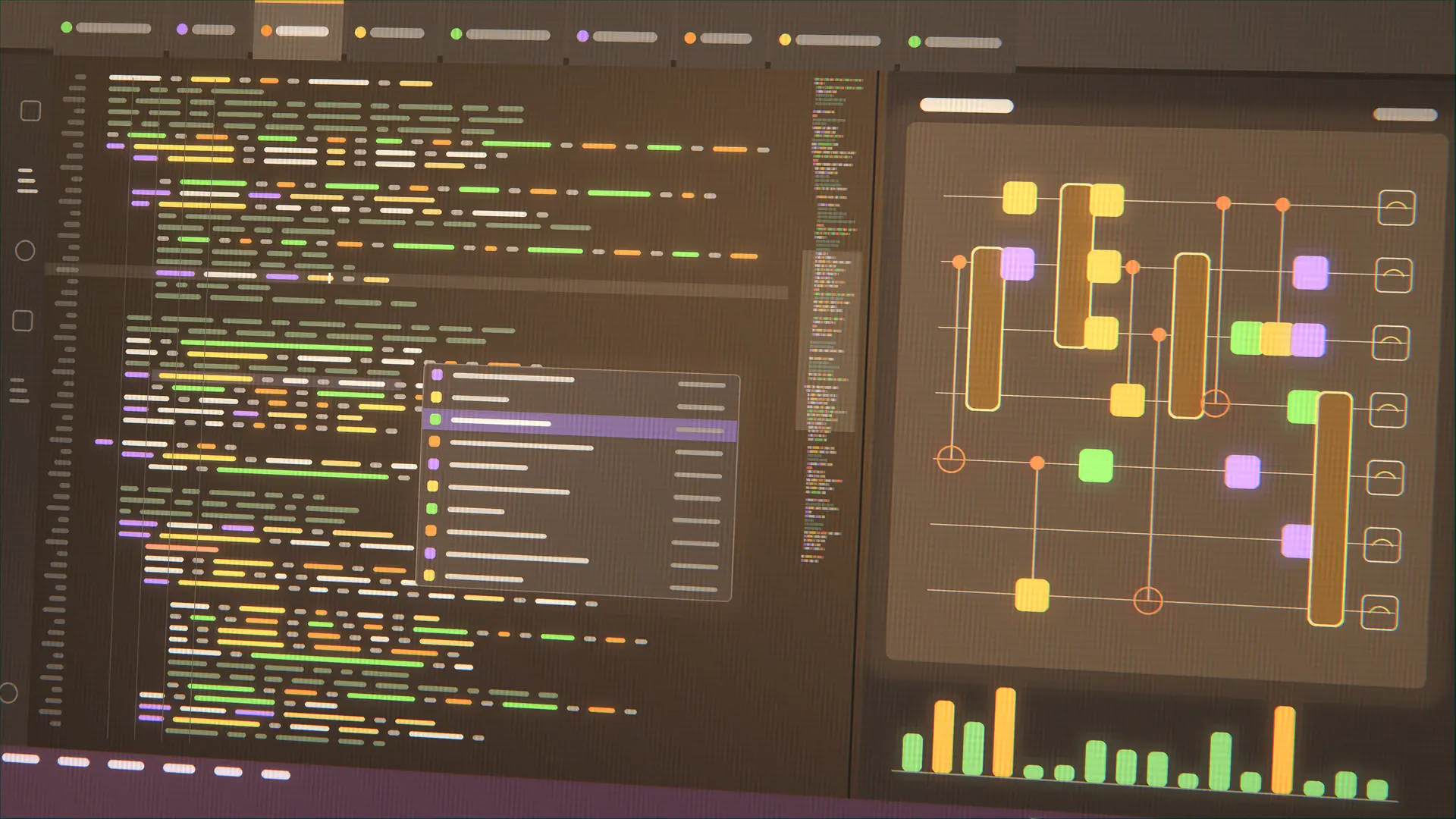
Horizon Quantum has introduced Beryllium, new software applying object-oriented programming principles to quantum computing for users of the Triple Alpha platform. The tool allows developers to define reusable quantum data types using “classes,” acting as blueprints for objects, mirroring structures found in classical programming languages.
This approach enables programmers to build complex programs from interacting objects without needing to understand each one’s internal workings, offering abstraction and modularity. The company states that object-oriented programming provides abstraction and modularity, managing complexity by breaking programs into smaller, self-contained units, addressing a key challenge in scaling quantum software development.
Object-Oriented Programming Challenges in Quantum Systems
The conventional rules of programming face fundamental challenges when applied to the quantum realm; classical object-oriented programming (OOP) relies on assumptions incompatible with quantum physics, yet Horizon Quantum’s new software, Beryllium, attempts to bridge this gap for Triple Alpha users. While OOP organizes software around objects containing data and behavior, quantum mechanics introduces constraints that disrupt this paradigm, specifically the inability to copy or inspect quantum data without altering it.
Existing quantum programming frameworks typically either lightly incorporate OOP within Python-based software development kits or eschew it entirely in favor of function-first or declarative models. Many prioritize familiarity by exposing quantum concepts through Python SDKs, but because Python is a classical language, it cannot enforce core quantum constraints at the language level, leaving correctness managed through libraries and conventions. Other frameworks prioritize mathematical rigor or hardware constraints, demanding developers think more like physicists than software engineers.
Declarative approaches prioritize abstraction over control, constructing circuits but often remain anchored to the circuit-level paradigm. Beryllium distinguishes itself as a purpose-built programming language designed to move beyond circuit-level thinking and enable truly expressive quantum programming. Unlike acting as a Python SDK or providing circuit wrappers, Beryllium aims to allow developers to write code that directly expresses what a program should achieve, rather than how the underlying circuits should be constructed.
It sits within Horizon Quantum’s Triple Alpha development infrastructure, compiling code down to lower-level languages for execution on quantum computers, positioned as the highest language level above Helium and Hydrogen. By combining classical and quantum data structures within a recognizable development environment, Triple Alpha users can leverage familiar control flow structures alongside quantum datatypes.
This higher level of abstraction allows developers to focus on program logic and produce hardware-agnostic quantum programs, reducing the need for specialized quantum expertise. Horizon Quantum notes that at this level, developers do not need to be hardware experts. As an object-oriented language, Beryllium enables developers to build quantum-accelerated applications using modules created by others, fostering a collaborative ecosystem. The ultimate goal, according to Horizon Quantum, is to lay the foundation for a future where quantum computing integrates seamlessly into mainstream development workflows.
Beryllium distinguishes itself within the rapidly evolving field of quantum programming by directly addressing the challenges of scaling software development beyond niche expertise. While many frameworks offer quantum functionality through classical languages like Python, these often manage correctness through external libraries rather than enforcing quantum constraints at the language level.
This integration allows for the creation of hybrid systems where quantum components run on a quantum processing unit (QPU) and classical components are evaluated by Horizon’s execution infrastructure. Beryllium’s advanced capabilities, supporting modular design and reusable components, represent a shift in how quantum software can be written and understood, making programs easier to read, scale, and maintain.
The demand for accessible quantum programming tools is driving innovation beyond circuit-level design, and Horizon Quantum’s Beryllium aims to bridge the gap between classical software engineering and quantum computation. By operating at a higher level of abstraction, Beryllium enables the creation of hardware-agnostic quantum programs with features like control flow, functions, and classes containing both classical and quantum data. This capability is crucial as quantum computing moves toward broader adoption, requiring a larger pool of developers without specialized quantum hardware expertise.




See today’s quantum computing news on Quantum Zeitgeist for the latest breakthroughs in qubits, hardware, algorithms, and industry deals.