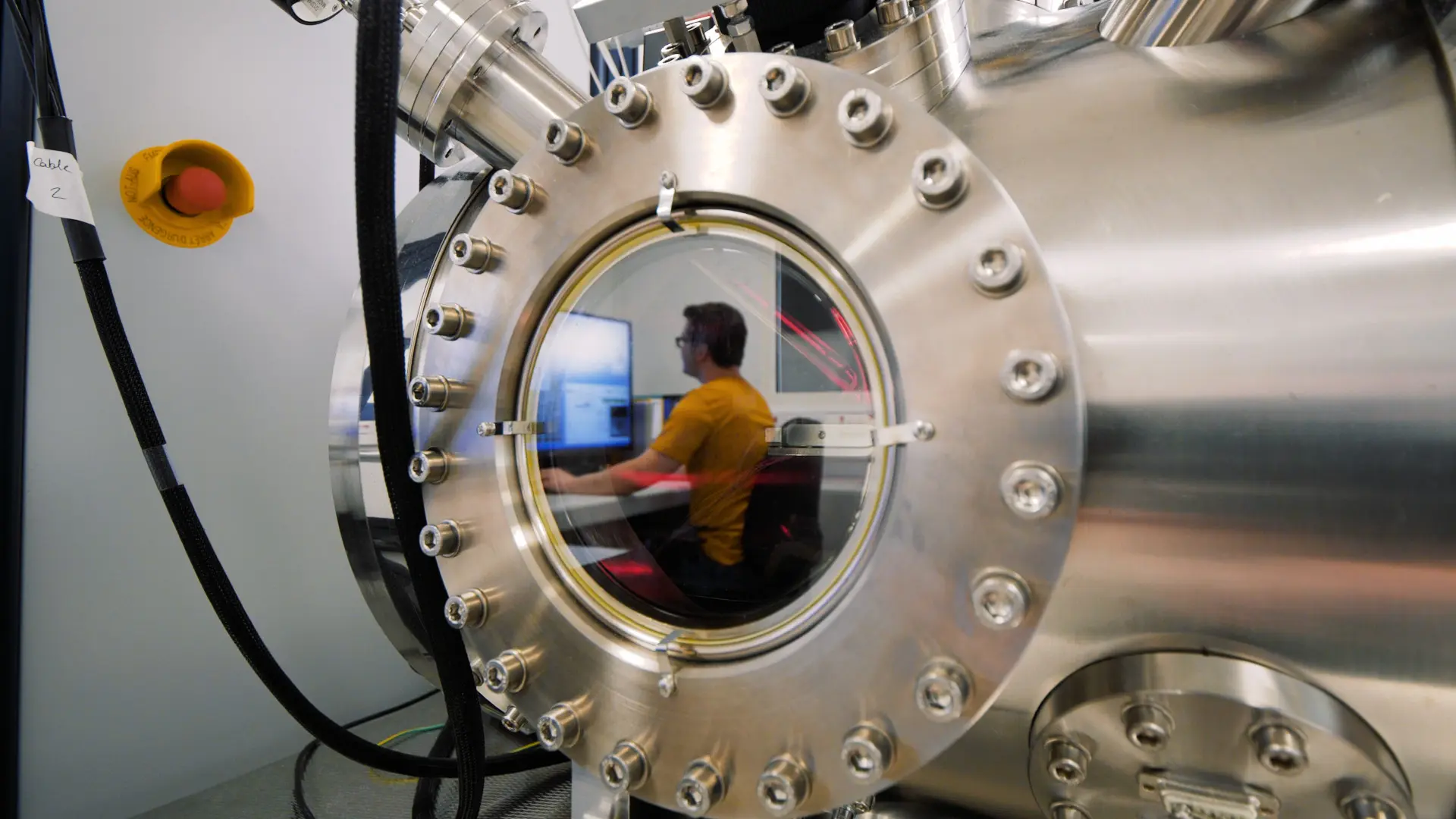
The University of Manchester’s instrument, P-Name, can now implant individual atoms into a material with 20-nanometre precision, a capability central to a new £12.6 million research programme. Led by Professor Richard Curry, the Materials Engineering for Advanced Devices (MEAD) programme, funded by the Engineering and Physical Sciences Research Council (EPSRC), aims to engineer materials with atomic-level control for breakthroughs in quantum technologies.
This precision will be applied to create a sensor capable of locating buried pipes and cavities from the surface without digging, alongside advancements in computing and secure communications. “We’re all united in addressing the same challenge of building new devices,” says Curry, “but at Manchester we’ll specifically use our expertise in engineering materials on the nanoscale.”
P-NAME Platform Achieves 20-Nanometre Atomic Implantation Precision
The Platform for Nanoscale Advanced Materials Engineering, or P-NAME, at The University of Manchester now achieves 20-nanometre precision in implanting individual atoms into materials. Researchers verified the precision of atomic placement using nanoSIMS, a technique that confirms the presence and location of engineered atoms at the finest possible resolution, and feeds those findings back into the engineering process. This iterative process distinguishes informed development from guesswork, ensuring the resulting materials possess the desired quantum properties.
The £12.6 million programme, led by Professor Richard Curry at The University of Manchester, in partnership with Imperial College London and the University of Leeds, aims to create materials specifically designed to deliver the required quantum properties at the heart of new technologies. “MEAD will build on our combined internationally recognised strengths in advanced materials, device engineering and quantum materials to deliver technologies that matter for national security, a new generation of sensing capabilities, and the future of quantum computing,” stated Professor Curry.
Jessie Boland will use a custom cryogenic near-field microscope, capable of nanoscale mapping of electrical, optical and chemical properties at ultra-low temperatures down to 30-nanometre length scales, to further characterize these engineered materials. This instrument will allow for detailed analysis of how atomic-level modifications impact device performance under realistic operating conditions.
The ability to manipulate atomic structure with such precision also opens avenues for creating communications systems resistant to eavesdropping, and computers capable of simulating molecular behavior for accelerated drug discovery and materials design. The recent publication in Communications Materials (doi. org/10. 1038/s43246-024-00498-0) details how this precision has yielded the world’s purest form of silicon, a material that promises to improve the reliability of quantum devices by minimizing interference from unwanted atomic impurities. The scale of investment underpinning MEAD extends beyond the existing infrastructure across the partner institutions.
The team’s work is not solely focused on theoretical advancements. They actively seek partnerships to translate these innovations into the next generation of advanced electronic, optical and quantum devices, engineered with single-atom and isotope-level precision. This collaborative approach emphasises the programme’s commitment to bridging the gap between fundamental research and real-world applications, ensuring that the benefits of quantum technologies are realized across multiple sectors.
We’re all united in addressing the same challenge of building new devices, but at Manchester we’ll specifically use our expertise in engineering materials on the nanoscale, so that we can create a new set of advanced materials – specially designed to deliver the required quantum properties at the heart of these.
MEAD Program Integrates Sensors, Single-Photons & Maser Technologies
This level of control allows for the deliberate construction of materials with tailored quantum properties, a cornerstone of the newly launched programme. Beyond simply manipulating atoms, the programme focuses on integrating these precisely placed building blocks into working prototypes, aiming to demonstrate their viability for real-world applications. Professor Richard Curry, Associate Vice-President for Research and Innovation at The University of Manchester, explains the programme’s ambition: “We won’t just study these materials and their quantum properties.
We’ll build them into working prototype devices to prove they can be used in real-world quantum technologies, such as quantum computers, secure communications systems and advanced sensors.” This emphasis on practical application distinguishes MEAD, moving beyond fundamental research toward tangible technological outcomes. One key area of development within MEAD centers on quantum sensors, with Dr. Jayadev Vijayan developing a new class of device using microscopic particles with engineered quantum properties held in a vacuum.
These sensors promise to significantly outperform existing technologies that rely on trapped atoms, offering enhanced sensing performance across a range of applications. The programme’s scope extends to actively seeking partnerships to accelerate the translation of research into commercial applications, inviting collaboration from entities interested in developing advanced electronic, optical and quantum devices. The team hopes to see these technologies applied in society, and are actively working to make that a reality.
Being able to check materials at the atomic scale, and feed those findings back into the engineering process, is what will separate informed development from guesswork.



See today’s quantum computing news on Quantum Zeitgeist for the latest breakthroughs in qubits, hardware, algorithms, and industry deals.