The Jesper Munch Quantum Laboratories at Adelaide University in South Australia are now the site of initial hands-on evaluations of superconducting quantum RF sensors for signals intelligence applications, as Southwest Research Institute (SwRI) and Adelaide University formalized a three-year research collaboration, the company says. Unlike conventional antennas, “quantum RF device size is independent of frequency,” according to SwRI Staff Engineer Michael Quinn, offering the potential for compact, broad-coverage systems aboard military ships and aircraft. This collaboration unites expertise in quantum materials with advanced RF engineering to address increasingly congested electromagnetic environments and complex operational scenarios.
Adelaide University & SwRI Advance Quantum RF Collaboration
These hands-on assessments mark the first phase of a collaborative project between the university and Southwest Research Institute (SwRI), formally launched through a three-year memorandum of understanding (MOU). The partnership focuses on advancing quantum RF sensing, sensemaking, and related technologies, with a particular emphasis on practical applications within defense and intelligence sectors. SwRI’s team conducted performance metric assessments on the superconducting quantum RF technology originating from Adelaide University, a critical step in validating the potential of these novel sensors.
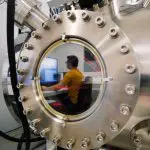
A key advantage of these quantum RF systems lies in their size, which differs significantly from conventional antenna designs. This compact design allows for more critical information to be gathered while minimizing the physical footprint of the sensing equipment. Adelaide University’s contribution to the project includes a molecular beam epitaxy (MBE) system, a sophisticated tool capable of “growing” advanced superconductor and quantum materials with atomic-level precision.
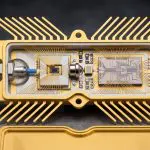
The MBE fabricates Superconducting QUantum Interference Devices (SQUIDs), which are then supercooled to -452.47 degrees Fahrenheit to activate their superconducting properties and RF wave response. Researchers are actively working to increase the SQUID operating temperatures, aiming to reduce cooling requirements and enhance the portability and practicality of the technology for real-world deployment.
The potential impact of quantum RF sensing extends beyond improved signal detection. Institute Engineer David Brown, part of SwRI’s quantum technology exploration team, described the field as “Quantum RF sensing is an incredible new area of technology,” and added, “This is a once-in-a-lifetime opportunity to be on the absolute cutting edge of science and explore the application of the most advanced technology of our lifetime.” SwRI anticipates integrating these capabilities to benefit both government and industry clients, suggesting a broad range of potential applications beyond defense and intelligence.
The MOU between SwRI and Adelaide University establishes a long-term framework for continued research, technology maturation and the exploration of opportunities in quantum sensing and advanced RF systems. This formal agreement highlights a commitment to collaborative innovation and the development of technologies that will address evolving challenges in the electromagnetic spectrum and beyond.
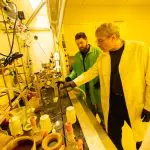
The SwRI team tested and assessed selected performance metrics of the superconducting quantum RF technology developed by Adelaide University.
Professor Giuseppe C. Tettamanzi, director of the Jesper Munch Quantum Laboratories and leader of Adelaide University’s superconducting quantum technologies research program

See today’s quantum computing news on Quantum Zeitgeist for the latest breakthroughs in qubits, hardware, algorithms, and industry deals.