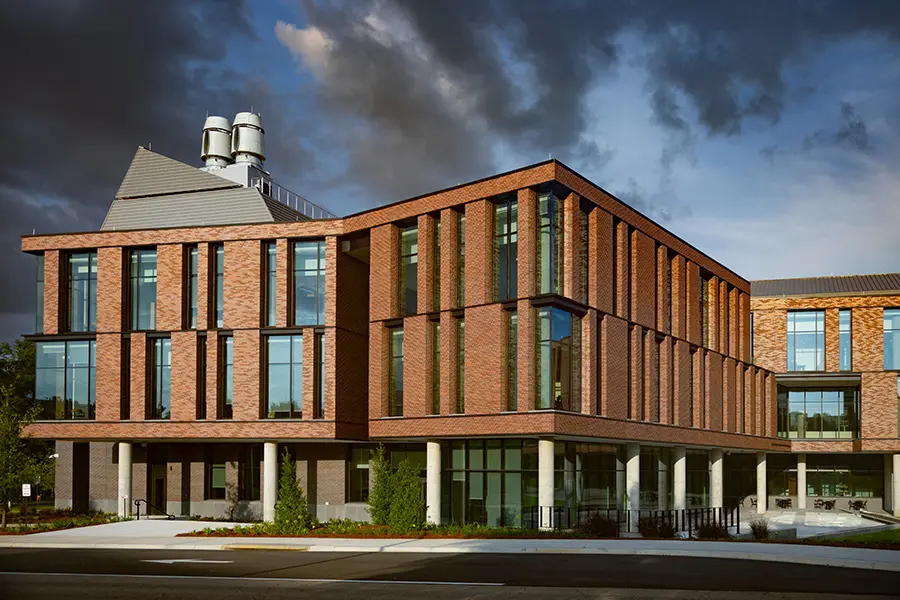
Florida State University will establish a unique, multi-location quantum communication testbed with $2.1 million in federal funding from the National Institute of Standards and Technology, a project secured with support from U.S. Representative Daniel Webster.
The testbed will physically link the Interdisciplinary Research and Commercialization Building with receiver nodes at both the FAMU-FSU College of Engineering and the National High Magnetic Field Laboratory, allowing researchers to assess performance under “strong air turbulence, high magnetic fields and cryogenic thermal cycling.” According to Representative Webster, this investment will strengthen American innovation in a field critical to national security.
FSU Establishes Real-World Quantum Communication Testbed
Researchers plan to use existing campus fiber resources to establish these links, providing a practical foundation for more extensive, long-distance quantum networks. The project, funded by $2.1 million, will generate and distribute entangled photons, the fundamental carriers of quantum information, while meticulously monitoring key performance indicators like link reliability. This data collection will help refine system performance and identify vulnerabilities in real-world deployment scenarios.
Beyond simple transmission, the testbed incorporates reconfigurable optical links, enabling researchers to deliberately subject components and communication channels to controlled environmental stressors. “The next frontier is not simply demonstrating quantum communication in an ideal laboratory, but understanding how to make these systems reliable in the environments where they will ultimately operate,” said Suvranu De, dean of the FAMU-FSU College of Engineering.
This investment builds upon Florida State University’s existing commitment to quantum research, which includes the recruitment of 10 new faculty members since 2023, bringing the total number of quantum researchers to 45. The university also recently launched Florida’s first graduate credential in quantum information science and engineering, and established the Florida Alliance for Quantum Technology, demonstrating a broad commitment to workforce development in the field.
Wei Guo, professor of mechanical and aerospace engineering and co-director of the FSU Quantum Initiative, emphasized the educational benefits of the new infrastructure. “Just as importantly, it will give students and researchers hands-on experience across the full quantum-networking stack, from photons and detectors to controls, data, networks and demanding operating environments.” The testbed’s ability to simulate challenging conditions is particularly noteworthy, as it addresses a critical gap in current quantum communication research.
While laboratory settings provide precise control, they often fail to replicate the unpredictable variables encountered in practical applications. U.S. “This is an important research infrastructure investment that can support future quantum-networking activities and position FSU for larger-scale opportunities,” added Guo.
The facility is designed to not only test the limits of current technology but also to enable secure and resilient quantum networks capable of operating reliably in the real world, as De stated, “This investment gives us a platform to connect fundamental quantum science with engineering validation, workforce development and future partnerships with government, industry and other universities.”
The next frontier is not simply demonstrating quantum communication in an ideal laboratory, but understanding how to make these systems reliable in the environments where they will ultimately operate.
Suvranu De, dean of the FAMU-FSU College of Engineering



See today’s quantum computing news on Quantum Zeitgeist for the latest breakthroughs in qubits, hardware, algorithms, and industry deals.