Vilnius University is deepening its collaboration with CERN, the European Organization for Nuclear Research, with a visit last week focused on talent development and strategic involvement in the particle physics leader’s activities. Professor Eglė Lastauskienė, Chairperson of the VU Senate, highlighted that CERN is a cradle of fundamental research and innovation. The delegation, including university and consortium leaders, met with CERN’s leadership to discuss Lithuania’s future participation in CERN’s decision-making and expanding opportunities for Lithuanian scientists and businesses.
VU Delegation Explores CERN Facilities and Research Areas
The ISOLDE facility at CERN, producing radioactive isotopes for cancer diagnosis and treatment, particularly impressed delegates from Vilnius University during their recent visit. This application of particle physics infrastructure beyond fundamental research highlighted a key area for expanded collaboration, according to the visiting Lithuanian delegation. Discussions with Dr. Ursula Bassler, CERN’s Director for Stakeholder Relations, centered on cultivating talent and encouraging innovation alongside scientific collaboration.
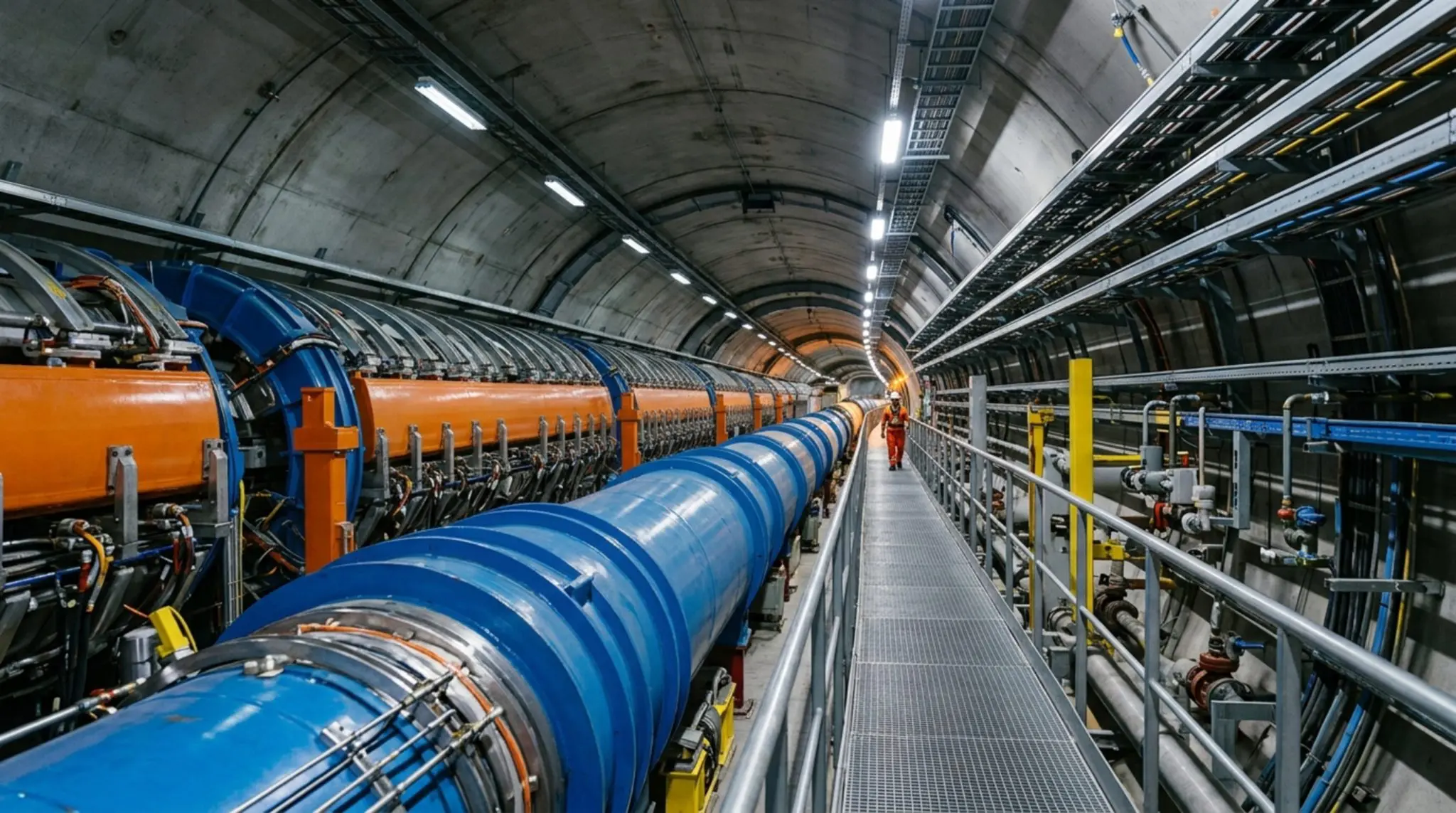
Professor Ramūnas Aleksiejūnas emphasized that achieving full CERN membership represents an investment in the country’s future, granting Lithuania a voice in the organization’s strategic direction and bolstering the international standing of its scientists and institutions. The delegation’s visit included a tour of the CERN Data Centre, the LHCb detector’s control centre, the Antimatter Factory and CERN’s historic Synchrocyclotron, providing insight into the facilities’ capabilities.
The delegation observed firsthand how CERN’s facilities support international research teams, with most scientists conducting their work at home institutions across numerous countries. This model aligns with Lithuania’s existing participation through the Lithuanian Consortium for Particle Physics and the LHCb Vilnius group led by Dr. Mindaugas Šarpis, who was pleased with the significant added value created by the CERN-Lithuania collaboration in diverse fields.
‘From 21 to 26 September, 27 Lithuanian students visited IdeaSquare, CERN’s innovation laboratory, where they learnt to tackle complex global challenges through an interdisciplinary approach,’ said Saulė Mačiukaitė-Žvinienė, Head of Entrepreneurship and Innovation Development at the VU Business School. The students, representing business, physics, and engineering were encouraged to challenge conventional thinking and develop unconventional solutions to future global issues. CERN’s ongoing Quantum Technology Initiative further expands the potential for collaboration, with studies encompassing quantum computing, sensing and networking.
This initiative, alongside the recent approval of a strategy to integrate artificial intelligence across all research activities demonstrates CERN’s commitment to embracing these technologies.
Lithuania Pursues CERN Full Membership and Strategic Involvement
Lithuania is actively seeking to expand its role within CERN, with discussions now centering on full membership rather than the associate status held since 2018. This pursuit of full membership is predicated on the belief that greater involvement will unlock wider opportunities for both Lithuanian students and its burgeoning innovation ecosystem. It would give Lithuania the opportunity to participate in the organization’s strategic decision-making, strengthen the international role of Lithuanian scientists and institutions, and open up wider opportunities not only for students and researchers, but also for business and the innovation ecosystem.
The Head of the LHCb Vilnius group, Dr Mindaugas Šarpis, was pleased that the collaboration between CERN and Lithuania is creating significant added value in various fields. The LHCb experiment collaboration conference, ‘LHCb Week 2026’, held in Vilnius from 14 to 18 September, was one of the largest and most successful international events in the history of fundamental research in Lithuania.




See today’s quantum computing news on Quantum Zeitgeist for the latest breakthroughs in qubits, hardware, algorithms, and industry deals.