

A 20 million investment will expand the National Science Foundation’s National Quantum Virtual Laboratory, adding five new teams to the four already developing technologies ranging from long-distance quantum networks to single-cell sensors. Each team will receive 4 million over two years to refine development plans and prepare for implementation, building capabilities to integrate quantum sensors, networks, and computers for real-world applications. This concentrated funding reflects a broader U.S. push to strengthen leadership in quantum technology, as outlined in a recent Executive Order. “Across academia, government and industry, America has an unmatched array of brilliant people working on quantum science and tech with incredible potential to improve our quality of life,” says Brian Stone, performing the duties of the NSF director, “But too often they are working independently in silos. We need to bring their talent and ideas together, and NSF is uniquely positioned to make that happen.”
NSF Funds Five Teams in National Quantum Virtual Laboratory Design
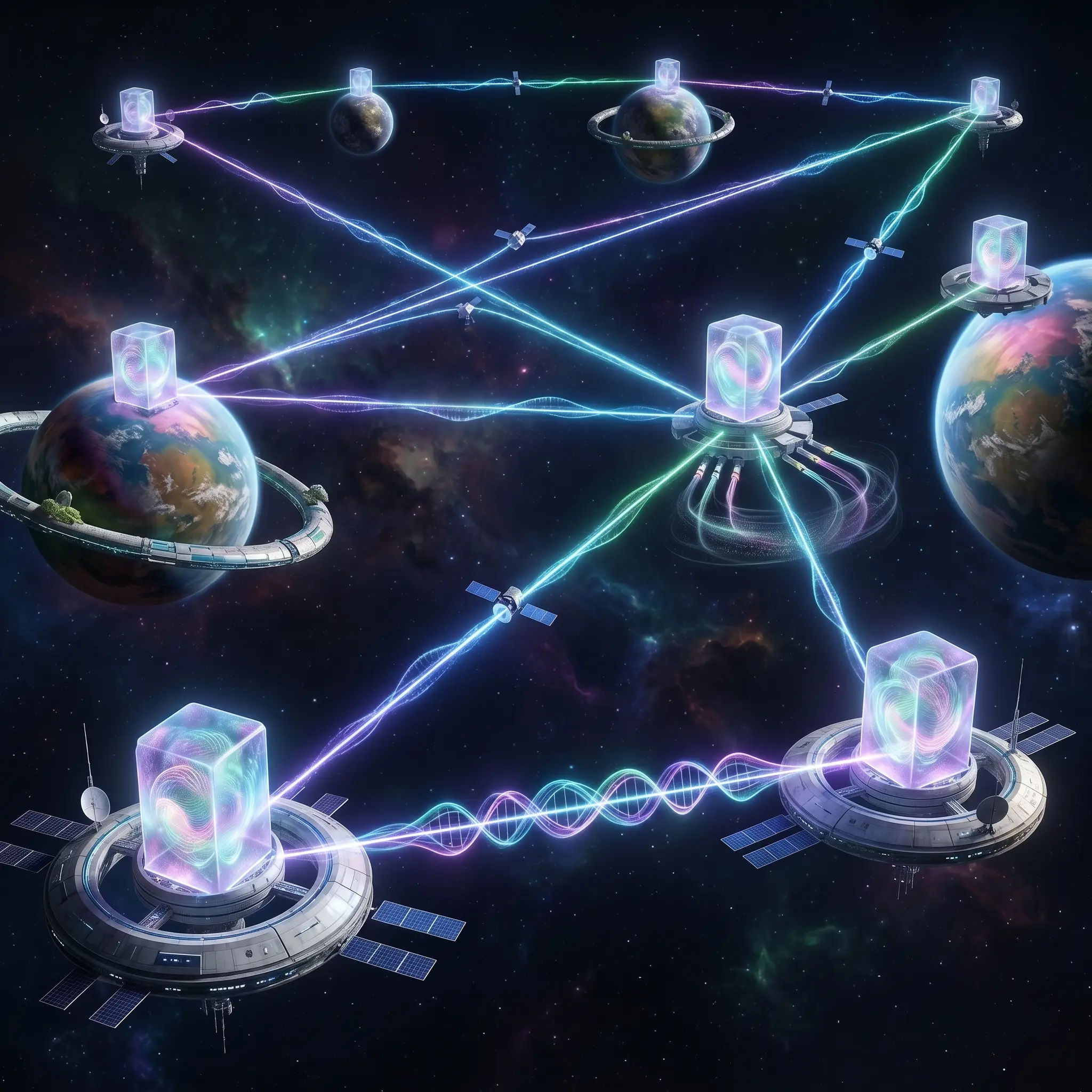
A collective $20 million in new funding from the National Science Foundation will accelerate the development of practical quantum technologies, adding five teams to an existing cohort of four already engaged in the National Quantum Virtual Laboratory program. This substantial investment underscores a concentrated effort to move quantum research beyond theoretical exploration and toward tangible applications, ranging from secure long-distance communication to advanced cellular-level sensing. The projects showcase the breadth of quantum technology being pursued; one team aims to create quantum networks capable of transmitting information at speeds approximately 100,000 times faster than current systems over distances reaching 60 miles. Another is focused on developing sensors utilizing protein-based qubits, designed to measure properties inside single cells, a capability with profound implications for biological research and medical diagnostics. A third team will focus on accelerating fault-tolerant quantum logic, unifying error-correcting code, hardware, and algorithms into a cohesive development process.
These efforts are not occurring in isolation; the projects involve partnerships with over two dozen U.S. companies including Boeing, Honeywell, and NVIDIA, as well as federal agencies like the Air Force Research Laboratory and NASA. This emphasis on collaboration is deliberate, addressing a key challenge in the field. The agency anticipates selecting the first teams to move into the implementation phase later this year, contingent upon congressional appropriations, furthering the goals outlined in the National Quantum Initiative Act passed by Congress in.
The team will design a high-fidelity quantum networking system approximately 100,000 times faster than current quantum networks and able to carry information over distances of about 60 miles.
NSF

See today’s quantum computing news on Quantum Zeitgeist for the latest breakthroughs in qubits, hardware, algorithms, and industry deals.


