Building a functional quantum network demands more than theoretical modeling; it requires careful design to overcome inherent technological hurdles. Quantum memories, essential for holding qubit states, currently face a significant limitation as they are susceptible to decoherence caused by environmental factors like temperature and vibrations, potentially collapsing a qubit into a classical bit.
This instability, alongside the lack of standardization in device timescales and frequencies, necessitates solutions like quantum transduction, changing a photon’s frequency while preserving its quantum state, to connect disparate systems. Identifying these issues upfront through simulation and emulation will prove critical as organizations begin to plan for entanglement-based networks.
Entanglement Challenges: Decoherence, Standardization, and No-Cloning
This instability presents a significant hurdle because it destroys the superpositions that define quantum information, effectively erasing the quantum state. Engineering solutions focus on isolating qubits, but achieving complete isolation remains a complex challenge given the sensitivity of quantum systems to external interactions. A lack of standardization further complicates the construction of interconnected quantum hardware; the nascent nature of the technology means there are currently no universally accepted protocols for device communication.
Entanglement rate, measured in qubits per second and entanglement fidelity, a quality metric, represent a fundamental trade-off in network design. A network boasting 90% entanglement fidelity, meaning a 90% chance of successful operation, will inherently operate at a slower entanglement distribution rate than one prioritizing speed. The choice between these metrics depends on the intended application; high-fidelity systems are important for precise experiments and security-sensitive applications where errors are unacceptable.
Prioritizing a faster rate of entanglement distribution may be preferable for networks serving numerous users, even if it means accepting a degree of error. Bridging the gap between devices operating at different frequencies may require transduction, a process necessary to ensure compatibility. “Depending on your purpose, on your user applications, higher speed or quality may be desired,” the source notes, highlighting the need for tailored network designs.
Network Design Guides: Use Cases and Performance Metrics
Establishing a quantum network’s operational parameters demands careful consideration of both entanglement rate and fidelity, with the optimal balance dictated by intended applications and user base size. Network designers must account for downtime tolerance and maintenance costs alongside these quantum metrics to create a viable system, as these practical considerations directly impact long-term feasibility. Encoding qubits into photons, the carriers of quantum information, presents a variety of methods, each with unique hardware requirements and suitability for specific networking goals.
Selecting the appropriate encoding method is therefore key to aligning hardware choices with overall network objectives. Precise time synchronization is also critical, stemming from the differing timescales inherent in quantum devices and the fact that quantum information is exchanged via photons at device-specific frequencies.
Photonic Encoding and Precise Clock Synchronization
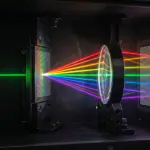
Quantum networks demand methods for converting photonic signals between devices operating at differing frequencies, a process known as transduction. This conversion involves shifting a photon from one frequency to another while preserving its quantum state, a necessity when connecting devices that aren’t natively compatible. Precise clock synchronization is also critical, as quantum systems require accurate timing for interactions. Certain quantum memories, designed to store qubits encoded as photons, must anticipate photon arrival.
Quantum repeaters performing entanglement swapping often demand synchronization at the picosecond level to successfully exchange photons. These synchronization requirements are dictated by the chosen qubit encoding method, as the way a qubit is encoded into a photonic state of light influences the necessary hardware. The team reports that understanding these trade-offs is important for the design process, and that designing for specific quantum network use cases is key.
Simulation and Emulation Validate Quantum Network Designs
A simulation’s effectiveness hinges on its fidelity, but introducing real hardware into the testing process offers a more realistic assessment of performance within a larger quantum network context. This approach allows for granular examination of how a physical component would function when integrated into a complex system, revealing potential bottlenecks or incompatibilities before significant investment occurs. Network responses to unexpected events, such as delayed qubit arrival during entanglement swapping, can be thoroughly tested and refined through simulation and emulation.
Defining protocols for handling these scenarios, including wait times and parameter adjustments, is as important as hardware selection itself. Approaching network design with intention, and basing choices on data-driven analysis, establishes a solid foundation for a fully optimized quantum network. This deliberate process allows for trade-offs to be carefully considered, ensuring that the final network architecture aligns with the intended applications and user needs. The ability to experiment with control software during this phase is also invaluable, allowing for fine-tuning and optimization of network behavior.




See today’s quantum computing news on Quantum Zeitgeist for the latest breakthroughs in qubits, hardware, algorithms, and industry deals.