The Canadian pioneer of commercial quantum annealing, and the first public pure-play quantum computing company built around it. This is how it grew, reached the stock market and set its course for the years ahead.
D-Wave Quantum is the company that turned quantum computing from a laboratory curiosity into a product you can buy time on. Founded in Canada in 1999, it shipped the first commercial quantum computer a full decade before most of its rivals existed, and it remains the only public pure-play quantum firm built around quantum annealing.
This is the commercial history of D-Wave Quantum, from a patient university spin-out to a Nasdaq-beating stock with a large cash reserve, a fast-growing customer list and a second machine on the way. It traces how the company scaled, how it reached the public markets, the community it has built around the Qubits conference, and why it sits in a stronger position today than at any point in its history.
What D-Wave Quantum does
D-Wave Quantum builds quantum computers and the cloud software that lets customers run problems on them. Its core systems are quantum annealers, machines purpose-built to find low-energy solutions to optimisation problems such as scheduling, routing, portfolio construction and materials simulation. Rather than sell only hardware, the company delivers most of its commercial work through Leap, a real-time quantum cloud service that businesses reach over the internet.
The choice that has defined the company for more than two decades is its focus on annealing. Most quantum firms chase the gate model, which aims at a universal computer able to run any algorithm, while D-Wave concentrated on a technique that scales to thousands of qubits quickly and attacks real optimisation workloads today. That practical focus is why D-Wave has paying customers solving live business problems while much of the field is still in the laboratory.
The company also provides the software tools that make the hardware usable. Its open-source Ocean suite lets developers build and submit problems in Python, and a library of hybrid solvers handles the heavy lifting of mapping a business question onto the quantum processor. This full-stack approach, from the chip to the developer toolkit, means customers can start small and scale up without stitching together pieces from different vendors.
How quantum annealing works
Quantum annealing is a physical approach to a specific job, finding the lowest-energy arrangement of a complex system. Many valuable business problems, from packing delivery routes to balancing a portfolio, can be rewritten as the search for that minimum, and an annealer is built to settle into it naturally. The user encodes the problem as a pattern of connections between qubits, and the machine then relaxes toward the best solution it can find.
D-Wave’s processors hold this information in superconducting circuits cooled to within a whisker of absolute zero, far colder than deep space. The qubits start in a simple quantum state and are guided slowly toward the landscape of the problem, using quantum effects to explore many possibilities at once before settling. The newest Advantage2 design arranges these qubits on a connectivity graph called Zephyr, which links each qubit to more of its neighbours and lets the machine represent harder problems directly.
The trade-off is deliberate and commercially shrewd. Annealing does not aim to run every quantum algorithm, so it cannot break encryption or perform arbitrary computation, but in exchange it scales to thousands of qubits and tackles optimisation today. That is why D-Wave could sell working machines while universal gate-model computers were still counting their qubits in single or double digits.
The technique keeps advancing in the wider research community, and Quantum Zeitgeist tracks the work closely. Recent coverage spans new optimisation methods built on annealing and even annealing applied to nuclear-physics calculations. That steady stream of results shows the approach D-Wave championed is still gaining ground.
It helps to picture the problem as a landscape of hills and valleys, where the best answer sits at the lowest point. Classical methods can get stuck in a shallow valley, while quantum effects let an annealer tunnel through barriers toward a deeper one. That ability to escape local minima is the intuition behind why annealing can shine on rugged optimisation problems that trip up conventional computers.
The 1999 founding and the annealing bet that paid off
D-Wave Systems was founded in 1999 in Burnaby, British Columbia, by Haig Farris, Geordie Rose, Bob Wiens and Alexandre Zagoskin. The early company behaved more like a research institute than a product business, patiently funding the physics it believed would eventually pay off. That was an unusually long-horizon stance for a venture-backed start-up.
The name itself points to the physics the founders came from. When electrons pair up inside a superconductor, the quantum symmetry of that pairing is labelled with letters borrowed from atomic orbitals, among them s-wave, p-wave and d-wave. The high-temperature copper-oxide superconductors at the heart of the founders’ early research display d-wave symmetry, so the team adopted D-Wave as a name that signalled those roots in superconducting physics. The choice proved fitting, because the company went on to build its qubits from superconducting circuits cooled close to absolute zero.
The decisive move was the early commitment to quantum annealing rather than the gate model. It was a bold, contrarian bet, and D-Wave backed it by shipping working systems, signing real customers and steadily publishing peer-reviewed results. That long head start gave the company engineering expertise in large superconducting qubit arrays that few rivals can match, and the approach has been borne out by a growing record of practical results.
The conviction was shared by a distinctive roster of backers. Early investors included Jeff Bezos through his personal investment vehicle, the venture arm of the United States intelligence community, and the investment group of Goldman Sachs, alongside Canadian institutions willing to support a long research horizon. That patient capital let the company keep doubling qubit counts while the scientific debate played out, and by the mid-2020s the results would tilt that debate firmly in D-Wave’s favour.
Sustaining that vision through the lean years took unusual resolve. D-Wave spent more than a decade refining its fabrication and control systems before the market caught up to its ideas, weathering doubts that would have sunk a less committed team. That perseverance is a large part of why the company, rather than a later entrant, owns the deepest experience in building and operating annealing hardware.
The first commercial quantum computer
D-Wave demonstrated a 16-qubit prototype called Orion in 2007, then announced D-Wave One in 2011. Built around a 128-qubit processor, D-Wave One was billed as the world’s first commercially available quantum computer, and customers paid for it. The milestone put the company years ahead of a field that had barely begun to think about products.
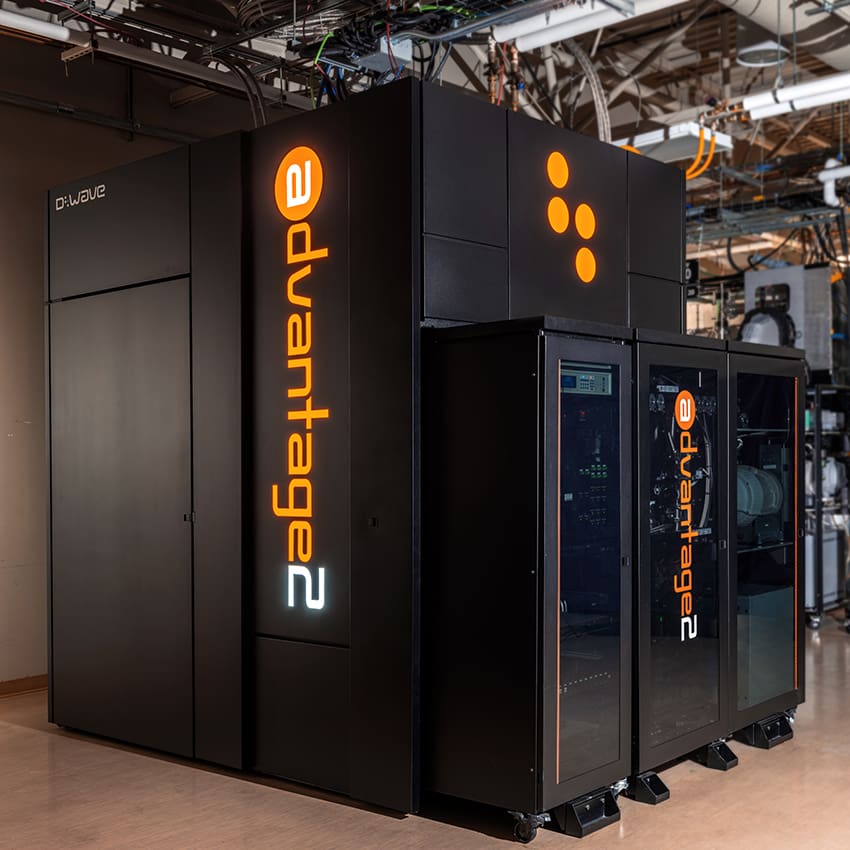
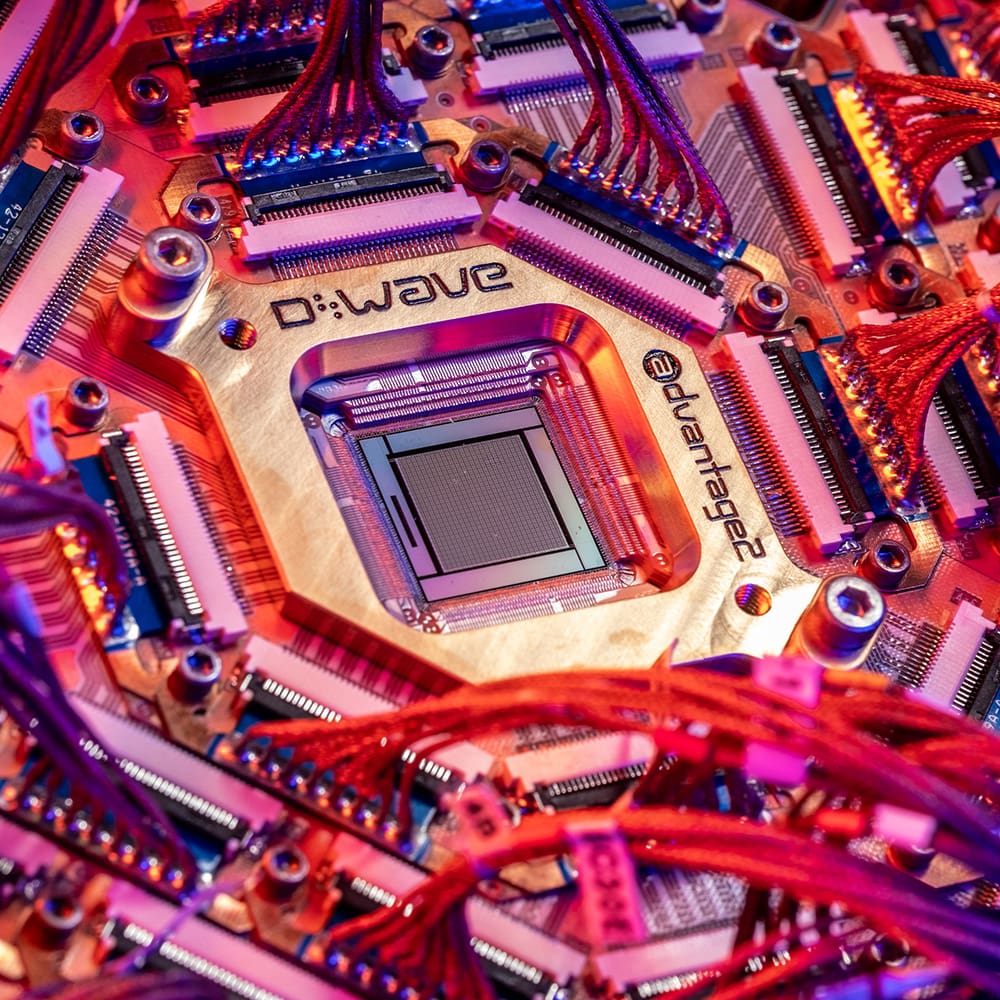
Each generation roughly doubled the qubit count, a cadence no gate-model rival could match at the time. That scaling story became the backbone of the pitch to customers and, later, to public-market investors who wanted a tangible roadmap rather than a science project. By 2020 the Advantage system passed 5,000 qubits on a richer connectivity graph, and the trajectory has continued since.
Pricing told its own story about ambition. The earliest systems carried multimillion-dollar price tags and sold to a handful of pioneers, but the shift to cloud access opened the technology to anyone with a problem and a browser. That move from rare capital purchase to on-demand service is one of the most important commercial decisions in the company’s history.
Behind each new processor sat a formidable engineering achievement. Running thousands of superconducting qubits demands dilution refrigerators that hold the chip near absolute zero and a control system that addresses every qubit precisely. Mastering that stack, and shrinking it into a reliable product, gave D-Wave manufacturing know-how that newer rivals are still working to build.
Lockheed, Google and NASA as early believers
Commercial validation arrived through a short list of demanding buyers. Lockheed Martin signed a multi-year agreement and bought a D-Wave One in 2010, using it to study verification of complex aerospace systems. The purchase gave the young company a defence-grade reference customer years before quantum computing was fashionable.
In 2013, Google, NASA and the Universities Space Research Association installed a D-Wave Two to launch the Quantum Artificial Intelligence Lab. Volkswagen later ran traffic-optimisation experiments on the hardware, and a string of national laboratories followed. These engagements proved that serious organisations would pay to explore annealing on real problems, and they seeded a customer base that keeps widening today.
Those early relationships also shaped how D-Wave sells. Working beside sophisticated buyers taught the company to frame quantum computing around concrete business outcomes rather than physics milestones, a discipline that still guides its commercial teams. The result is a sales story grounded in solved problems, which has helped it win over cautious enterprise customers.
The customer roster has broadened well beyond the early pioneers. Banks, carmakers, logistics providers and public agencies have all run projects on D-Wave hardware, drawn by the promise of better routing, scheduling and allocation. Each successful engagement adds a reference that makes the next sale easier, a compounding advantage in a market where buyers want proof before they commit.
Building the Advantage systems and the Leap cloud
The arrival of the cloud reshaped how the company sold its technology. In 2018 it launched Leap, a service that lets developers submit problems to a live quantum processor in real time, and the model shifted the business from selling rare multimillion-dollar machines toward recurring access revenue. Leap also lowered the barrier for the optimisation specialists who make up much of the customer base.
The 2020 Advantage system, with more than 5,000 qubits and richer connectivity, became the workhorse behind that cloud. The company has since sold full Advantage systems to buyers that want their own on-premises machine, including the Jülich supercomputing centre in Germany, while most users reach the hardware through Leap. This dual route, owned machines plus cloud access, still defines a commercial model that few quantum companies can offer at scale.
The hybrid solvers that sit on top of Leap matter as much as the hardware. They automatically split a large problem between classical computers and the quantum processor, so customers can tackle real-world sizes without needing to be quantum experts. That software layer has widened the audience for annealing well beyond physicists and into mainstream operations and logistics teams.
Access has widened steadily since Leap launched. The service reaches developers in dozens of countries, and D-Wave has added support and onboarding so newcomers can run their first problem within minutes. By lowering the cost and complexity of trying quantum optimisation, the cloud turned a niche scientific tool into something a working engineer can pick up and use.
Real-world problems D-Wave already solves
What sets D-Wave apart commercially is how much of its work is in production rather than in pilots. The company has built a strong line in optimisation for logistics, manufacturing and scheduling, the kinds of problems that cost large enterprises real money every day. It secured a ten million dollar quantum-computing-as-a-service deal with a Fortune 100 company, a sign that blue-chip buyers see value in annealing now rather than someday.
The use cases reach well beyond logistics. D-Wave has worked on drug design with the specialist PolarisQB, on a twenty million dollar collaboration with Florida Atlantic University, and on defence applications, including a tenfold speedup for a missile-defence workload and an Advantage2 system installed at Davidson Technologies. A 2026 survey the company highlighted found that 41 percent of UK firms see up to 100 million pounds of value from quantum within a year.
That focus on demonstrable value is a deliberate strategy. By solving problems that customers can measure today, D-Wave builds the references and repeat business that turn interest into revenue, and it gives the whole industry a rare example of quantum computing earning its keep outside the research lab.
The breadth of sectors is striking for a technology often dismissed as far off. D-Wave has engaged customers across logistics, manufacturing, financial services, mobility and the public sector, each drawn by the prospect of better schedules, routes or allocations. By meeting these buyers with production-grade cloud access rather than experiments, the company has turned quantum optimisation into a service organisations can actually purchase.
Some of the results are strikingly concrete. Customers have reported faster solutions and better answers on problems from treatment scheduling to manufacturing layout, and D-Wave has shown cases where its hybrid solvers handle millions of variables. These are the kinds of measurable outcomes that move quantum computing from a research curiosity to a line item a chief operating officer can justify.
The 2025 quantum supremacy milestone
In 2025 D-Wave delivered the result that crowned two decades of work. A peer-reviewed paper showed that its hardware had solved a materials-simulation problem that would take a leading classical supercomputer roughly a million years, a claim of genuine quantum advantage on a useful task rather than a contrived benchmark. It was a landmark moment that put hard evidence behind the promise of annealing.
The result built on earlier demonstrations that D-Wave systems could solve certain problems faster than the best classical machines. Peer-reviewed and robustly defended, the work cemented D-Wave’s place at the centre of the quantum-advantage conversation. It also gave customers fresh confidence that the hardware they were already using sat at the scientific frontier.
The milestone carried weight beyond the headlines. It reassured existing customers that they were building on hardware at the cutting edge of the science, and it strengthened the pitch to new buyers ready to put annealing to serious work. The 2025 result was both a scientific and a commercial turning point that confirmed the annealing bet had paid off.
A record of industry firsts
Few companies can claim as many milestones in commercial quantum computing. D-Wave’s history is studded with moments when it did something before anyone else, and that track record is central to its identity.
- First commercial quantum computer. D-Wave One, announced in 2011, was sold as the world’s first commercially available quantum computer.
- First quantum computer sold to a customer. Lockheed Martin bought a D-Wave One, becoming the first organisation to own a commercial quantum machine.
- First quantum computer at Google and NASA. A D-Wave Two anchored the Quantum Artificial Intelligence Lab in 2013.
- First real-time quantum cloud service. Leap, launched in 2018, let developers run problems on a live quantum processor over the internet.
- First claim of quantum advantage on a useful problem. The 2025 materials-simulation result argued for a practical speedup over classical supercomputers.
Each of these firsts came with commercial intent rather than as a laboratory stunt. That is the thread that runs through D-Wave’s story, a willingness to ship and sell quantum technology while the rest of the field was still preparing to.
Adding a gate-model line with Quantum Circuits
D-Wave is no longer an annealing-only company, and its expansion into the gate model is one of the most important parts of the recent story. In a move that widened its addressable market, the company agreed to acquire Quantum Circuits Inc for 550 million dollars, bringing in dual-rail superconducting qubits with very high gate fidelities. The deal positioned D-Wave to pursue both annealing and gate-model systems under one roof.
The technology has already produced results. The company reported a gate-model breakthrough and in 2026 demonstrated a dual-rail error-aware quantum simulator that points toward fault-tolerant machines. Its published 2026 roadmap covers both annealing and gate quantum computing, and it has set a clear near-term target of one million operations on 100 logical qubits.
The gate-model roadmap gives D-Wave a second, longer-range growth engine. Gate-based machines are the universal kind that could one day run algorithms annealing cannot, from chemistry simulation to factoring, so owning a credible gate programme lets the company address that market without giving up its annealing lead. The dual-rail qubits inherited from Quantum Circuits are prized for very high gate fidelities, which lower the overhead of error correction and shorten the road to fault tolerance.
Running both architectures from a single strong balance sheet is a position no other pure-play quantum company currently holds. D-Wave has framed annealing and the gate model as complementary, with annealing serving optimisation customers today and the gate line opening longer-term scientific and industrial markets. The 550 million dollar Quantum Circuits purchase, paid for in stock during the 2025 rally, was the move that made that dual strategy real.
The timing of the move was shrewd. By acquiring proven gate-model talent and technology during a period of strength, D-Wave compressed years of in-house development into a single step. It now fields one of the broadest technology portfolios in the sector, able to meet a customer with annealing today and a path toward universal quantum computing tomorrow.
Going public as NYSE: QBTS
D-Wave Quantum entered the public markets in August 2022 through a merger with DPCM Capital, a special purpose acquisition company. The transaction valued the business at about 1.6 billion dollars and put the parent, D-Wave Quantum Inc., on the New York Stock Exchange under the ticker QBTS. The listing made it one of the first pure-play quantum computing stocks available to ordinary investors, and a benchmark the whole sector would watch.
D-Wave arrived as part of the first wave of quantum companies to reach the public markets, the cohort that gave the field its first traded stocks. The quantum-security firm Arqit listed in September 2021, and IonQ followed weeks later as the first pure-play quantum computing company to go public, both through SPAC mergers. The superconducting pioneer Rigetti came to market in March 2022, and D-Wave completed its own merger that August, while the trapped-ion leader Quantinuum later chose a traditional listing in 2026. Together these companies turned quantum computing into an investable sector, and D-Wave’s annealing focus gave investors a distinct bet within it.
After a tough opening stretch common to companies that arrive through a SPAC, the story turned decisively in D-Wave’s favour. A wave of investor enthusiasm for quantum computing across 2024 and 2025 lifted QBTS, and the company used that strength to put its early funding worries firmly behind it. By 2026 it was one of the best-capitalised names in the field.
The listing also gave D-Wave something less tangible but valuable, a public profile that helps it recruit, partner and sell. Being a named stock that investors follow keeps the company in the conversation whenever quantum computing makes headlines. For a business that depends on convincing cautious enterprises to try something new, that visibility is an asset in itself.
A strong balance sheet and government backing
Financial strength is now one of D-Wave’s clearest advantages. The company lifted its cash position to about 588 million dollars, up 93 percent year over year, giving it years of runway to invest in both annealing and gate-model hardware. For a sector where cash has often been the binding constraint, that reserve is a genuine competitive edge.
Government programmes have added to the momentum. D-Wave secured a 100 million dollar CHIPS Act commitment to scale its quantum systems and a separate 25 million dollar award to advance superconducting qubit fabrication. This public backing validates the company’s manufacturing strategy and helps keep advanced quantum chip-making onshore, while its quarterly results give investors a regular read on growing demand.
The combination of private cash and public support is unusual in the sector. Many quantum start-ups depend on a single funding source and live quarter to quarter, whereas D-Wave can plan multi-year hardware programmes with confidence. That financial footing lets it invest steadily in both its annealing roadmap and the newer gate-model line without the constant pressure to raise money.
That financial firepower flows straight into the roadmap. The company can fund parallel work on its next annealing generation and its gate-model programme, invest in fabrication, and pursue talent without the stop-start rhythm that hampers thinly funded rivals. In a field where progress tracks sustained investment, a deep balance sheet is one of the surest signs of who will still be building hardware a decade from now.
The Qubits conference and a growing community
Few quantum companies have built a community the way D-Wave has, and its annual Qubits conference is the centrepiece. The event gathers customers, developers and researchers to share working applications, and it has become a fixture of the commercial quantum calendar. The Qubits 2025 gathering in Scottsdale featured real deployed solutions, and Qubits 2026 continued the annual tradition.
The franchise has gone global. D-Wave hosted its inaugural Qubits Japan conference amid growth across the Asia-Pacific region, and it launched Qubits Europe to highlight real-world quantum impact across the continent. Each regional edition reflects a deliberate push to meet customers where they are and to seed local ecosystems of annealing users.
The community work extends to the broader public conversation. D-Wave demonstrated its technology at CES 2026 with a focus on the energy efficiency of quantum computing, and its leadership regularly makes the case for practical quantum value, including a widely shared World Quantum Day message from the chief executive. This visibility keeps D-Wave at the front of the industry’s public profile.
This community is a quiet competitive advantage. A developer who learns to model problems for D-Wave hardware, and a company that builds an internal team around it, are far more likely to stay with the platform as it grows. By investing in events, education and regional ecosystems, the company deepens the loyalty of the customers it already has while drawing in the next wave.
The ecosystem reaches into education and developer support. D-Wave publishes extensive learning material, supports university courses, and maintains an active community of programmers who share code and applications. Cultivating that talent pipeline matters, because every engineer who learns to think in terms of annealing becomes a potential advocate and a future customer.
Scaling the company and the culture
Behind the products, D-Wave has been scaling as an organisation. The company expanded with a new headquarters and research facility in Boca Raton, Florida, a sign of confidence in its growth and a base for deeper work with United States partners. The move complements its long-standing roots in Canada and California.
The culture has earned outside recognition too. D-Wave was certified as a Great Place to Work, and it has joined regional efforts such as the Southeastern Quantum Collaborative to build talent and partnerships. These steps matter commercially, because attracting scarce quantum engineers is one of the hardest parts of scaling a hardware company.
The company’s footprint now spans North America and reaches into Europe and Asia through partnerships and regional programmes. That geographic spread helps it serve multinational customers and tap government initiatives on several continents. Building local presence, rather than selling purely from afar, has become part of how D-Wave wins large and often sovereign accounts.
Alan Baratz and the leadership
D-Wave’s direction since 2020 has been set by its chief executive, Dr Alan Baratz. A computer scientist by training, he led the JavaSoft division at Sun Microsystems during the commercial launch of the Java platform, then held senior roles across enterprise software and venture investing. He joined D-Wave in 2017 to run product and research, and took the top job in early 2020, just as the company prepared to enter the public markets.
Baratz has made practical, commercial quantum computing the company’s rallying cry. He argues consistently that annealing delivers measurable value to customers today rather than in some distant future, a message that runs through his public appearances, including a widely shared World Quantum Day reflection from the chief executive. That focus on real deployments, a strong balance sheet and a measured expansion into the gate model has defined the company’s strategy under his watch.
Baratz leads a deep bench of scientists and engineers, many of whom have spent years inside the company mastering its unusual hardware. That continuity of expertise is itself an asset, since annealing know-how cannot be hired off the shelf. The combination of a commercially minded chief executive and a seasoned technical team has given D-Wave both direction and staying power.
How D-Wave makes money
The commercial engine has shifted decisively toward software and access. The largest part of the business is the Quantum Computing as a Service model, in which customers pay recurring fees to run problems on the hardware through Leap rather than buying a machine outright. That recurring revenue is the metric the company points investors toward, because it signals whether pilots are turning into production use.
Two other lines round out the model. Professional services teams help enterprises translate a business problem into the mathematical form an annealer can solve, and these engagements often seed later cloud spending. System sales, like the on-premises Advantage machine delivered to the Jülich centre, bring large payments from governments and research institutions that need a dedicated machine, giving D-Wave three complementary ways to grow.
This mix gives the revenue base useful resilience. Cloud access scales with usage, services revenue grows with each new enterprise engagement, and the occasional system sale brings a large payment that funds further development. Because the three lines respond to different drivers, the company is not wholly dependent on any single type of customer or budget cycle.
The shape of the business is shifting toward higher-quality revenue. As more customers move from one-off experiments to ongoing subscriptions, the recurring portion of sales grows and becomes easier to forecast. That trend, more than any single large contract, is what would turn D-Wave from a promising pioneer into a durably profitable company.
Why D-Wave stands out
D-Wave’s strengths add up to a distinctive position in the sector. It has the largest base of working quantum hardware in commercial use, a real and growing cloud business, and a track record of solving problems that customers can measure. No other pure-play quantum company can point to as many years of paying customers running live workloads.
The company also enters its next chapter with rare financial stability. A cash reserve near 588 million dollars, government backing through the CHIPS Act, and a 2025 quantum-advantage result give it both the means and the credibility to push forward. Adding a gate-model line through the Quantum Circuits acquisition broadens its reach without abandoning the annealing business that made its name.
Just as important is the ecosystem around the product. The Qubits conference, the regional editions in Europe and Japan, and a culture recognised as a great place to work all help D-Wave attract customers and engineers in a field where both are scarce. Those advantages are hard for newer rivals to replicate quickly.
Taken together, these strengths describe a company that has moved past the existential questions that dog younger quantum firms. The argument is no longer whether D-Wave will survive, but how large the annealing market becomes and how quickly the gate-model business can add to it. That is a far more comfortable position than most of its peers occupy.
What ties these advantages together is hard-won experience. More than twenty-five years of building, cooling and selling annealing systems have given D-Wave a depth of operational knowledge that capital alone cannot buy quickly. For customers choosing a partner for the long haul, that track record is reassuring in a field full of newcomers.
The road ahead
The path in front of D-Wave is the most promising it has faced. The annealing business is converting interest into production deployments, the gate-model programme adds a second engine for growth, and the balance sheet gives the company room to invest through to fault tolerance. Its target of one million operations on 100 logical qubits is a concrete marker of that ambition.
Challenges remain, as they do for the whole field, chiefly the work of turning a strong technology lead into steadily growing revenue. Yet D-Wave approaches that task from a position of strength rather than survival, with customers, cash and a scientific milestone behind it. After more than two decades of patient building, the company that shipped the first commercial quantum computer looks well placed to remain a leader in the next phase of the industry.
For followers of the stock, the story now rests on execution rather than survival. The pieces are in place, a proven product, real customers, a scientific milestone, government backing and a healthy cash reserve, and the task is to compound them into durable growth. If D-Wave delivers, the company that opened the commercial era of quantum computing could also help define its mainstream one.
The sixth-generation annealer reached general availability in 2025 with more than 4,400 qubits. It is built for larger and harder optimisation problems than the earlier Advantage system.
The cloud platform through which most customers reach the hardware in real time. It is the foundation of the company’s recurring access revenue.
A second architecture beyond annealing, strengthened by the 550 million dollar Quantum Circuits acquisition. It aims to broaden the range of problems the company can solve.
The flagship gathering where customers and developers share working quantum applications. Regional editions extend the community across Europe and the Asia-Pacific region.
Frequently asked questions
What does D-Wave Quantum do?
What is the stock ticker?
When did it go public?
Is it a real quantum computer?
What is the Qubits conference?
What is the Advantage2?
Is the business financially strong?
How is it different from IBM and IonQ?
Disclaimer. This article is for informational purposes only and does not constitute investment, financial or professional advice. The quantum technology industry evolves rapidly and information may become outdated. Always conduct your own research and consult qualified advisers before making investment decisions. Investing in quantum computing companies involves significant risk, including the potential loss of your entire investment, and past performance is not indicative of future results.
See today’s quantum computing news on Quantum Zeitgeist for the latest breakthroughs in qubits, hardware, algorithms, and industry deals.